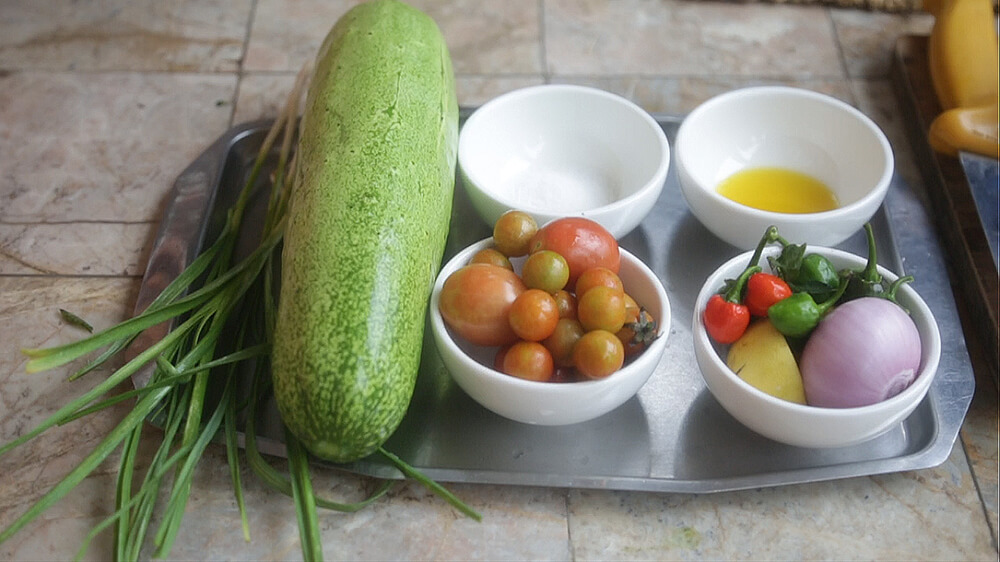
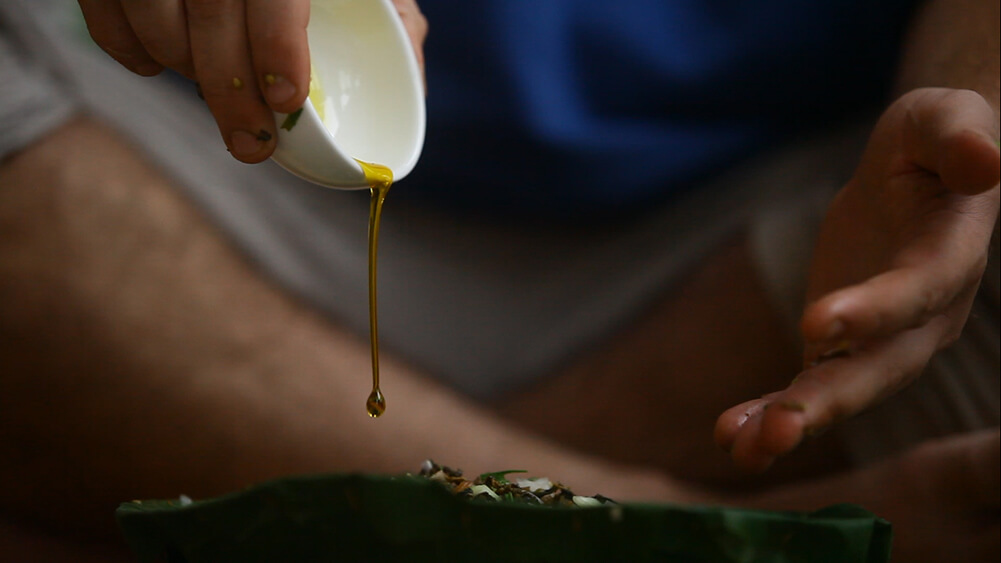
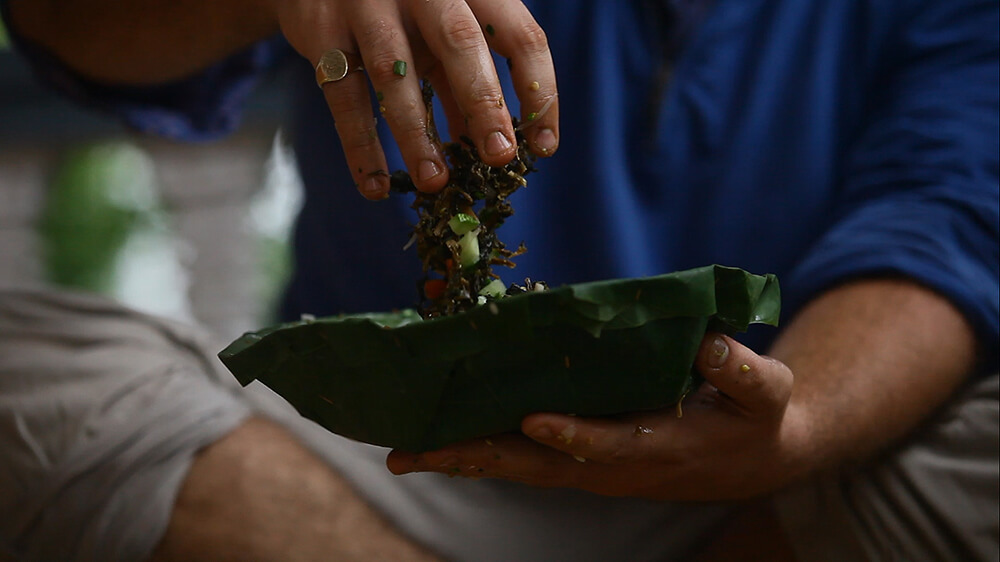
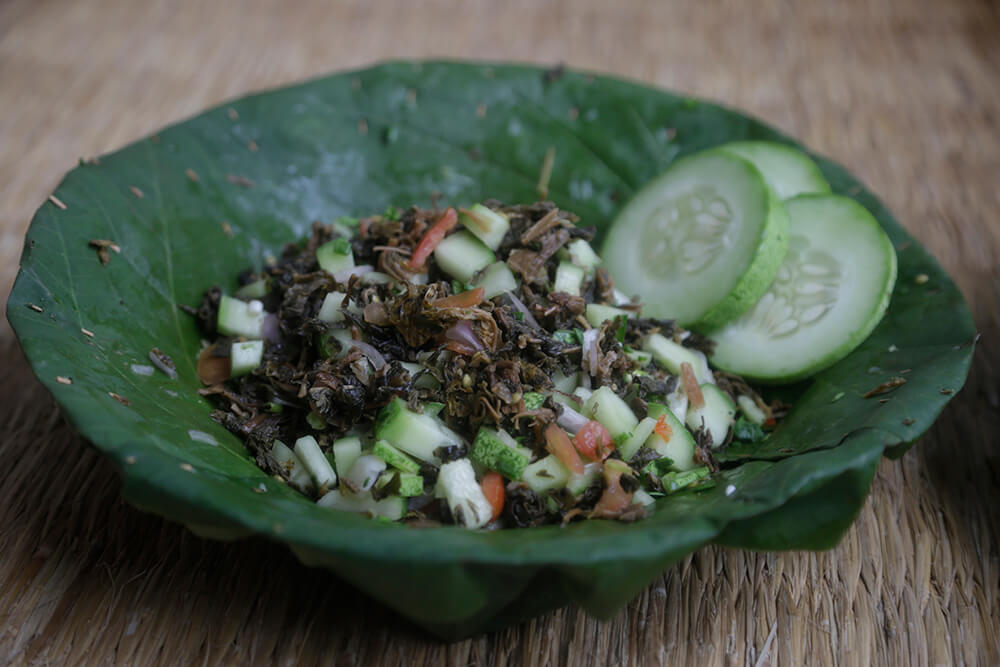
It’s a great shame that most tourists come to Nepal, trek up and down mountains on a diet of pizza and pasta, then fly out without so much as a whiff of gundruk.
Similar to many great tastes, like stilton or stinky tofu, that come with cadaver-like smells, gundruk is an acquired taste. It is almost Nepal’s national dish, but visitors usually find the smell of the fermented greens repulsive.
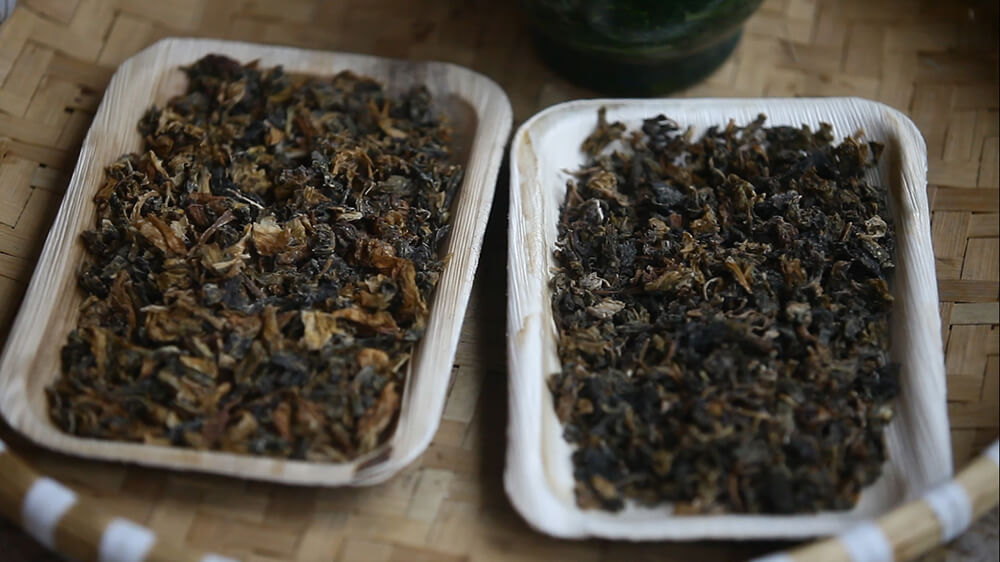
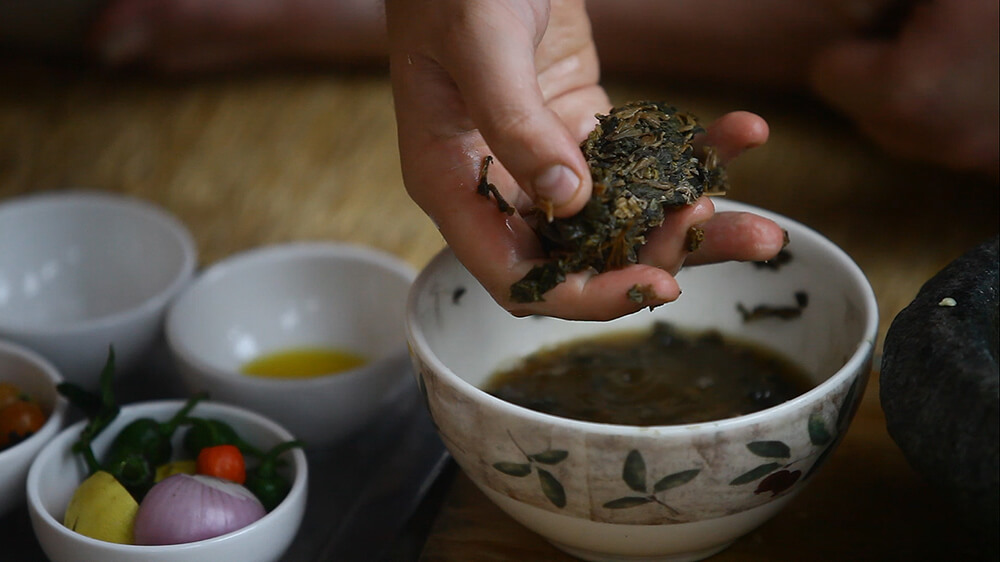
If spinach and raisins had a rotten lovechild, and the looks of tobacco leaves, gundruk is it. Raw, it has the texture of waxy cardboard and forces the mouth to flood with saliva because of its bitterness. My own taste buds are free-loving hippies in terms of the conservative Western palate, and I’m open to trying anything.
The main ingredients of gundruk are various vegetable leaves, which are pounded, fermented in jars or amphora-style pots, then chopped and sundried for later consumption. Gundruk is simply a means of preserving excess of radish, kohlrabi or cauliflower leaves and mustard greens, when they are prolific, so they can be eaten with rice in winter. Each leaf lends the final product a different flavour, and it is usually made around October.
For most, Nepali momos are on top of the food chain because of their familiarity and omnipresence. Gundruk, however, is arguably far more uniquely Nepali. It’s hard to find any link to another culture’s cuisine.
The United Nations Food and Agricultural Organisation says 2,000 tons of gundruk are made in Nepali households every year. How anyone can calculate the total gundruk output is anyone’s guess, which must be why FAO has come up with a safe round figure.
Gundruk has kept generations of Nepalis healthy in the agricultural off-season, when all there is to eat is rice, tubers and maize. It is not the only fermented Nepali food, there is also the fermented bamboo shoot (tama), fermented radish roots (sinki) and fermented soybeans (kinema).
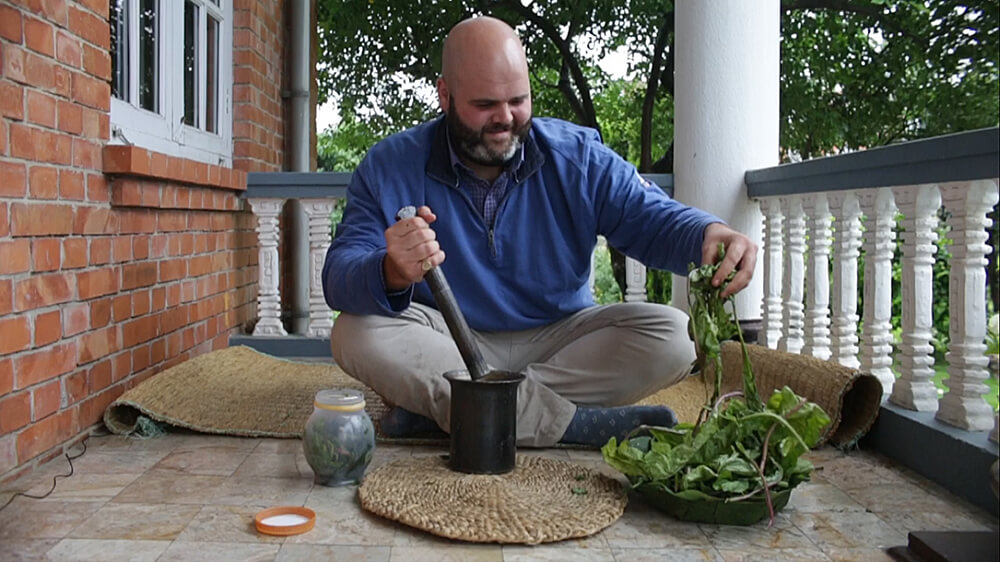
The fermentation process of gundruk is somewhat similar to German sauerkraut or Korean kimchi, and it has the same bacteria. Given the obsession with the benefits of those fermented foods it is fair to assume that gundruk probably boasts the same goodness. Unlike kraut and kimchi, however, gundruk is a little more versatile because it is available dried and can be used in hundreds of different ways.