
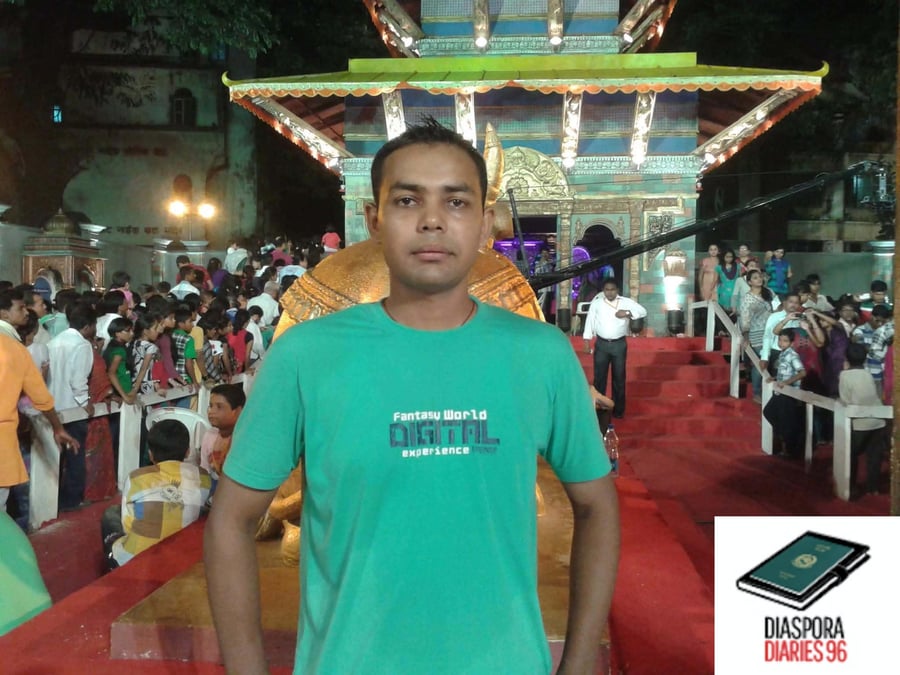
This is the 96th episode of Diaspora Diaries, a Nepali Times series in collaboration with Migration Lab providing a platform to share experiences of living, working and studying abroad.
Growing up in Gulmi, I always wanted to enroll in the British Army. But I never made it. The natural fallback was the Indian Army.
My father was a migrant in India, as was my grandfather. We were four brothers and a sister, and remittances helped with our education and growth. Back then, ‘galla’ recruiters would come to villages looking for strong, young men to enroll in training centres.
I was selected in the physical tests at the British Army recruitment centre in Butwal, but I did not make it at the next stage in Pokhara. The British Army was ideal because of its reputation, better salaries and benefits. Seeing British ‘lahure’ visiting the village was the best publicity for recruitment and motivated us young folks.
You had to be perfect to get selected: physically, mentally and emotionally. It was a fair process where your capabilities mattered more than anything. Perhaps they detected some weakness in me. I did not retake the tests the next year, and migrated to Mumbai instead.
I had taken Indian Army training for six months, and had to wait for some time because of my age. I did various jobs, mostly in administrative positions but also joined hotel management training. I got a chance to work at the Taj Hotel as a chef trainee.
One day, a Canadian Indian wanted to talk to me after tasting my basil pasta. I don’t think the pasta was that special. This introduction soon led to conversations over the next few weeks. His nephew had married a Nepali and he had a soft corner for us. He probably saw something in me or it was just my luck, but I was offered a job in the Democratic Republic of Congo.
I had heard of Africa and thought it was a country, but knew nothing about Congo. I took up the offer as his steel company, Mangalji, with operations in many countries including Canada and the UK, looked like a good option that would help my career.
Without knowing all the details about the country or the company, I agreed to join. My family was not happy because they still wanted to see me in the army. The salary in the Congo was in dollars and there was a chance to move to Canada afterward.
This was 2009, and Mumbai airport immigration gave me a difficult time, and I had to show them all my documents. I first stopped by Kenya which was already a different world, and when I arrived in Kinshasa, my heart sank. The airport was like a bus stop in Butwal, and I started questioning my decision.
After three days at the company, I resigned. I could not comprehend where I was: the food, the language and the culture were all so different. The lack of language and ability to speak made me feel blank and lost. I just did not feel at home. The Indian Army option was still open and I had good career prospects in the chemical company I was working at in Mumbai. In fact they were offering me a ticket to return.
Congo was not for me. But a fellow Indian colleague named Yadav told me to stay. He saw potential in me to one day rise up the ranks in the company and become a DG. I stayed on reluctantly, but for the next few weeks I would call my dad in tears and confess that I made the wrong decision.
SECOND CHANCE
I decided to stay on for three months, and in that time, I was told that I would be included in the sales and purchase division of the steel company if I learnt the local language. My salary then was $450 a month, and they said it would double.
So I made it a priority to learn the Lingala language. I would ask locals for common words which I would note and learn by heart. Within three months, I was fluent in the language. I did not need formal classes because I had real life language lessons.
I got promoted, and my salary increased. Before I knew it, just like Yadav had predicted, I became a DG. I spent a lot of time with locals to understand the DRC. As I engaged with them, I started feeling that the Congolese people had a big heart just like Nepalis and I felt a close attachment to them.
From 2017 till 2020, I started my own business as a contractor to the UN after leaving the steel company. I also tried my hand at other businesses and branched out into part-time work, including as a general manager at a manufacturing plant that supplies to industrial areas. I also run my own businesses including a restaurant in Kenya and Congo.
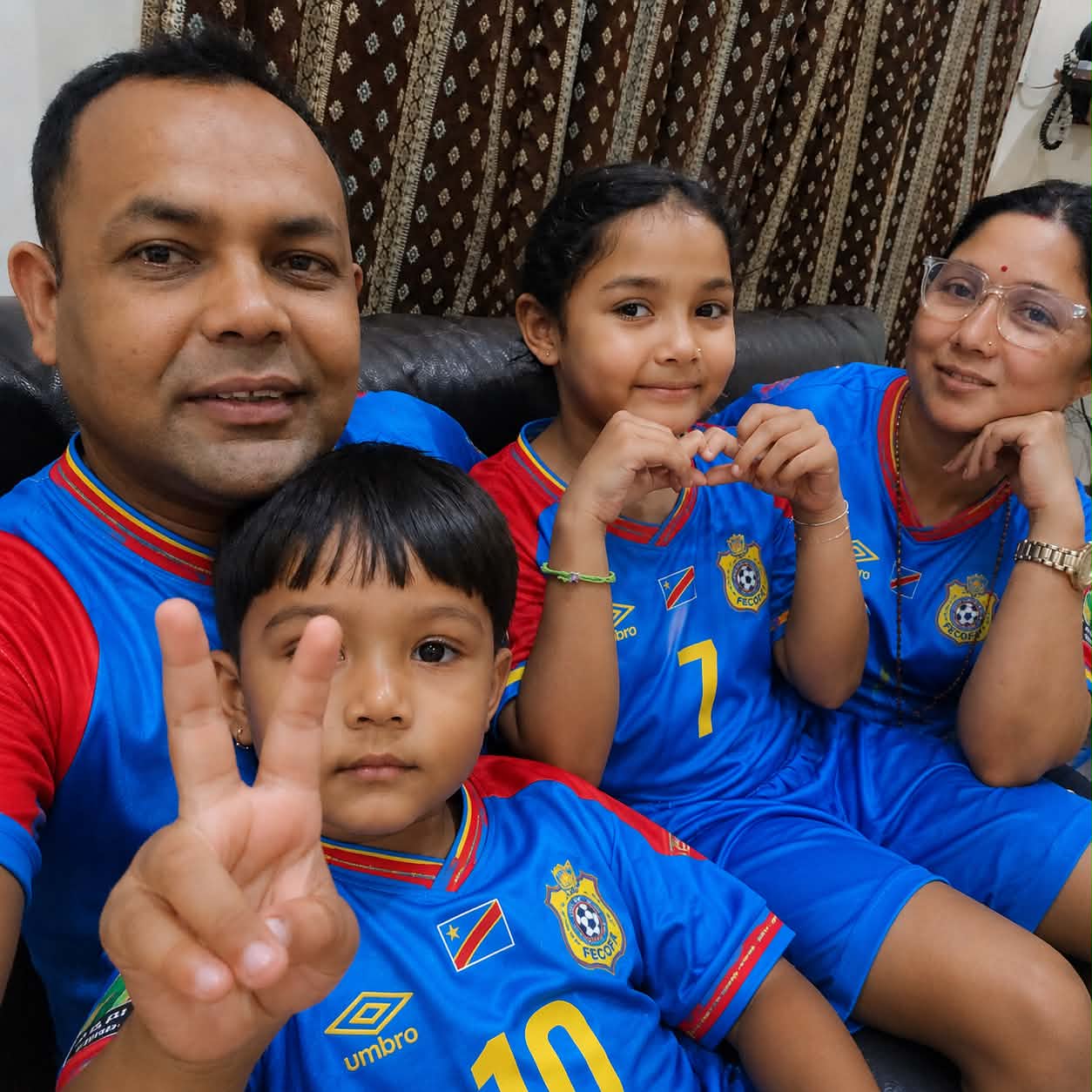
Six years after I first went to the DRC, I got married in 2015. My wife finally moved to Congo in 2023. Once again, we doubted if we made the right decision to work in Africa, especially about the future of our children who had joined us. Perhaps Nepal would have been better for us, as we had our parents, in-laws and family to rely on.
The first few months in Kinshasa, my wife used to ask me how I had spent so many years because she had struggled to adjust. But today, whenever she is in Nepal for holidays, she misses the Congo.
The initial period was difficult, but we like it here now. We live in a community of hundreds of Indian businessmen and their families. Our children have good quality education under the Cambridge system. My daughter is multi-lingual in Swahili, Gujarati, Hindi, Arabic, English and French. She is a topper in her class and wins student of the year every year.
I have built a good rapport with Congolese people, and am also intensifying efforts to mobilise the Nepalis who work here through diaspora groups like NRNA. There is a growing Nepali diaspora here, we are above 500 Nepalis excluding around 1,400 peacekeepers and we have prioritised efforts to strengthen Nepal-Congo ties. Despite the conflict and the problems, the DRC has enormous mineral wealth and I have seen the country develop dramatically in the time I have been there.
My elder brother is back home from the UAE to be with our father. My other two brothers are in the UAE and Korea.
I had never thought I would end up in the DRC and remain there for over 17 years. Now, even though I often go to the USA, I still prefer being in the Congo. There is a lot to be done here in many sectors, and it is safe to do business.
Labour costs are also low, so investments in services and manufacturing can be successful. I have also made a name for myself through my work and got to meet and learn about people and society. I may have become a soldier if I had not opted for Congo, but then this lifestyle would not be possible.
Congo has taught me how to struggle. It changed many perceptions I had about life, my career and family. The country has made me less ambitious in a good way as it has taught me that wealth is temporary.
You do not need a lot to be happy.