Nepal Oil Corporation’s announcement on Sunday of an across the board increase in fuel prices is expected to have a knock-on effect on inflation, aviation and tourism and on prospects of an economic rebound post-pandemic.
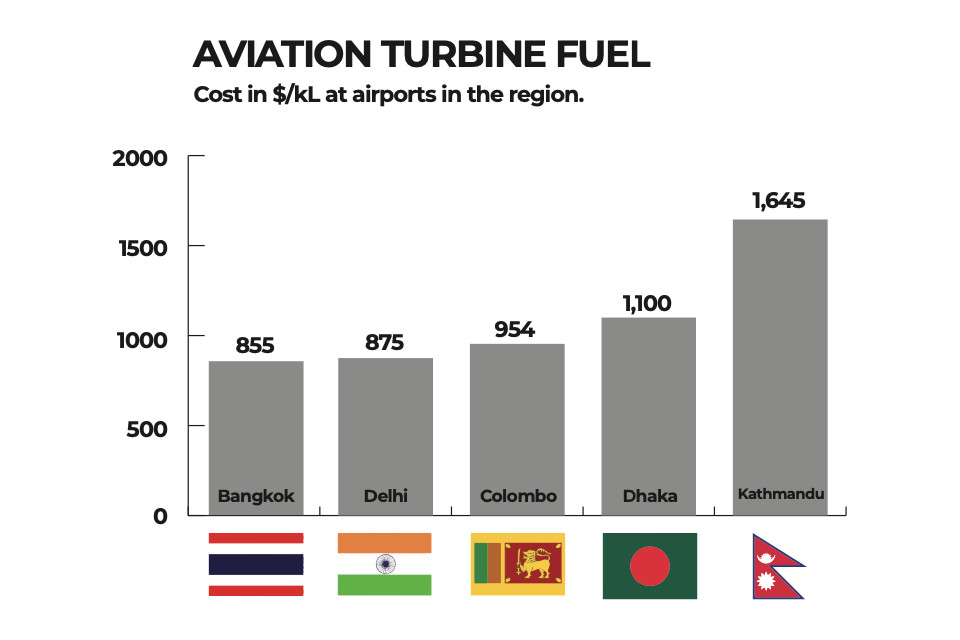
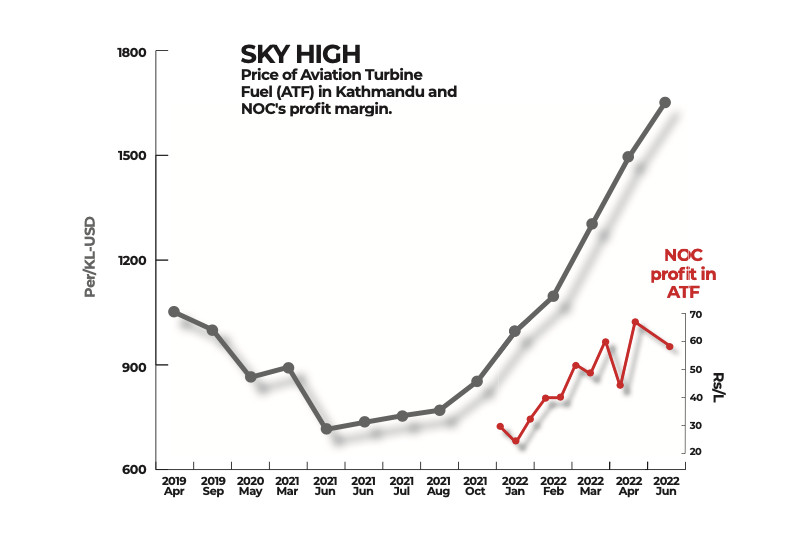
NOC brought the price of petrol to just below the Rs200 per litre threshold, and increased the already high price of aviation turbine fuel (ATF) by $100, taking the cost per kilo litre in Kathmandu to $1,645 -- the most expensive by far in the region.
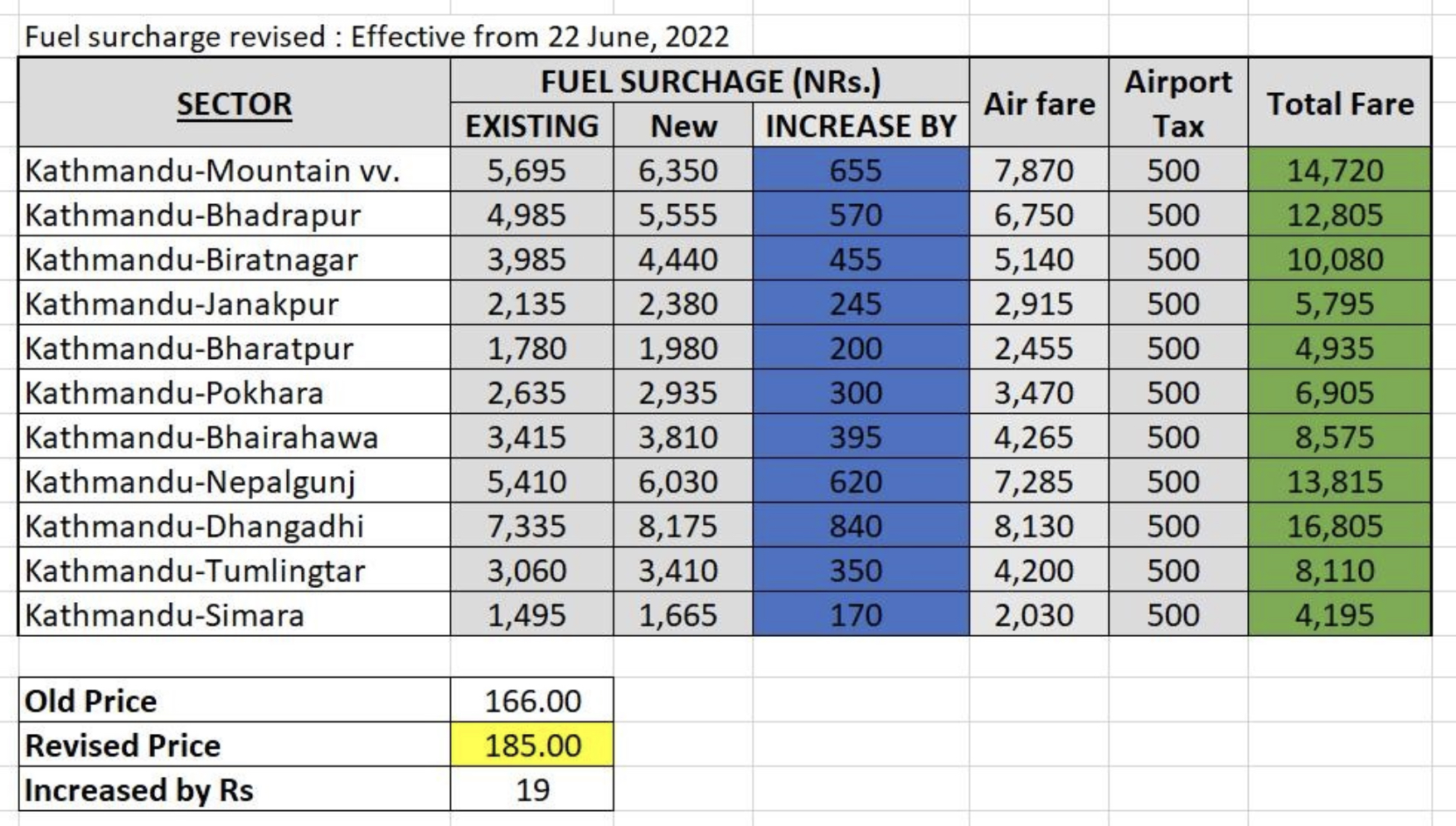
Bus companies immediately announced hikes in fares for urban and inter-city transport by between 6-7% and domestic airlines also increased their fuel surcharge, which on some routes is now greater than the actual fare.
NOC increased the price of ATF by Rs19 per litre to Rs185. The one-way fare for the shortest destination line Kathmandu-Simara has increased by Rs170 to Rs4,195 which includes the fuel surcharge. Kathmandu-Dhangadi will now cost Rs840 more to Rs16,805 (see table below).
The increases were announced just when the price of Brent crude dropped to $113 a barrel on Monday morning, down from $120 last week. NOC had reduced the price of petrol by Rs10 per litre two weeks ago, but has now jacked it up by Rs40 just when world prices were going down.
Nepal’s domestic airlines and international carriers serving Nepal, which had started seeing high load factors for the first time after the pandemic, say they have no option but to pass the added cost of ATF to passengers.
There is a fear that some international airlines operating long-haul routes that need to refuel at Kathmandu airport may have to make fuel stops, or close down operations altogether.
Read also: Sky high fuel price hits Nepal’s tourism, airlines, Nepali Times
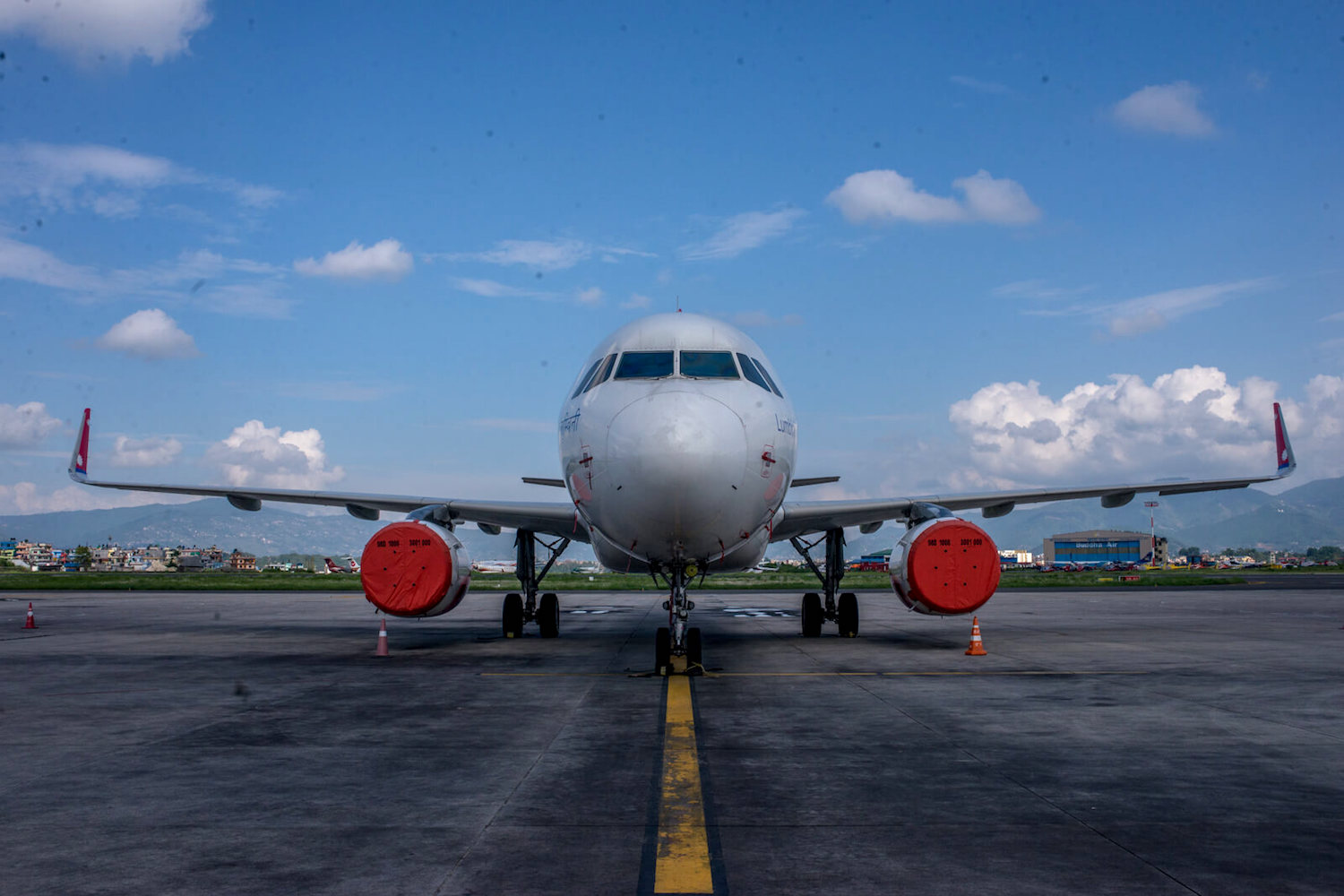
That possibility is sending Nepal’s tourism sector into panic mode because of what it may mean for their bookings for the autumn season for tourism and trekking, which showed signs of a rebound this spring.
“We understand that the increase in petroleum fuel prices is a worldwide phenomenon after Russia’s invasion of Ukraine, but such a high increase for aviation fuel will be counterproductive for Nepal’s economy because of the impact on tourism,” one worried airline executive who did not want to be identified told Nepali Times.
An official at NOC justified the increase, saying that it needed to make up for its subsidies on diesel and petrol and LPG with higher profit margins for ATF. Prices for fuel in Nepal are higher because of government tax as well as the cost of transporting it in tankers from Indian refineries, he added.
In addition, petrol prices must also be higher in Nepal than India to stop smuggling of fuel across the open border. Indian vehicles refueling on cheaper fuel in Nepal and driving back had increased Nepal’s import of fuel, but with Sunday’s increase the price of petrol in Bihar is now slightly lower than in Nepal at Rs172/l (INR 107/l).