
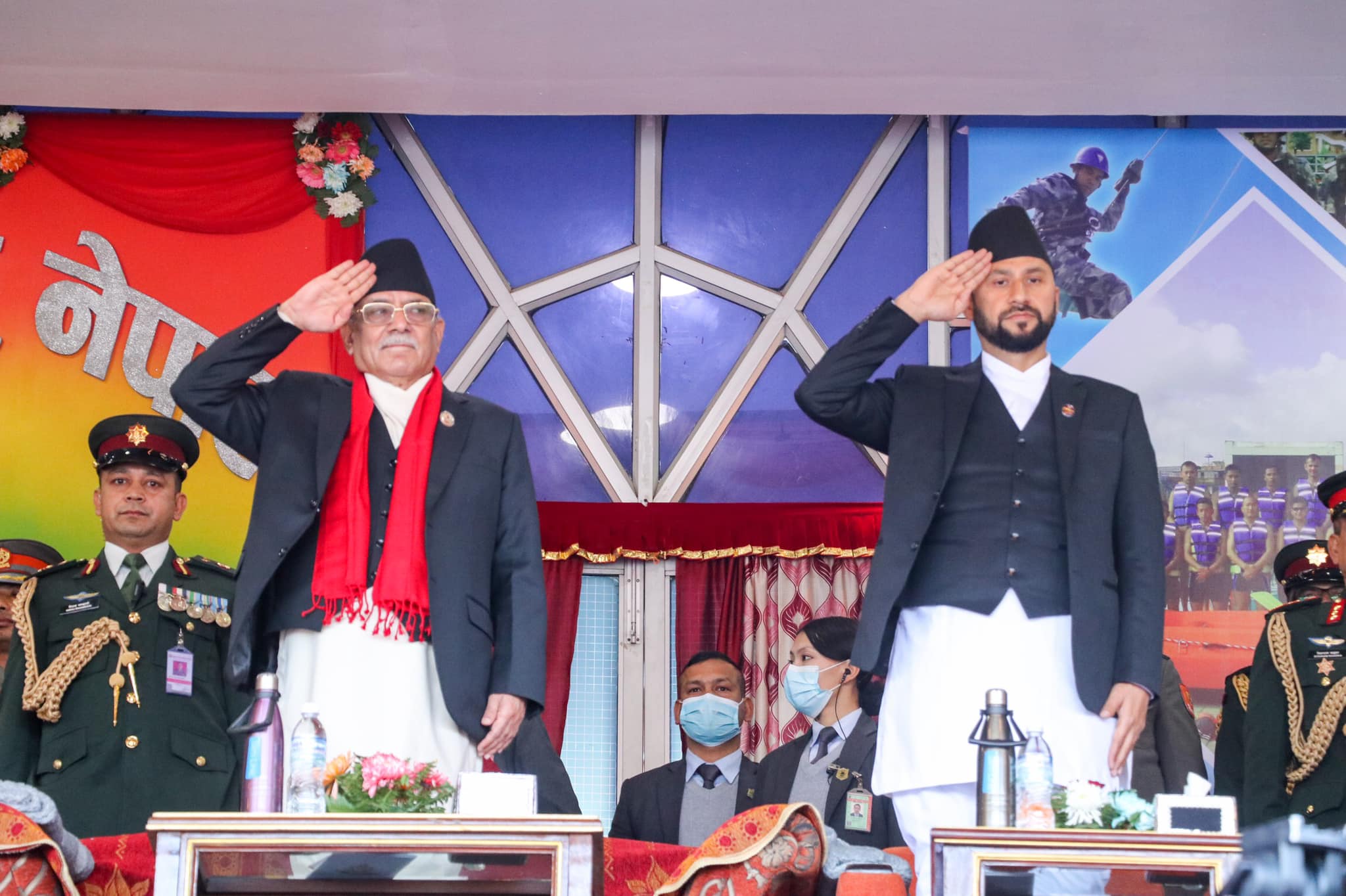
This week marks 27 years since the Maoists launched their armed struggle. Three decades later, and 17 years after the war ended, the leader of the revolution is prime minister of Nepal for the third time.
The Maoists waged war to end the monarchy, and turn Nepal into a federal, secular republic. But Prime Minister Pushpa Kamal Dahal (aka Prachanda) shares power in a coalition with openly anti-secular, royalist and anti-federal parties.
Former enemies are now the state. And while this may be a model for post-conflict reconciliation, it also means that neither the security forces and their civilian leaders, nor the Maoist leadership and their guerrilla commanders, have had to answer for heinous crimes committed during the insurgency.
The former antagonists have made sure that the two commissions mandated to deliver transitional justice remain toothless. Social science and history text books make no mention of the violent conflict that left 17,000 Nepalis dead. A whole generation of Nepalis has grown up with no knowledge of what happened between 1996 and 2006.
Many of the survivors and families of victims have lost faith in ever getting justice, and have moved on because of the pressures of day-to-day survival. Time is erasing memories, and that suits the perpetrators of war crimes fine, since they want us to forget what happened.
As they watch at the way the country has been run, however, the hundreds of thousands of Nepali civilians and fighters who suffered, were tortured, wounded, displaced or bereaved, are thinking: what was it all for?
On 4 February 1996 at Singha Darbar, Maoist ideologue Baburam Bhattarai presented to Prime Minister Sher Bahadur Deuba (yes, his first of five tenures in office) 40 demands. His party did not even wait for the government’s response, and on 13 Feburary 1996 launched simultaneous attacks on police stations across the country.
The conflict was never about a ‘revolution’. The war was just politics by other (violent) means. The behaviour of their leaders in government today probably gives little comfort to former guerrillas and comrades. In fact, like in any other party, Pushpa Kamal Dahal has purged all potential rivals from the Maoist Centre.
Just like K P Oli of the UML, and to a certain extent the NC’s Sher Bahadur Deuba, Dahal’s conduct is based on the principle of ‘I am the party, the party is me.’