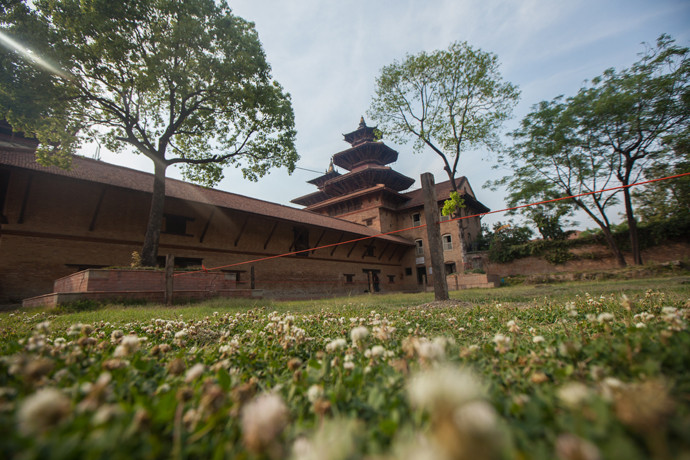
At the heart of the Patan Palace this was once a hub for rituals and festivals including royal weddings and even the investiture of the crown prince. Often vandalised and preyed upon by antique robbers, Mul Chok used to be neglected, misused and plagued with misguided restoration. This elegant and imposing courtyard is now open to the public.
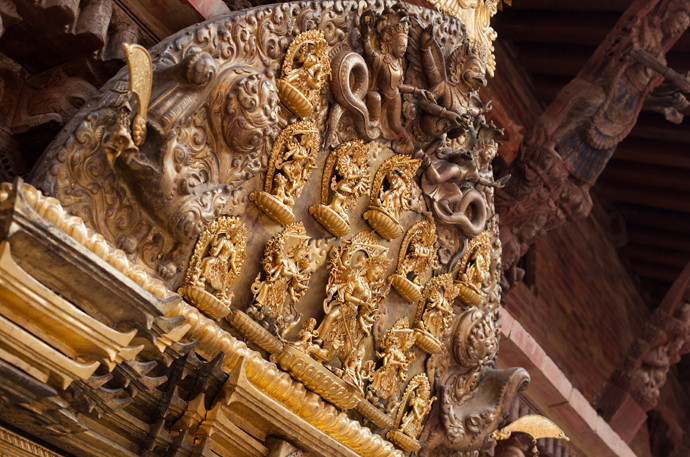
It is twice the size of the adjoining Sundari Chok and has undergone several renovations. It even survived a roof collapse during the 1934 earthquake and features a wide spectrum of different architectural styles, serving as a living testament to the rich tapestry of influences in Nepali architecture.
Mul Chok is still used for rituals including the 15-day Dasain festival in October, where a goat is sacrificed to the Gods. During the festival it is said the goddess Taleju is brought down to a special room in Mul Chok by priests. A notable feature is the courtyard’s large gate, which is spectacularly adorned with 12 intricate golden statuettes. These detailed statues were originally damaged or lost, but has since been restored by the KVPT.
This courtyard is a living museum. It preserves its architectural elements in its natural environment, rather than simply displaying them in glass cases.
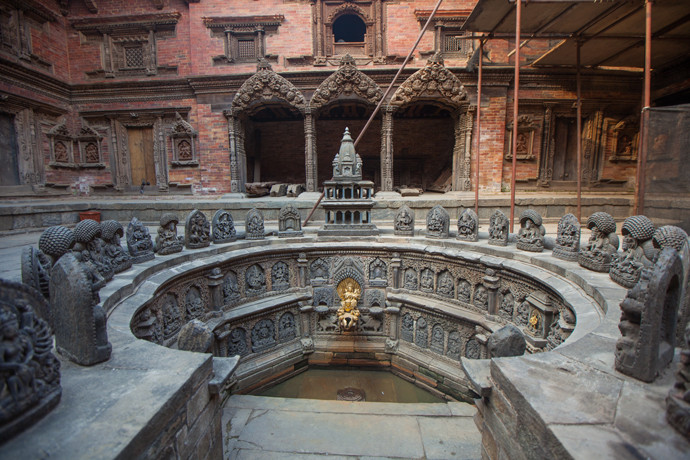
One example of Kathmandu’s intricate water architecture is the Tusha Hiti waterspout, which features an image of Vishnu with Lakshmi on his lap, carried by their mount, Garuda. Lined around the walls of the step-well are three rows of 72 elaborately carved stone sculptures.
The gilded copper waterspout was stolen in 2010. A replica was made based on photographic documentation and installed in 2012, only days before the original was miraculously recovered by police. The original spout is now safely stored in the National Museum.
Meanwhile, a complete waterproofing and fitting of steep pins have ensured that water will not seep into the carvings, and that stone elements are kept secure.
Nepal Architectural Exhibition Gallery
The architectural galleries, while slightly small, still give a sense of airiness with elevated wooden beams and warm yellow lighting. Divided into about four main sections, the gallery showcases various aspects of Kathmandu Valley's Newari architecture. Visitors can get a sense of how these designs have evolved over the ages, from the length of struts (bilampau), to the design of carved windows and the motifs found on tympanas (the triangular or semi-circular surface above the porch).
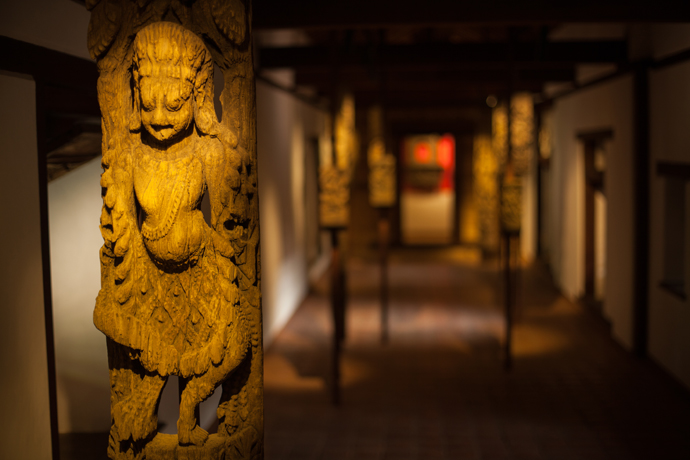
One notable exhibit is the carved wooden columns from different periods, ranging from 15th- 18th century, showcasing how their designs have been influenced from various periods.