
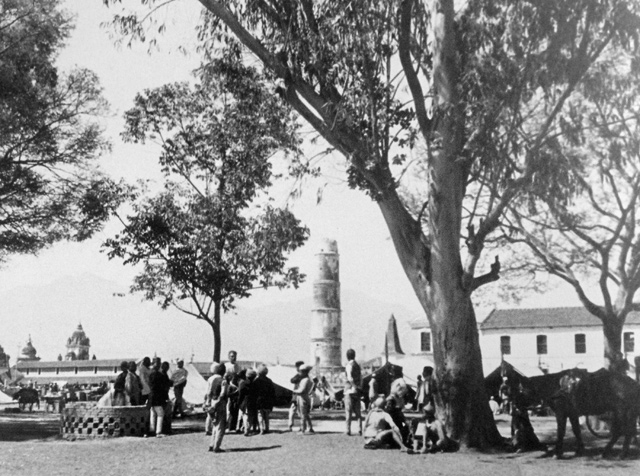
Every year, Nepal has been marking 15 January as National Earthquake Safety Day to commemorate the 1934 magnitude 8.3 quake epicentred in Okhaldhunga that killed 10,000 people in Kathmandu Valley. After last April’s disaster, we probably don’t need to be reminded of the devastation earthquakes can cause. But it may be well worth remembering that April was not the Big One everybody had feared — that one is still coming.
Three months before the April event on National Earthquake Safety Day we wrote an Editorial in this space titled ‘Unnatural Disaster’. In words that presaged the disaster, we had said:
It has been accepted wisdom that there is a Great Earthquake in Kathmandu every 80 years and the next big one is due any day. Well, if it’s any comfort, Som Nath Sapkota of the National Seismological Centre tells us that the frequency of 8 magnitude quakes is more like 500 years. The last one in 1255 killed one-third of the Valley’s population, including King Abhaya Malla. There have been smaller quakes every 80-100 years, but as Sapkota says: “You don’t need an 8 magnitude earthquake to destroy Kathmandu, a 7 will do just fine.”
As it turned out, the earthquake three months later on 25 April was not the expected megaquake. Tragic as the loss of life was, the country did not suffer catastrophic nationwide damage. This was one of the most data-rich earthquakes ever in the Himalaya, and the numbers are still being analysed. What scientists know so far is that the whole of central Nepal, including Kathmandu Valley, moved southwards by upto 3m. The terrain tilted like a seesaw, with the Mahabharata range rising as the mountains north of Kathmandu dropped.
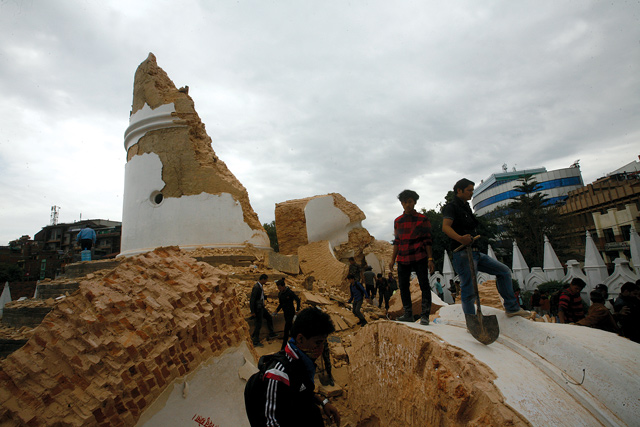
The earthquake’s aftershocks travelled along a rupture zone eastwards from the epicentre on the Gorkha-Lamjung border. There was very little shaking and no major aftershocks to the west. The earthquake was not strong enough to release all accumulated energy in the block of crust below central Nepal, however, and seems to have fizzled out just south of Kathmandu Valley. The shaking lasted less than a minute, and the shock waves were of sufficiently low frequency, causing damage to older mud and brick buildings and monuments but sparing most ferro-cement structures. These and other lucky factors, like that the main earthquake struck on a Saturday afternoon, saved many lives. Based on the number of classrooms that were completely destroyed, it is estimated that 75,000 children could have died had the quake happened on a weekday.