
If there is one aspect of Nepal’s socio-economic condition that touches the life of just about every Nepali family today, it is migration. There is no other more damning indictment of governance failure and criminal neglect over the last 25 years. This is flagrant abdication by the political leadership of its primary responsibility of protecting its citizens.`
Human beings have historically been Nepal’s Number One export. Subsistence farmers fled indebtedness during the last two centuries to settle in Assam, Darjeeling and Bhutan, and young Nepali men started being recruited into British Gurkha regiments even before the Anglo-Nepal War ended in 1816, a process that continues to this day. Then there were the hundreds of thousands of young Nepali women trafficked first into India and now to the Gulf countries, duped into prostitution and abused by employers.
Read also
From Chitwan to Chiyoda, Kunda Dixit
Ironically it has been since the restoration of democracy in 1990 that the export of manpower to the Gulf and East Asian countries took off – largely because recruiters had political patronage and lubricated the electoral machinery of the parties with a cut of the profits they made from fleecing fellow Nepalis. More than 4 million Nepalis went abroad in search of work in the last 20 years, nearly all of them paid a hefty fee to manpower middlemen. And this number does not even include the unknown millions who have migrated to India seasonally for work.
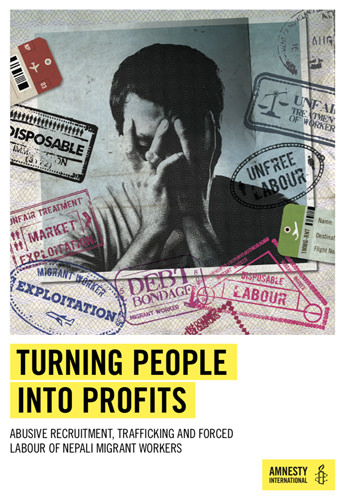
The most searing condemnation of the inability and disinterest of the Nepal government to guarantee safe migration is Amnesty International’s report released earlier this year: Turning People into Profits: Abusive Recruitment, Trafficking and Forced Labour of Nepali Migrant Workers. Every page of this report chronicles state collusion in directly defrauding its own people. It should outrage us.