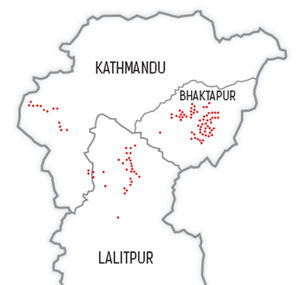
Beyond Bhaktapur’s golden rice terraces and charming palace square, lies a world of soot and grime. The capital’s insatiable hunger for high rises and homes coupled with the lack of livelihood and employment opportunities, mean that hundreds of families from rural Nepal and Bihar migrate to factories here during the dry season to make bricks. In Kathmandu Valley, alone there are around 110 brick kilns employing thousands, including more than 10,000 children.
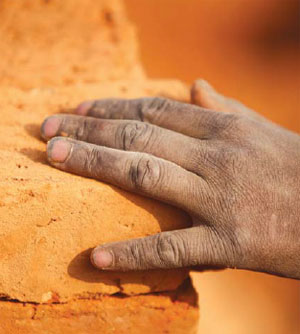
For six months a year, the labourers toil from early morning to late evening digging and kneading soil, manually moulding bricks, drying them, and finally stacking them in the kiln. With little to no protection against the suffocatig conditions, they remain completely exposed to fumes and dust.
The families live next to the factories in small huts made of sun-dried bricks. The younger children are left to care for themselves, while the older ones help out their parents in the kilns. Having left school in their home districts, most children are not getting an education. Instead, they are ‘training’ to follow in the footsteps of their elders.
Shoddy housing and the lack of basic health, water, sanitation, and school facilities make the poor families among the most vulnerable communities in the Valley. Even though the earnings are not as low as one might think – a labourer can earn upto Rs 70,000 in the season – the human costs are high.
Smoky business
Until July 2013, brick-making was one of few businesses in Nepal where owners didn’t have to pay any tax on their profits. All that changed with the new fiscal year and now Kathmandu’s 110 operating brick kilns (see map) will have to pay a Value Added Tax. But at a time when most factories still operate without licences, let alone VAT registration, kiln owners say the effectiveness of this new law is highly questionable.
“Traditionally, brick kilns do not have a history of keeping records either with the government or their own employees. So asking us owners to make bills for every transaction is a huge challenge,” admits Mahendra Bahadur Chitrakar, president of the Federation of Nepali Brick Industries. “Besides, we have a hard time explaining to customers why they have to pay tax-inflated prices to build their homes.”
There are more than 800 brick kilns across Nepal and Chitrakar says some factory owners outside Kathmandu are already trying to arm-twist their way out of making the change. But shelling out extra cash to the state is not their only concern. As Kathmandu Valley expands outwards, the mines are emptying out quickly and brick kiln owners now have to compete for real estate with those wanting to build homes.