
Nepal’s recent history has been marked by milestones popularly remembered as People’s Movements. The first one in 1980 got us a referendum on the absolute monarchy. In 2006, the people took to the streets for peace and democracy.
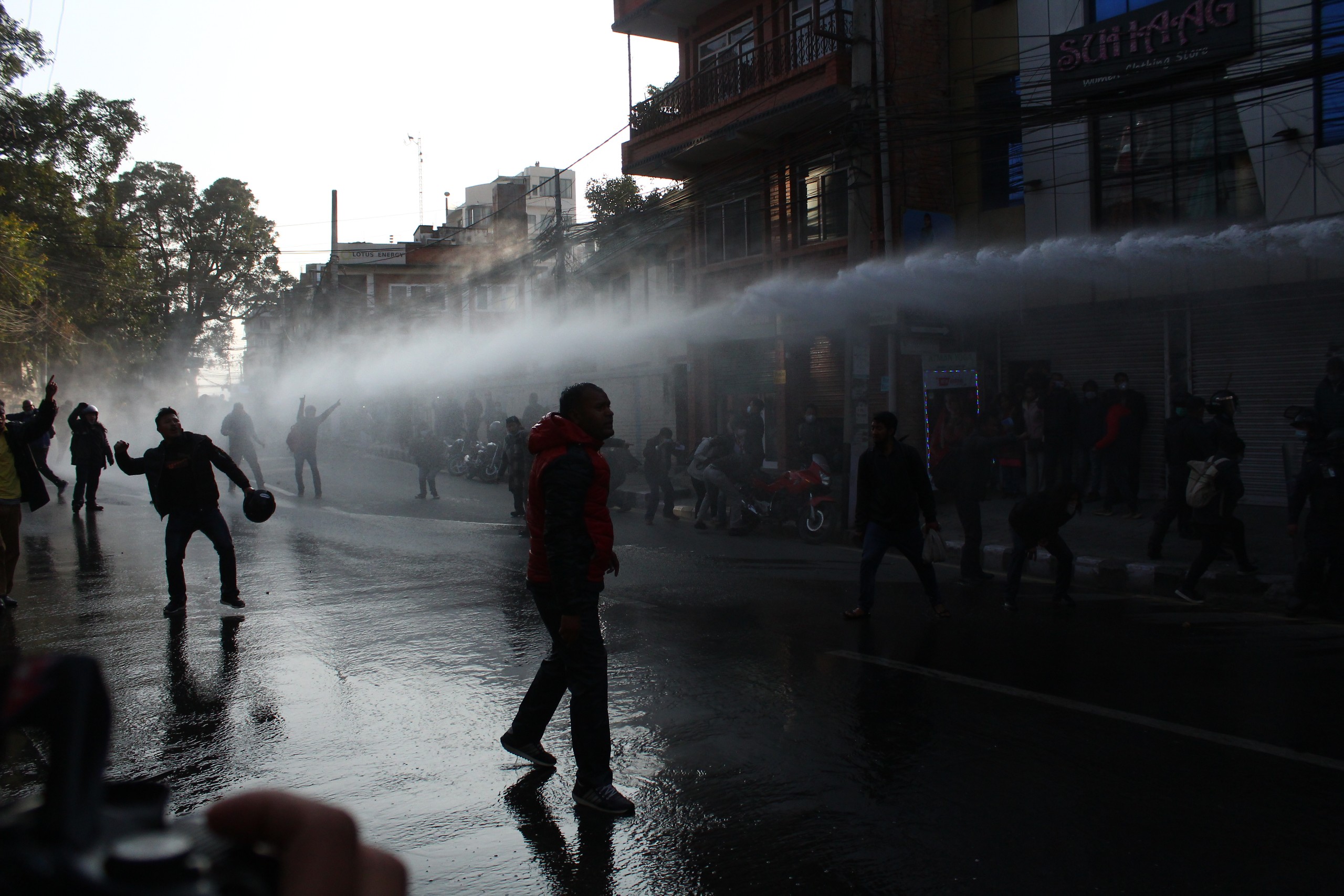
This week, after riot police beat up civic groups and hosed them down with water cannons, there were calls once more for another pro-democracy uprising. A video clip went viral of journalist and writer Narayan Wagle stabbing the air with his forefinger: “This is the beginning of a third people’s movement.”
There had been much larger protests in recent weeks against Prime Minister Oli’s dissolution of the Lower House on 20 December, but police had stood by. Why they had to use batons and point blank water cannons against a small and peaceful march is inexplicable, unless it was to provoke a backlash.
Previous pro-democracy street protests have seen the emergence of a new political order, except in 1980 when the referendum allowed the absolute monarchy to prevail. A decade later, protests led to a lifting of the ban on political parties, ushering in a constitutional monarchy. The 2006 protests were as much a movement for peace as it was against King Gyanendra trying to turn the clock back.
The winter of 2020-21 will be remembered as one where civic groups once more had to take to the streets against what they saw as an autocratic prime minister riding roughshod over the Constitution.
The street protests have mostly been dominated by cadre loyal to the anti-Oli faction of the Nepal Communist Party (NCP) as well as some pro-democracy activists. It has not yet galvanised the public, which seems to see it still as largely a power struggle between top men in the ruling party who were unable to resolve their personal differences.
This ego-clash has led to the virtual split of a party that had a commanding majority in Parliament with both factions competing for bigger street rallies.