
A G Krishna Menon is an urban planner and conservation consultant based in New Delhi who was invited to examine strengthening and rebuilding in Kathmandu after the 2015 earthquake. He calls it the most extensive and successful preservation campaign in South Asia, if not globally.
Coming from an architect with 40 years of experience, that says a lot. Menon worked with Eric Theophile of the Kathmandu Valley Preservation Trust (KVPT) on the book Nepal Dialogues II: Architecture, Preservation and Living Culture and is a strong proponent of ‘revitalist architecture’ in culturally rich earthquake-prone areas.
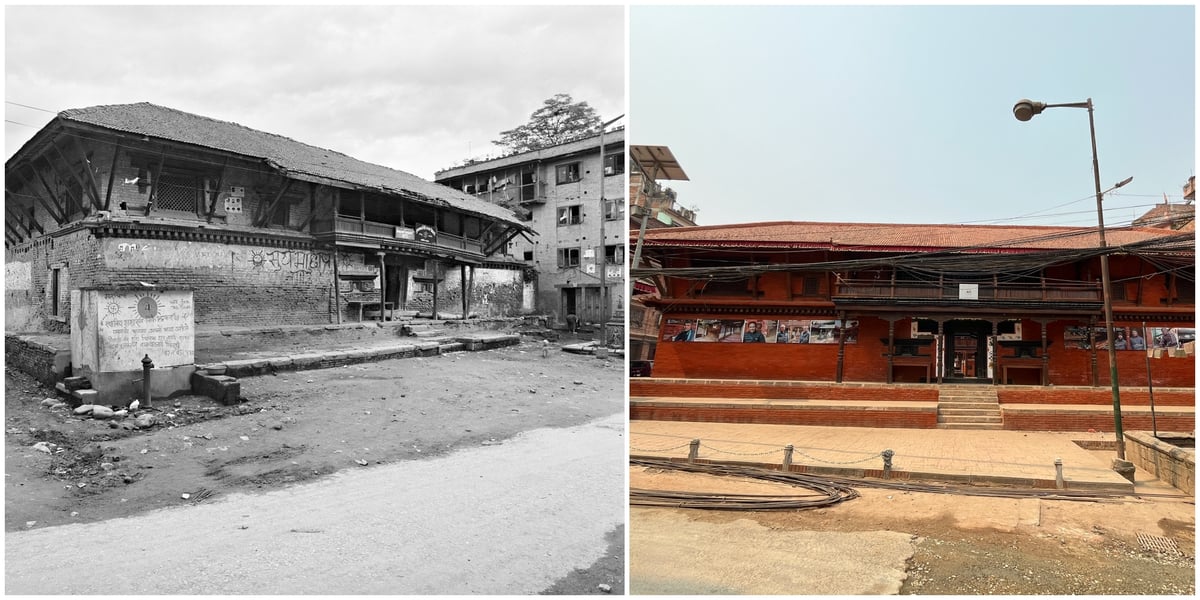
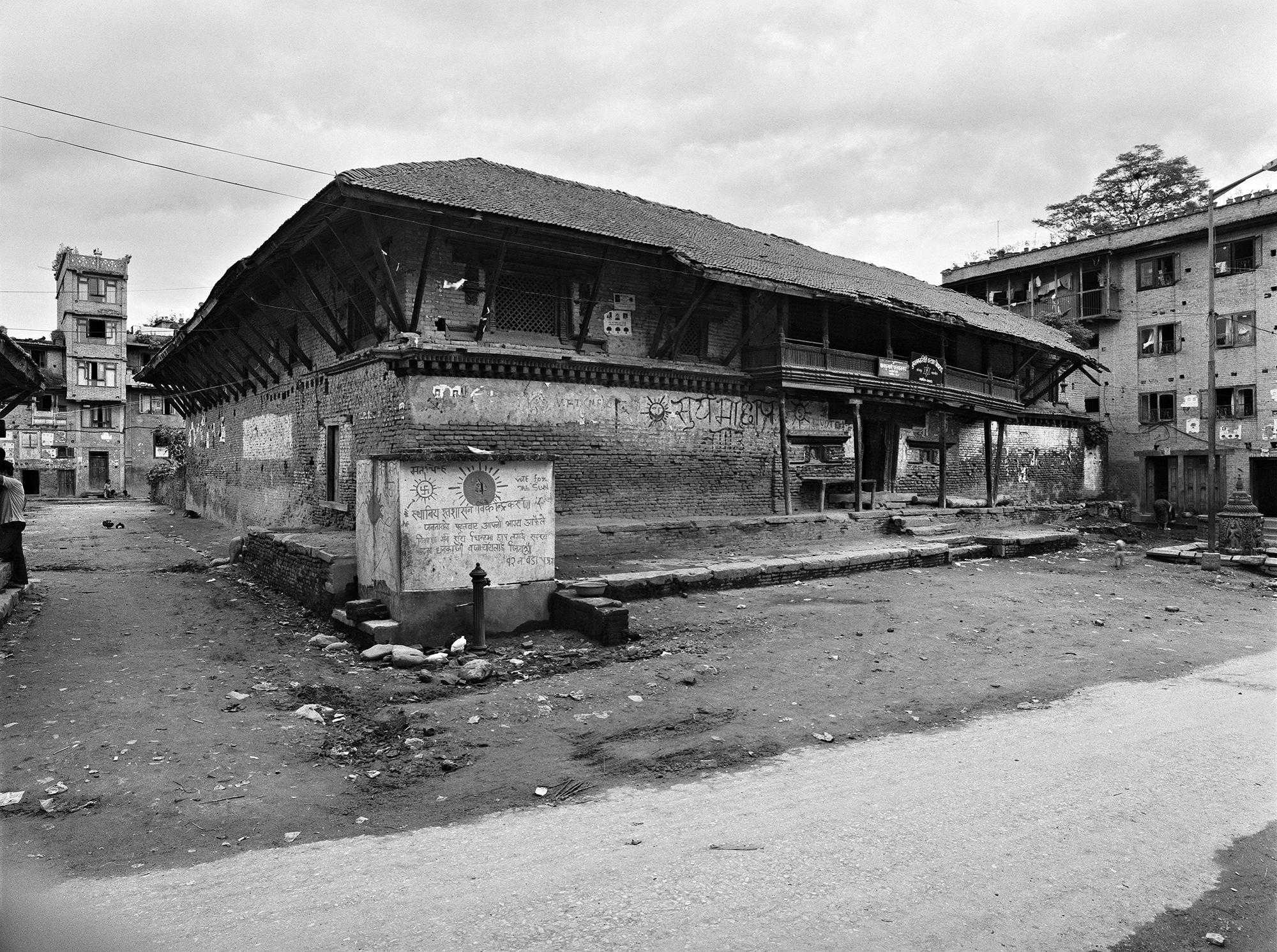
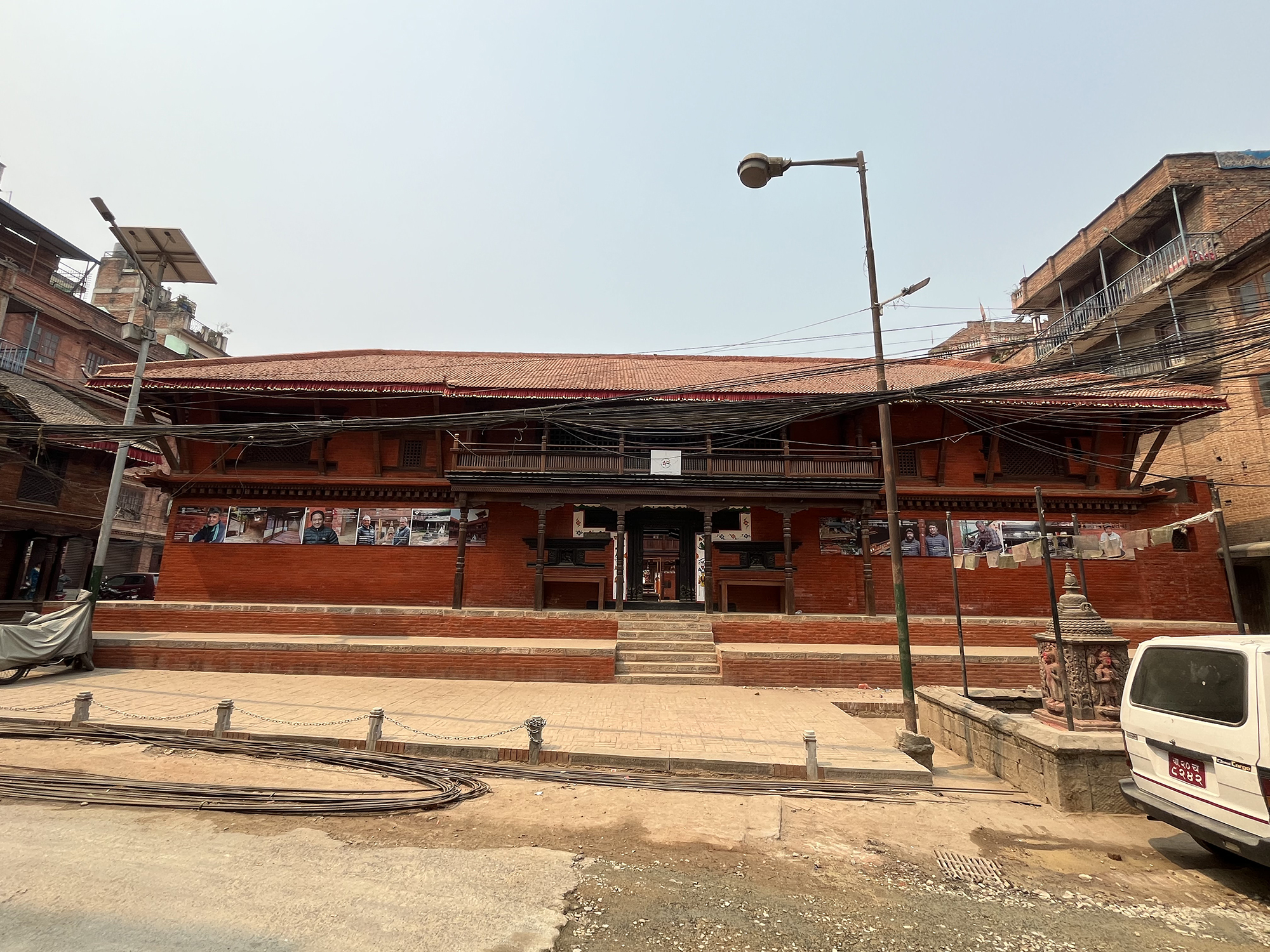
The slim volume is a perfect companion to Tradition and Modernity in Patan: The Paradox of Architectural Preservation in Nepal. Menon compares KVPT projects with that of the Indian National Trust for Art and Cultural Heritage (INTACH) which restored Jyababahi Monastery in Patan (pictured, below).
The difference between KVPT and INTACH was the approach. The Jyababahi restoration was perfunctory, old drawings were not consulted, and INTACH did not adhere to principles of conservation. The contractor was free to dismantle and discard anything, and proceeded as if building a brand new monastery.
The structure had sustained only light damage in 2015, but was pulled down, carved wooden windows and columns were sold to a junk dealer, and rafters and joists were turned into firewood. The lesson for Menon is that conservation is as much about love and passion as legal and fiscal propriety.
KVPT has compellingly challenged universal conservation norms in its projects, but Menon laments INTACH has not, despite its local roots. Eurocentric conservation ideology is so ingrained that even local architects aware of South Asia’s living heritage seldom contest it.
The paradox here is that heritage conservation and high-level decisions are often isolated from the community, even though the monuments were first envisioned and built by those very communities with their traditional skills and craftsmanship.
KVPT is a New York-based charity with deep roots in the classical European ideal of heritage conservation but it went native.
Notes Menon: ‘While KVPT did not totally abandon their faith in the ideals of a universal conservation ideology, they learnt from, and respected, the deep rooted cultural values of the local societies whose architectural legacies they sought to conserve.’
Menon himself tried to get international heritage preservation bodies to revisit the Venice Charter during an International Council on Monuments and Sites (ICOMOS) meeting in 2024 but was largely ignored. That is why he thinks KVPT’s engagement with living heritage is especially instructive as a case study in transcultural dialogue.
It demonstrates that it is possible to interrogate Eurocentric bias in heritage preservation which itself is the West morally justifying colonisation and the political control and appropriation of material resources of native societies.
Erich Theophile is co-founder of KVPT, and elaborates on what living culture means in reality. He studied under Eduard F Sekler at Harvard who was an adherent of the Venice Charter, and cautioned against going too native, arguing that recreating a lost iconographic carving was by definition fake.
‘Preservation in this sense resembled dentistry more than design – stabilization without creativity,’ Theophile writes, adding that working alongside mentors like Niels Gutshow and Götz Hagmüller in his early days in Nepal helped him recognise the limitations of this rigid orthodoxy.
Gutshow and Hagmüller were designers as well as historians, and themselves learnt from local Kathmandu Valley craftsmen, and wove new architectural elements to fit with local patterns of worship and civic life.
The distinctions between these two schools of thought came to the fore in the 1999 restoration of the 14th century Sulima temple, whose missing roof struts had to be designed. An international symposium was held to debate whether the lost carvings should be reproduced, and Menon, a strong advocate of allowing local craftsmen to decide, was also present.
Going native and living culture also go hand in hand with patronage. In the past, kings and nobility commissioned temples and monuments, sustaining artistic traditions. KVPT just became the new custodian of giving continuity to such craftsmanship.
Gutshow, with 50 years of experience in Kathmandu Valley and Patan native Ranjitkar share a deep attachment to Newa architecture that is reflected in their own book (above).
In his chapter, Theophile praises Ranjitkar as a modern master builder ‘capable of synthesising design judgement, technical rigor, and civic diplomacy’.
The collective experience of all these architects was put to the test in 2015 when most of the Valley’s monuments collapsed. An even harder job followed: negotiating western standards and local practice.
Traditionally, after earthquakes in previous centuries destroyed or damaged temple carvings were replaced with new ones. But Theophile says that international preservation ethos prefers the maximum retention of original fabric, with conjectural replacements generally forbidden.
The Trust decided to pursue a hybrid model: prioritising the reuse of historic fragments and replacing only irreparably damaged elements with new carvings to restore visual and ritual completeness in line with local expectations.
The reintegration of rescued fragments in temple reconstruction preserved far more of the original than would have been possible under either orthodoxy alone. KVPT did face opposition from local conservation conservatives who maintained that no modern materials should be used in reconstruction.
But this would have made the monuments vulnerable to future earthquakes. This resistance, however, did help the Trust refine designs to make them ‘more conservative, more concealed, and more technically sophisticated without compromising on historic appearance’.
Theophile concludes: ‘Living culture is not only what artisans and patrons create in wood and bricks, but also what we create together in memory, dialogues, and reflection.’
Nepal Dialogues II:
Architecture, Preservation and Living Culture
Text by A G Menon, Erich Theophile
Kathmandu Valley Preservation Trust, 2025
99 pages