
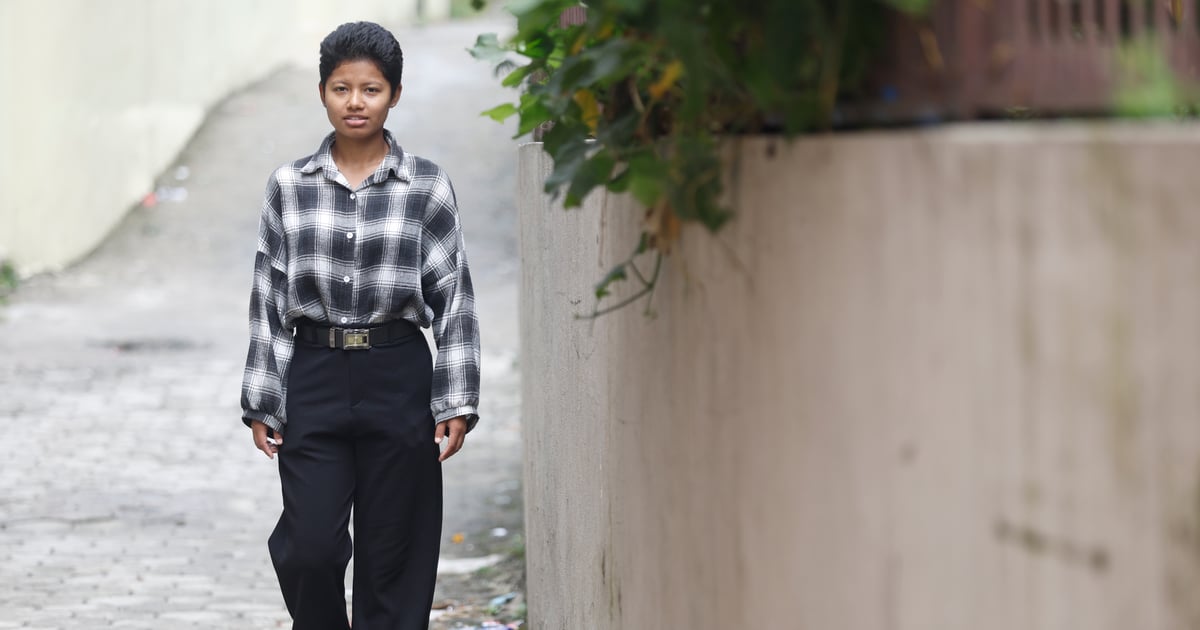
In her small, shared rented room in Sitapaila, Kathmandu 22-year-old Nisha Chauhan gets ready for her class at Padma Kanya Campus. She wants to be a counsellor and a social worker because she herself was abandoned at age 5 on the streets and rescued. Attempts to trace her parents failed, and she spent the next 13 years in a care home.
She has vague memories of her biological parents but considers the care home her family.
“The shelter had around 50 to 60 children and we were looked after by our house parents and caretakers,” Nisha remembers. “The environment was favorable and while growing up, I had many friends.”
At 18, Nisha was required to leave the care home because she was now an adult, and it has been a difficult adjustment.
She relocated to a small rented room which she shares with a friend. The care home where she was staying provided her Rs 5,000 a month, which was barely enough to cover her monthly expenses.
“It is a huge change to go from always having people around you to suddenly being on your own,” Nisha explains. “And you have to pay the bills, find a job, and juggle studies.”
Nisha now works as an intern at Department of Social Work at Padma Kanya Campus. However, since the internship does not pay her anything, she still has to rely on the limited amount that she gets from the care home.
For many young people in care, reaching adulthood and leaving shelters is a source of anxiety. They often struggle with their identity, face stigma and carry trauma from their past.
Young people leaving care are one of the most vulnerable groups in society. A 2019 research study in India shows that when care leavers step into the adult world without adequate education, vocational skills, financial support or a social safety net, they often are often trapped by poverty, homelessness, mental health problems and exploitation. Many end up on the streets.
The Constitution of Nepal, guarantees that the state is the ultimate guardian of children, responsible for their necessary protection and fulfilment of their rights.The Act relating to Children 2018 also states that children who are deprived of parental care or are on the verge of losing parental care should be placed at alternative care system. However, there is no clear policy for the aftercare support of young people.
“Shortcomings on the part of the government and poor data gathering have negatively impacted care leavers in Nepal,” says Ganga B Gurung, National Director of SOS Children’s Villages Nepal.
According to the National Child Rights Council, in the fiscal year 2021/2022,there were more than 10,000 children in 417 alternative care homes. However, there is little information on what happens to them when they leave the shelters after 18.
“The present system doesn’t recognise their vulnerability and need for extended support,” adds Gurung. “As a result, they are excluded from policies related to social protection and reservation.”