

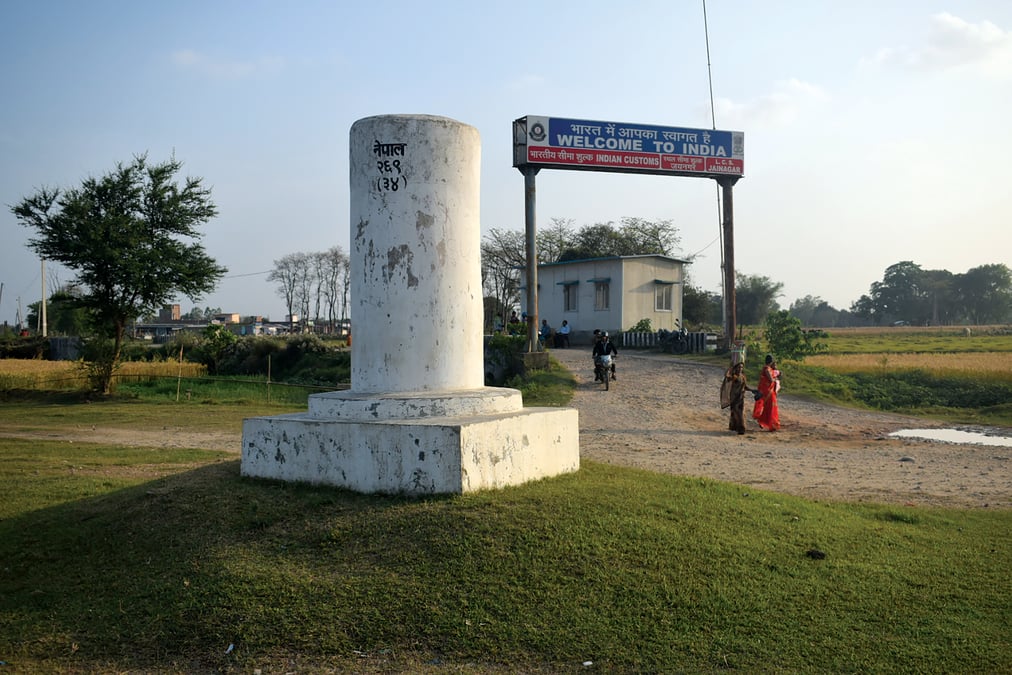
Bihar shares a 600km open border with Nepal. Right along the Tarai, there are linguistic, cultural and family ties binding the two sides together. In some places the border cuts right through households and farmlands.
Unlike what happened in Uttar Pradesh where the BJP was soundly defeated in the 2024 elections by the INDIA alliance, in Bihar’s election this month the National Democratic Alliance (NDA) that brought the BJP together with the Janata Dal (United) secured 200 of the 243 seats in the state assembly.
In Nepal, we make fun of politicians who want to become prime minister for the sixth time. But Nitish Kumar took his oath of office last week for the tenth time as chief minister in 20 years.
Also unlike Uttar Pradesh, the vote was not polarised along religious lines, signalling a deep transformation of Bihari society and the rising political consciousness of its voters.
The most important change must be the massive participation of women voters. Women did not merely make this election decisive, but altered its very character. A polyphonic social configuration emerged from this election that has broken away from entrenched caste-based vote banks of the past.
In 2006 during his previous tenure as chief minister, Nitish Kumar gave half the representation in local political units to women. Many people ridiculed it at first because there was a tendency for male politicians to bring in their wives to fill the quota.
Even if a woman won, in practice the husband called the shots. But over time competent women leaders emerged at the grassroots.
Just before this election, the Chief Minister Women Employment Campaign provided INR10,000 as the first instalment to 12 million potential women entrepreneurs. Once they start their own enterprises they get INR210,000.
Bicycles were distributed to girl students to improve their mobility, and sense of independence. Such schemes are helping to increase women’s leadership and self-reliance. Bihar’s youth and women are driving change.
Nitish Kumar also used federal investment to improve roads, bridges, electricity supply and irrigation across Bihar (“बिज्ली, सडक, पानी”). The transformation is dramatic for those of us who remember the time when roads on the Indian side of the border were much worse than the highways in Nepal.
CRONY POLITICS
Most of this change is in Patna and the main cities, but nearly 90% of Biharis live in villages. And despite these visible changes, Nitish Kumar has failed to bring about an improvement in the quality of education and healthcare. He has also used patronage with cronies to ensure his political longevity.
With 140 million people, Bihar makes up one-tenth of India’s population. But it is still the poorest state in India with an annual per capita income of $900 — one fourth of the country’s national average. Its main industry, just like in Nepal, is the export of manual labour to richer states in India and to the Gulf.