
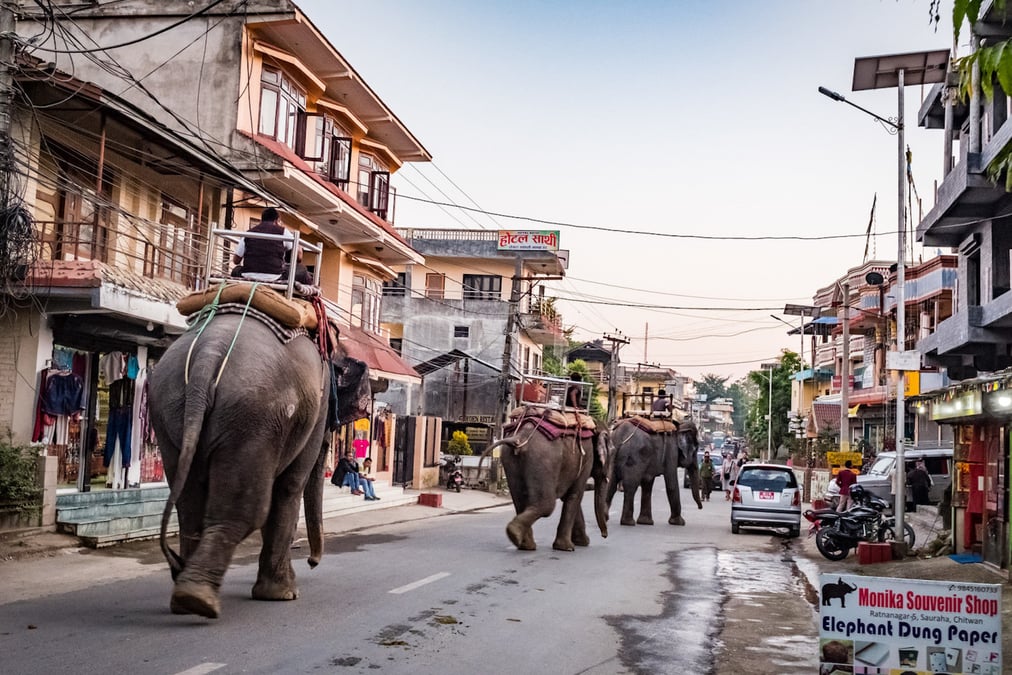
Elephants are highly social and sentient beings, making them one of the most beloved animals in the wild. They are also reverred in the Hindu world as the half-human half-elephant Ganesh, the god of success and prosperity.
Tourists journey from all corners of the globe to Nepal to watch the Asiatic elephant both in the wild and in captivity, significantly contributing to the nation’s economy. It is therefore essential to champion sustainable tourism that enriches both the economy and the welfare of captive elephants.
As the demand for elephant-based tourism grows, an increasing number of private owners and hotels have begun to keep the pachyderms. Many of them are captured from the wild and trained to be tame, while others are born in captivity.
Unfortunately, many owners remain unaware of the basic ecology and behaviour of elephant herds and their habits. People who own or pay to see elephants should know how to handle the mammals responsibly and refrain from endorsing harmful practices.
The ongoing Elephant Festival in Chitwan to welcome the New Year has drawn much criticism nationally and from around the world, especially 'games' like elephant polo and football. Despite the ban on certain activities during the festival, some organizers attempted to continue with elephant polo and similar events, which were ultimately rejected.
Income from tourism seems to be too tempting for many owners to continue employing elephants for entertainment, which involves psychologically and physiologically stressful training sessions to make elephants submissive and obey orders.
Understanding the basic biology of elephants is essential for promoting their well-being. Elephants are social beings with highly developed cognitive skills. They live in closely knit matriarchal family groups. The loss of or injury to a family member can lead to profound distress, mirroring human grief.
A calf is born into the herd after a gestation period of 24 months and mothers care for their newborns until they can feed on their own. The mother-calf bond is unique and remarkable, with mothers going to great lengths to protect their young.
Elephants communicate through calls, touch and chemical signals (pheromones). They typically live up to 60 years, much like humans. Their home ranges vary from 100-400 sq km, demonstrating the need for these megaherbivores to roam far and wide in search of resources and to favour their reproduction and survival.
When in captivity, it is critical to recognise elephants’ fundamental biological and behavioural needs, including maintaining social interactions, facilitating communication, ensuring proper rest and foraging, and, importantly, providing adequate space.
Most elephants used for safari tourism have been kept in captivity for extended periods, rendering them unsuitable for rewilding. To support their care, many private business owners host elephant safaris, organise festivals, or rent them out for marriage processions.