
Nepal is a multi-disaster prone country, and climate breakdown will make these compunded hazards more and more frequent.
But even through disasters that have struck over the past decades, Nepal has continued to endure silent emergencies and slow-moving crises that do not make it to the headlines.
Although infant and maternal mortality rates have gone down drastically and the average lifespan of Nepalis has doubled in the past 35 years, progress has flatlined in the past decade.
Nearly 25,000 children in Nepal still die each year before they reach their fifth birthday, more than half of them from causes that are entirely preventable through full vaccination, safe drinking water, clean air, and timely medical care.
That works out to about 40 babies and children dying needlessly every day, yet those fatalities never make it to the news. On the other hand, when a bus falls off the road and kills 20, it is given headline treatment in the national press.
All this to emphasise the fact that Nepalis have been suffering an unreported health emergency before, during and after past calamities like earthquakes and floods.
Silent crises and loud catastrophes like the latest flood disasters are happening side by side. The government’s response, therefore, must be two-pronged: tackle the immediate medical needs of those injured and exposed to diseases in crowded shelters, while simultaneously continuing to deliver affordable and accessible healthcare to the larger population away from the disaster zones
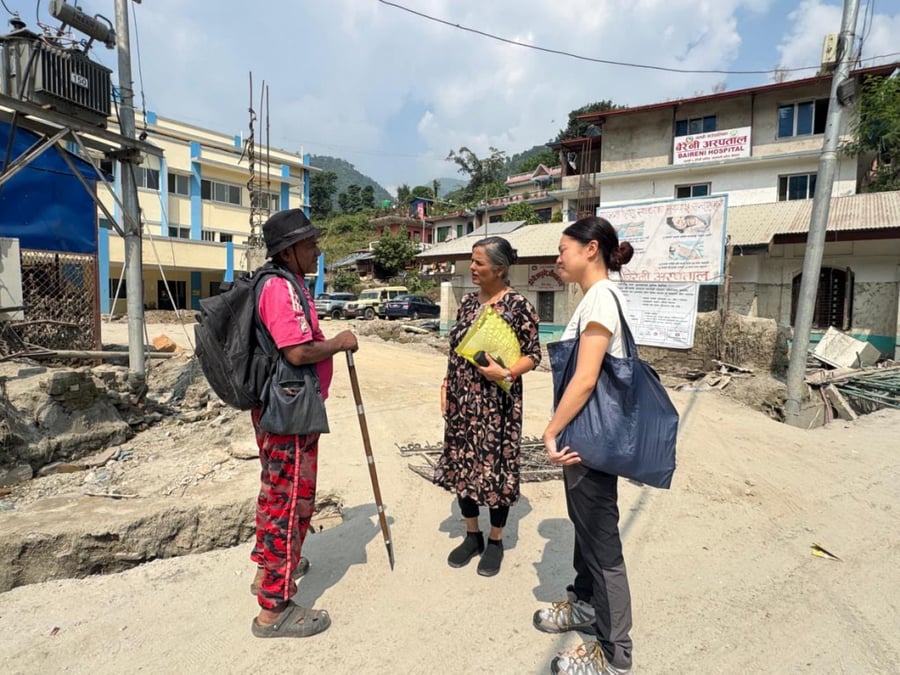
Besides rising female literacy and lower rates of child marriage, the other reason Nepal’s maternal mortality rate has come down is because of the spread of the road network that made institutional deliveries possible. The two flood disasters in August and October showed just how important access to hospitals and health posts becomes when bridges and roads are swept away.
As Srijana Devkota reported recently from Nuwakot in this paper, two months after the catastrophic flood, and as far as 80km downstream, the immediate emergency has been replaced by a silent health crisis.
‘Damaged roads and missing bridges have cut off access to health centres even to families who were not directly affected by the debris flow,' Devkota writes. ‘Even when there is access, it is dangerous and takes much longer.’
Rajendra Lama, a physician at Trisuli Provincial Hospital tells us that patient numbers have fallen by half since the flood because damaged roads and destroyed bridges have cut off his facility from its catchment.
The hospital can only be reached through a precarious cable basket that has to be manually pulled over the river, so Lama has deployed health workers to the far bank to treat patients with chronic ailments who need medicines or those who need referrals.
In a recent article in the journal Lancet, Abhilasha Karkey, Sudeep Adhikari and Buddha Basnyat of the Oxford University Clinical Research Unit Nepal refer to the need for the country's healthcare system to address not just the aftermath of disasters and be prepared for the next one, but also to broaden the focus to the wider medical needs of the country.
‘Nepal cannot eliminate every climatic or geological hazard,’ note the authors. ‘It can, however, build a health system capable of absorbing their effects without abandoning its essential functions. Resilience must mean more than saving lives immediately after a disaster: it must mean continuing to protect the health and dignity of affected populations throughout the months and years that follow.’
Nepal’s healthcare is a three-tier system: local health posts provide basic services, while district and provincial hospitals offer more specialised care. But government hospitals are often under-funded and under-staffed, pushing patients to seek out-of-pocket treatment at expensive private facilities.
Despite the Constitution granting universal health coverage, therefore, only half of the population have access to medical facilities. More than 50% of household expenditure is for treatment after accidents or disease.
Children are still dying of preventable caused because only 52% of children are fully vaccinated, 5% are still not reached. Lifestyle changes mean that chronic diseases like diabetes, and cardiovascular or kidney ailments are on the rise. Air pollution alone kills about 45,000 people in Nepal every year, and reduces lifespans by 3.5 years in Kathmandu.
Karkey, Adhikari and Basnyat say in their Lancet article that health emergency preparedness for future disasters must be designed to extend beyond treatment of trauma to protect the health of the wider population.
They conclude: ‘Increasingly complex climate-related hazards require … a durable, adequately financed health system rather than being assembled anew during every emergency.’