 |
A sked by a reporter whether the movie adaption of his children's book Where the Wild Things Are was too scary for children, Maurice Sendak responded, "If they can't handle it, go home. Or wet your pants. Do whatever you like. But it's not a question that can be answered." An enticing recommendation for a movie (and just the kind of response anyone might be tempted to fling at doubters and detractors). Of course, venerated authors such as Sendak can afford such barbs. But his response shouldn't be mistaken as his dismissing children's taste - rather, it is an unabashed endorsement of Spike Jonze's adaptation and a dismissal of sentimentalised and sanitised notions of childhood.
Sendak's endorsement problematises the accusation that Jonze has desecrated what some argue is a straightforward story of the power of imagination. In the swift strokes oft-employed in children's books, a young unruly Max, banished to his bedroom, whisks himself away to where the 'Wild Things' are. The Wild Things, ferocious creatures perhaps much like himself, have outsized appetites and compulsions. Staring into their eyes, Max commands their respect and obedience, and so awed are they with this little creature that they crown him their king. Of course, Max's first order of business as king is a 'wild rumpus', depicted by Sendak's illustrations in eloquent wordless spreads of bacchanalian abandon before the comforts of home draw Max back to where his hot supper awaits him in his room.
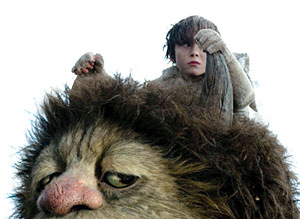
It may be difficult to believe, but Jonze maintains in the main the spirit, sensibility and narrative of his source, and uses the capacity of his medium to personify the Wild Things and explore the world they inhabit. Where the Wild Things Are, all fur, feathers, claws and maws, wisely chooses a tactile aesthetic that matches not only the feel of Sendak's book, but also that quality of undiminishing interest.
Just like Sendak's book, Jonze suggests, but in this case also expands, tantalising reflections between Max's internal conflicts and the outlandish landscape he finds himself in. The Wild Things are not mere nameless monsters, but realised characters with human needs and fears. Yet Jonze disallows pat reduction or explanation. It's easy to forget that Sendak's work wasn't initially received well by adults, perhaps because it was so keyed into the uncomfortable corners of our psyche. The rage, hostility and lonely resentment that simmers beneath the raucous exuberance that carries the narrative is successfully transferred to the movie.