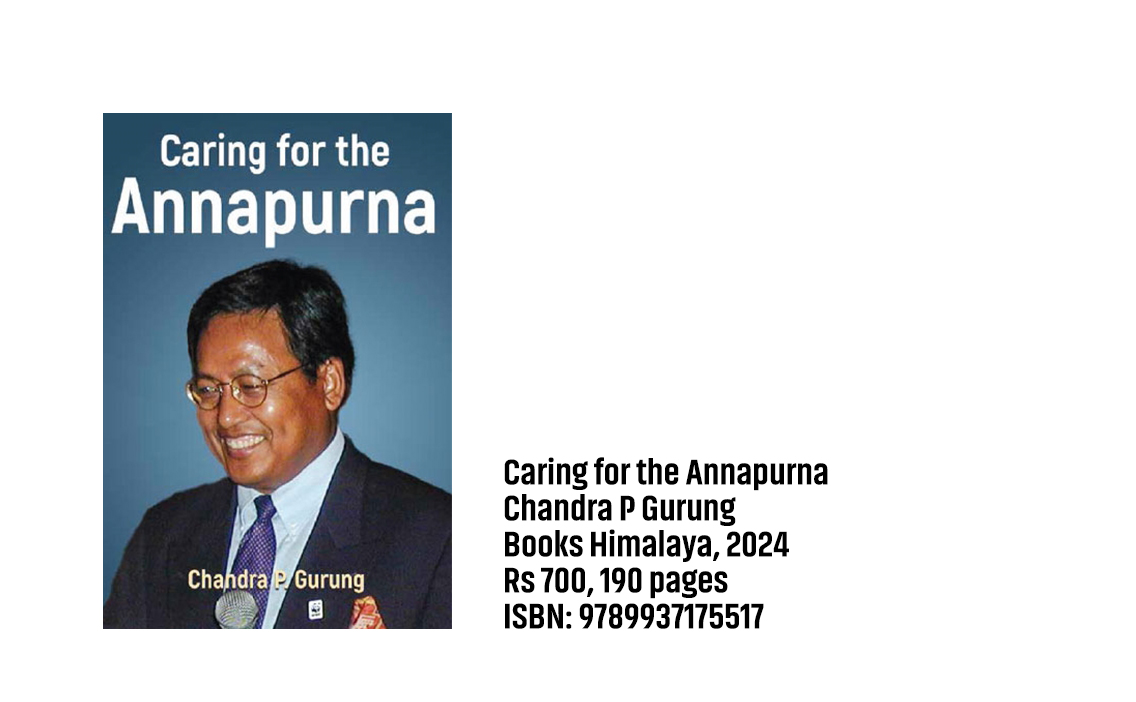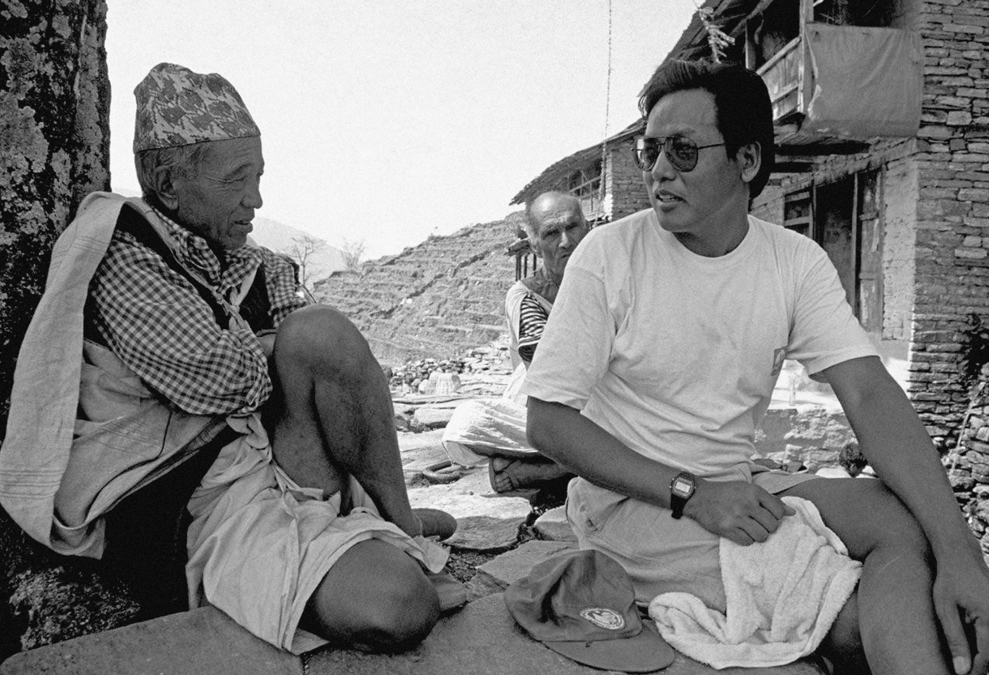
Chandra Prasad Gurung grew up in the village of Sikles below the Annapurnas where he was steeped at a young age in the rhythms of the seasons that determined planting, harvesting, herding livestock to high pasture, and sustainable natural resource management.
These were indigenous practices of the Gurung community passed down through generations: collective decision-making to take just enough from nature to allow it to recover. That was how the seed of a new conservation ethos was planted in Chandra Gurung’s mind, later to flower when he went on to complete two masters degrees and a PhD in geography from the University of Hawaii.
On return to Nepal, the King Mahendra Trust for Nature Conservation included him in a task force to design a national park for the Annapurnas with Mingma Sherpa and Broughton Coburn. The team crisscrossed the entire region in 1985 for two months on foot from Sikles to Ghorepani, from Manang to Lo Manthang just as trekker numbers on the circuit were increasing.
What the team heard from people in tea shops and verandahs was almost unanimous: we do not want a national park here. Locals had heard about Chitwan, Sagarmatha and Rara where residents were either evicted or restricted from taking part in traditional activities by national park authorities.
So, the team methodically planned interventions to allow a balance between lifting living standards with environmental protection. What if conservation itself paid for development and improved the lives of residents?
Read also: Conserving conservation, Sara Parker
Their findings were presented to the government, and approved. The Annapurna Conservation Area Project (ACAP) was a departure from the western-inspired model of complete wilderness protection by resettling people out of their ancestral lands. The Conservation Area concept was later replicated in Manaslu, Rolwaling, Kangchenjunga and Api Saipal.
Chandra was working on a book documenting details of the step-by-step approach to establishing ACAP and other protected areas. At age 56, Gurung and Mingma Sherpa along with Nepal’s top conservationists were among the 24 people killed in a helicopter crash in 2006 after a handover ceremony of the 2,000 sq km Kangchenjunga Conservation Area to local communities in Ghunsa.
Chandra’s manuscript had been lost, but was fortuitously located at the Blue Mountains National Park in the garage of an Australian academic by Hum Gurung, a student of Chandra. Hum then worked with the Chandra Gurung Conservation Foundation to posthumously publish the book, Caring for the Annapurna, which was launched last week in Kathmandu.