
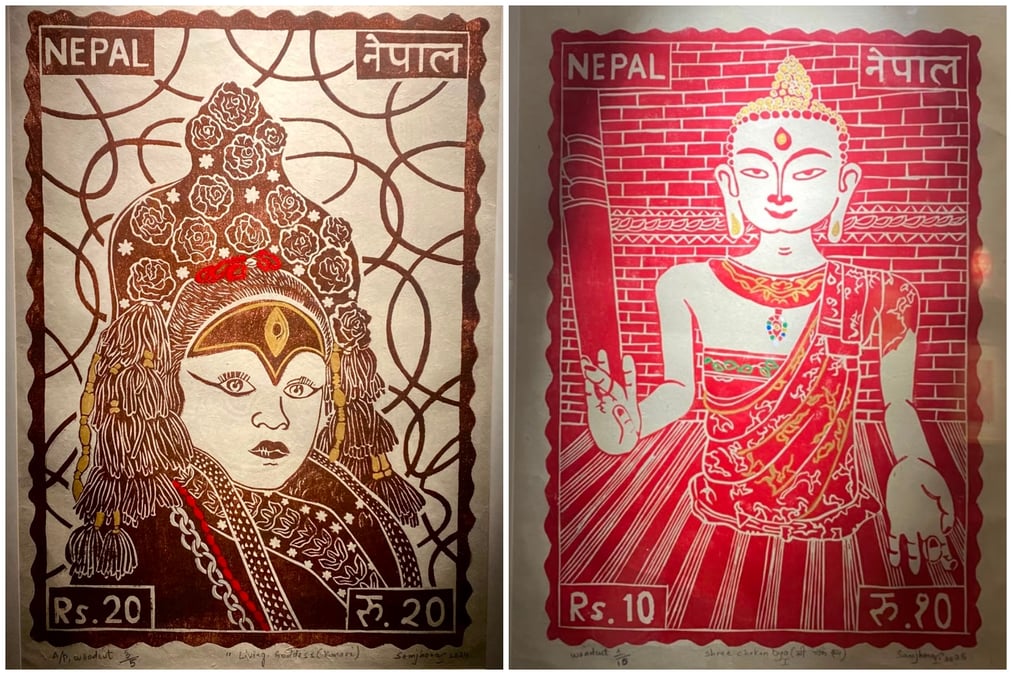
Community life in Kathmandu Valley has always centred around its bahal, the courtyards of Buddhist monasteries set back from its busy streets that offer meditative refuge.
Just off the chaos of Thamel, through a low, narrow gate and dwarfed by the towering Chhaya Centre nearby, is Bhagwan Bahal. Historically known as the Bikramashila Maha-Vihar, it is an oasis of tranquility and one of the oldest bahal in Kathmandu where devotees gather for festivals and rituals.
Artist Samjhana Rajbhandari grew up in this sacred sanctuary, and for her it is more than a historical site, it is a repository of childhood memories. (Samjhana means memory.) So it is fitting that her solo exhibition of woodcut art should feature the courtyard.
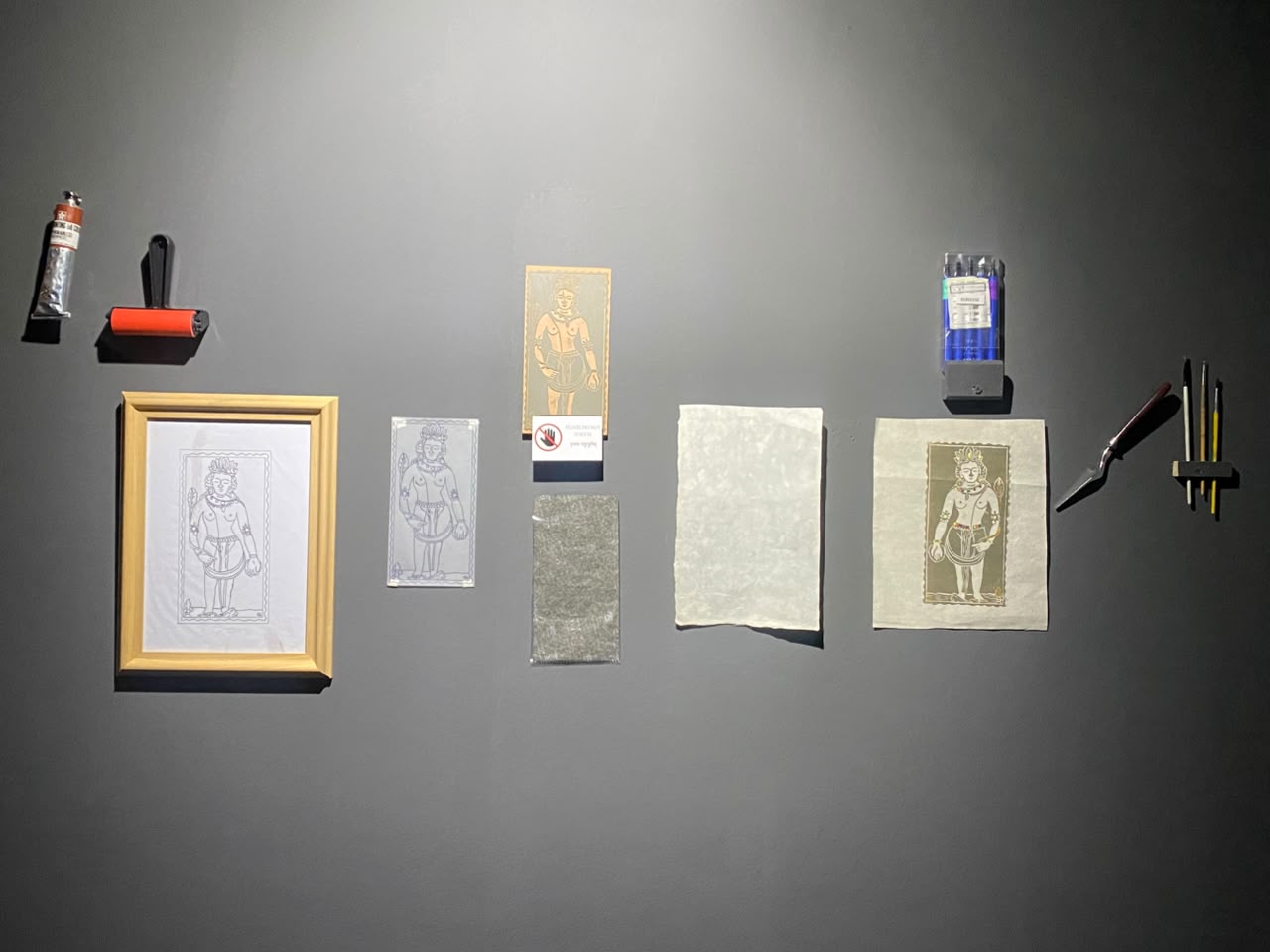
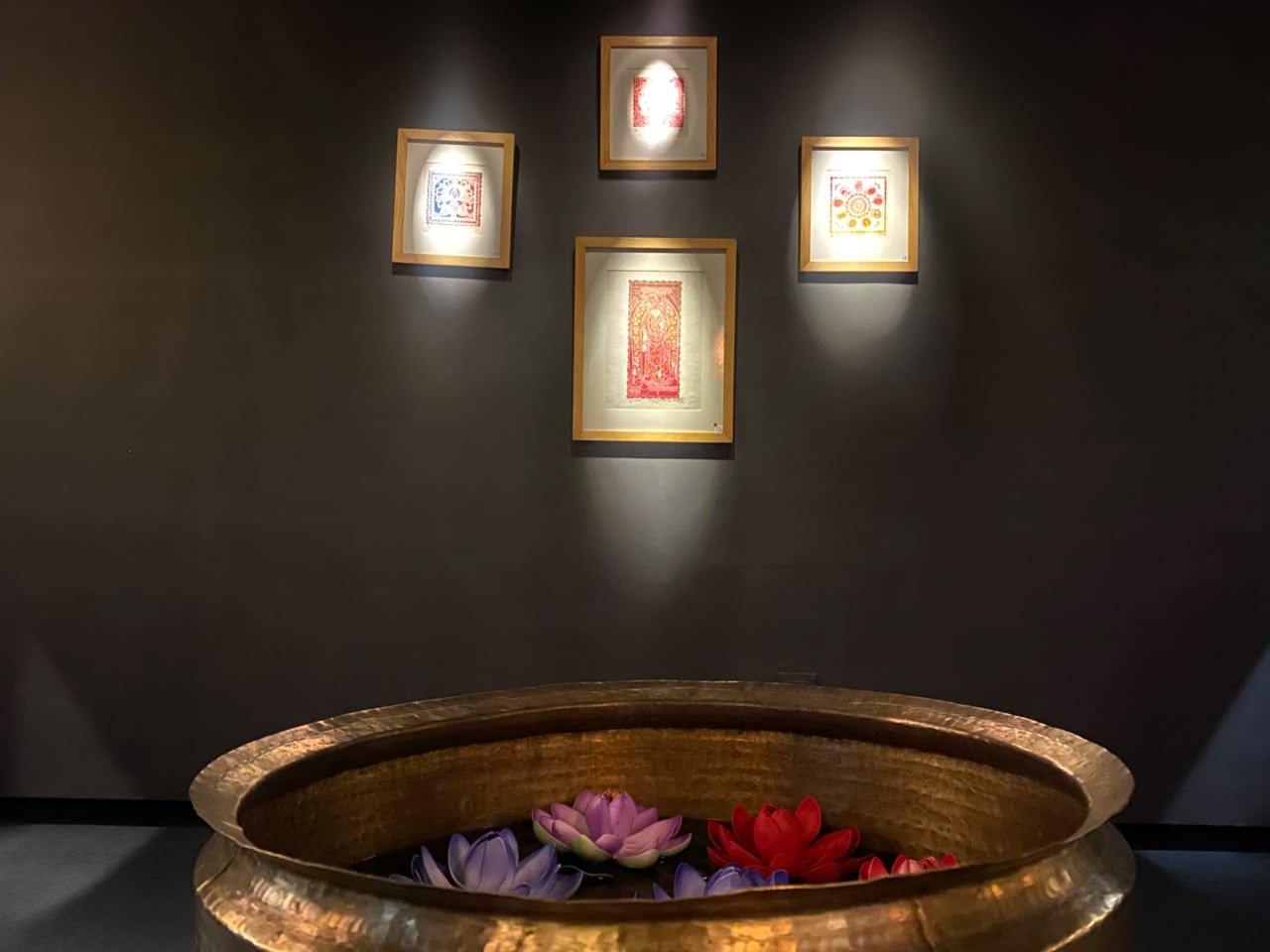
Impressions of Bhagwan Bahal is on display at Gallery 108 in Darbar Marg, translating her intimate memories and familial oral histories into a stunning collection of woodcut prints, a meticulous, unforgiving medium.
The artist must trace an image onto paper, transfer it onto a wood block, and precisely carve out a mirror image before rolling it with oil paint to press the final imprint onto traditional lokta paper.
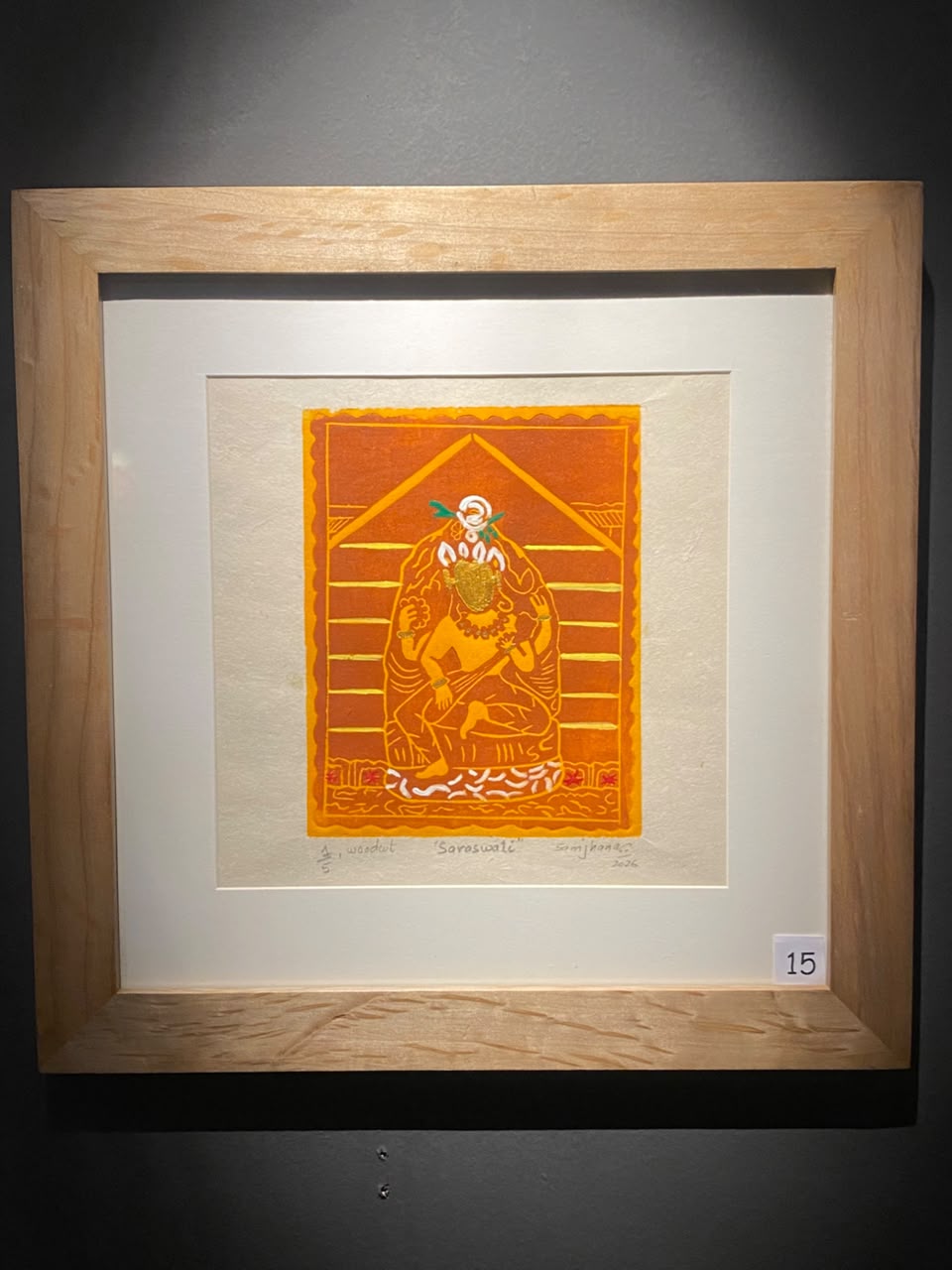
Rajbhandari uses this tecnhique masterfully, transferring the raw texture of the wood surface to vibrant colours that mimic the original pigments of the deities and antiquities of the site.
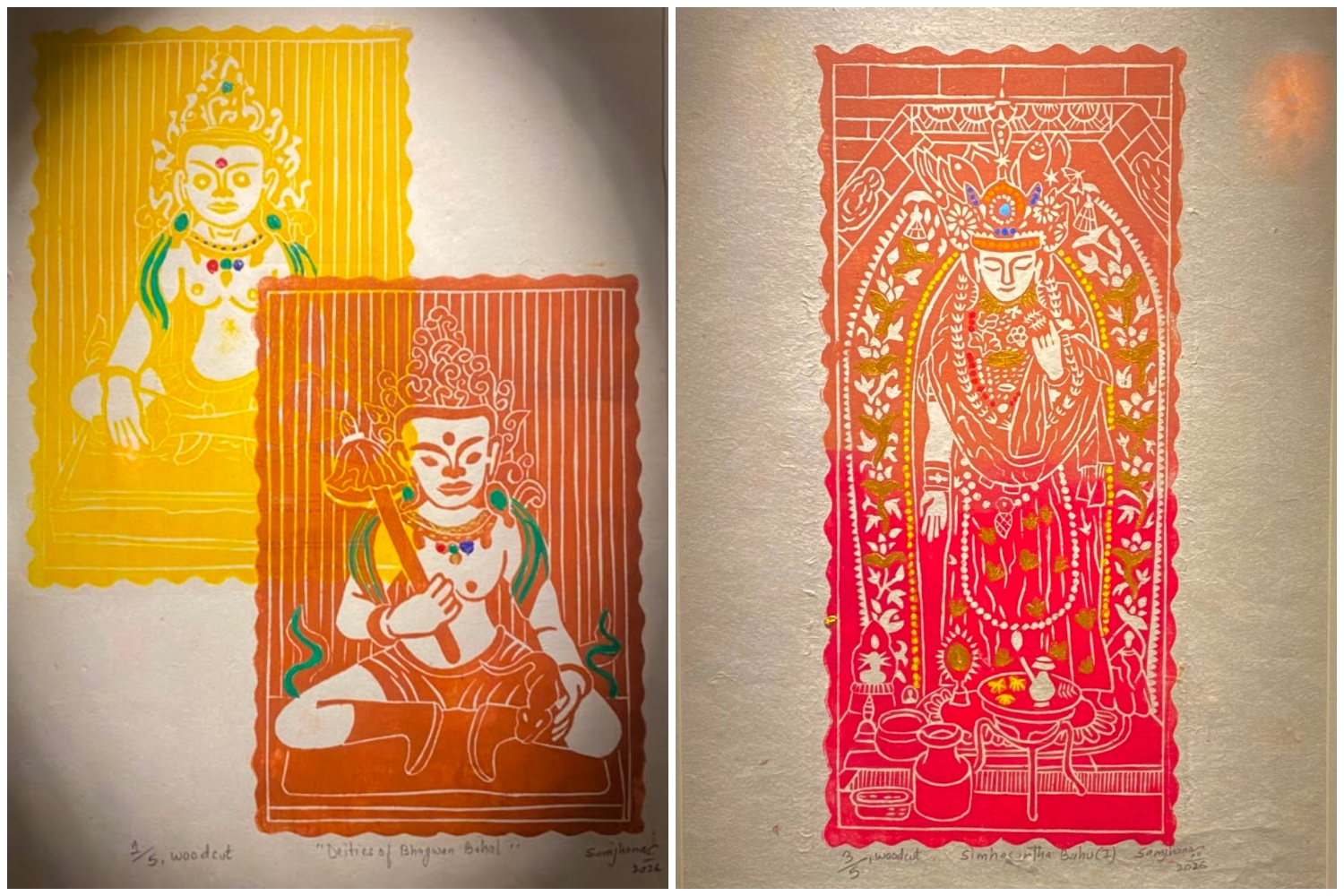
All bahal have a central deity, and at Bhagwan Bahal it is Simhalasarthabahu, a Newa merchant who traveled to Tibet, alongside shrines dedicated to Bhairav and Ganesh. The intricate carvings of the jewelry and the ornately carved toran tympanum above temple doorways are particularly striking.
In one of her most intriguing stylistic choices, Rajbhandari has painted the faces of the figures on the toran entirely in gold leaf, devoid of facial features. “I left the faces blank and golden because I wanted the viewers to see themselves in these divine images,” Rajbhandari explains. “It could be anyone; it could be you, or it could be me.”
Another captivating piece features a majestic flying horse. It is believed that in Tibet Simhalasarthabahu once realised his companions had been trapped by yakshini demonesses, and he escaped back to Kathmandu on a balahaka, a flying horse.
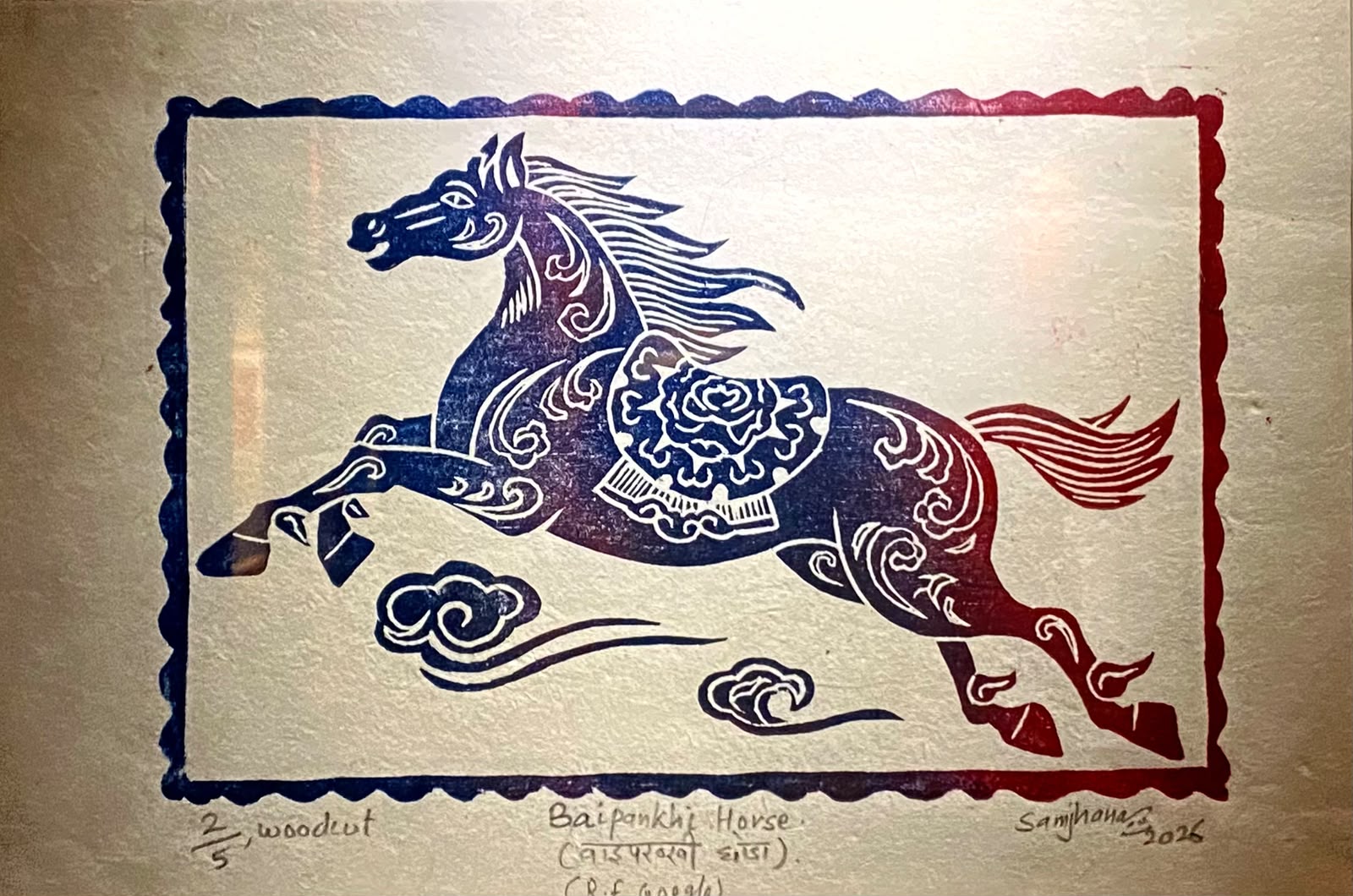
While Rajbhandari uses contemporary imagery to help visualise the form, the core inspiration came straight from the bedtime stories told by her mother. Colour plays a narrative role in the exhibition. The representation of Chakan Dya stands out against a dual-toned background of pink and red, radiating a vivid warmth that makes the deity feel almost alive.
Intriguingly, some images of the Kumari, Chakan Dya, and the Bhagwati temple are framed within the borders of vintage postal stamps, evoking a profound sense of nostalgia. “Over time, our means of communication have radically shifted,” says Rajbhandari. “Stamps used to hold immense emotional and physical significance. By rendering these sacred spaces as stamps, I wanted to rmemorialise my childhood and preserve that era for future generations.”
The exhibition also serves to remind us of the environmental importance of ponds in Kathmandu Valley as a way to store monsoon rains to recharge ground water so public spouts would not go dry. One of those ponds was next to Bhagwan Bahal.
Chakan Dya is the most culturally vital deity of Bhagwan Bahal. Every year, on the day after Holi, the idol is brought outside, ritually cleansed, adorned with ornaments, and paraded through the city even through the procession is overshadowed by bigger festivals like Indra Jatra.
“Bahals in Kathmandu carry deep, insular historical significance,” Rajbhandari notes. “We need to be aware of these spaces, prioritise their preservation, and reconnect with the traditions they safeguard.”
And in an era increasingly dominated by the virtual reality of social media feeds, Impressions of Bhagwan Bahal does exactly that — it forces the viewers to pause and contemplate Kathmandu’s sacred, tranquil past.
Impressions of Bhagwan Bahal
by Samjhana Rajbhandari
Gallery 108, Darbar Marg
Open 11:00 AM – 7:00 PM
Until 7 June