
|
|
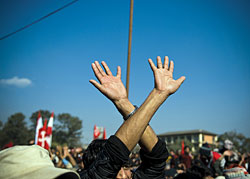
Tuesday 22 January could prove to be a defining date in our collective memory. In turbulent periods of history, uncertainty is the only certainty. Days break with a strange mixture of hope, despair and foreboding in the air. Dusk brings a resigned sense of relief. But even in the confusion of constant change, some days are more tumultuous than others.
From early morning, rumours about the prime minister's health began spreading through Kathmandu. Meticulously planned and carefully orchestrated tyre burning shut down the city's thoroughfares, ostensibly in protest at the previous evening's petroleum price rise. A madhesi officer at the Agricultural Development Bank in Rajbiraj was shot dead for refusing to hand over Rs 3 million. In Khotang, for the first time since the civil war ended, three police posts were overrun and their arms looted by a mysterious crowd, which later clarified its intent to prevent the constituent assembly elections at any cost.
For hope, we had to look abroad. In New York, UNMIN was denied an expansion of its role, reportedly at the insistence of the Chinese. In New Delhi, the British and Indian prime ministers welcomed the announcement of a date for Nepal's constituent assembly elections. Together they urged all parties "to cooperate and maintain the declared date to ensure a free and fair process, open to all without intimidation." For good measure, they added a pious sermon: "It is for the people of Nepal to decide their own future." Phew! What a relief! At least in their eyes, we are masters of our own destiny.
This destiny, however, seems to be slowly slipping from our grasp. Powerful forces opposed to the sovereignty of the people have begun to act in silent concert to subvert all efforts to hold the elections. They have been dormant until now because they didn't believe the Seven Party Alliance was serious about the polls. With Maoists and mainstreamers at each other's throats, there was no need for a third party to meddle. But several simultaneous developments have changed the status quo.