
 |
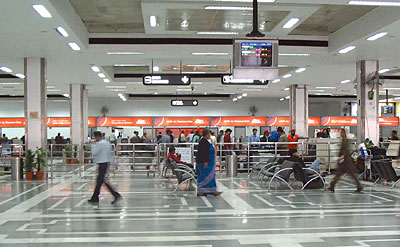
NEW DELHI. Arriving at Delhi's gleaming new Terminal 3 gives one the impression that this city has indeed upgraded itself to meet international standards. Spread over 500,000 square metres, this is one of the world's largest terminals, built to handle 34 million passengers a year. Although you may still have a few complaints (baggage losses, arrogant and/or untrained staff), it's a tremendous improvement from the congested, polluted, and uncomfortable terminal building of the past. An urban planner told this beed that if India had depended on aid agencies to build an airport of this magnitude, then it would have taken ten years instead of just four. The biggest lesson for Nepal is that large infrastructural developments might be better off in the hands of local private operators than donors.
Rapid development of urban infrastructure obviously facilitates one's ability to do business in a city. The expanded Delhi metro network has helped decongesting city roads and rendered commuting easier and faster, decreasing the economic costs of traffic jams. The over-charging cabbies complain that business is down but surely mass rapid transit is a crucial factor in making cities livable. We may still be battling hours of daily loadshedding here, but it is important that we explore the possibility of rapid electric transit systems for intercity traffic. Malaysia, a country with a similar population to Nepal, consumes 22,000MW while we are projected to be using just 5,000MW by 2025. It's time we calculated domestic energy demands and plan for self sufficiency in supply.