
|
|
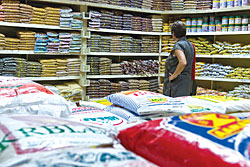
Supermarket shelves are emptying throughout the world. From Argentina to the UK to Japan politicians have worried looks and the newspapers are gravely charting the rising food prices and dwindling stocks.
In Haiti, the food crisis has already toppled the government. Haitian governments are toppled famously easily, but even in India, the UPA government may lose the next election if the opposition exploits the issue resourcefully enough. The Chinese state think-tanks are working overtime to ensure that the country's vast infrastructure and resources are able to supply food to all of its vast population.
In Nepal, the focus has been on the upcoming government in the constituent assembly, so the food issue has not been much more than a few reports in the papers. But we should not ignore this matter. If inflation fuelled by the food shortage gets out of control no one knows where it might stop. Nepal is lucky to have its currency pegged to the Indian rupee, which is still strong against the US dollar. But a big devaluation of the rupee, as happened in the early nineties could lead to chaos here as much as in India.
The global food shortage is being exacerbated by growing consumption of both foodstuffs and other commodities, which is now close to outstripping supply.
Consumption has increased on four counts. Firstly, the growing affluence in developing countries is increasing the demand for grain. Secondly, the advent of large retail stores like supermarkets and hypermarts which stock a large quantity and variety of foodstuffs means that more food is in the storeroom. Thirdly, people are eating more meat, which necessitates more grain to feed more animals. And fourthly, now that the search is on for renewable energies and alternatives fuels, much former cropland is being given over to producing biofuels.