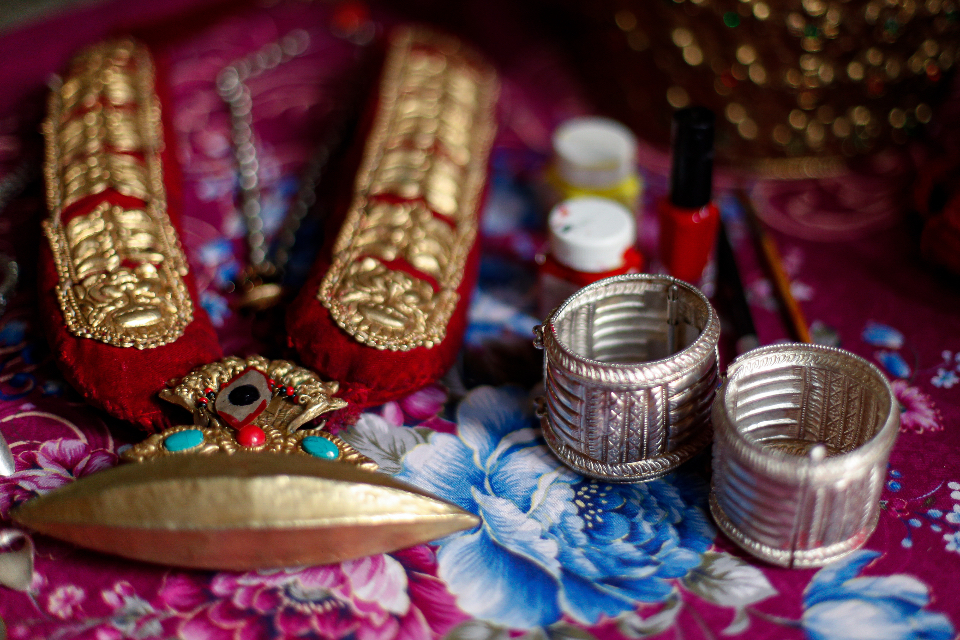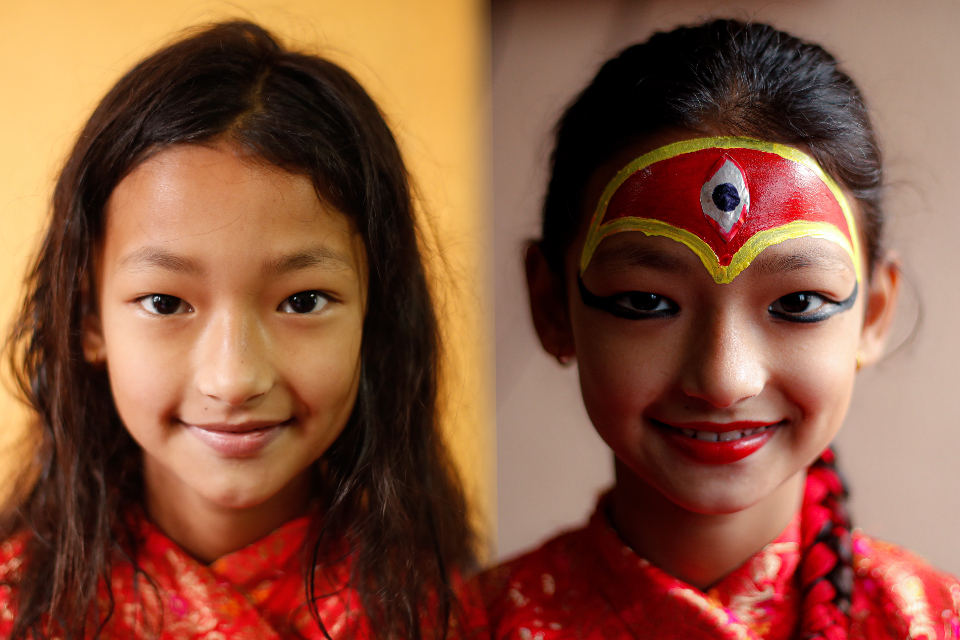
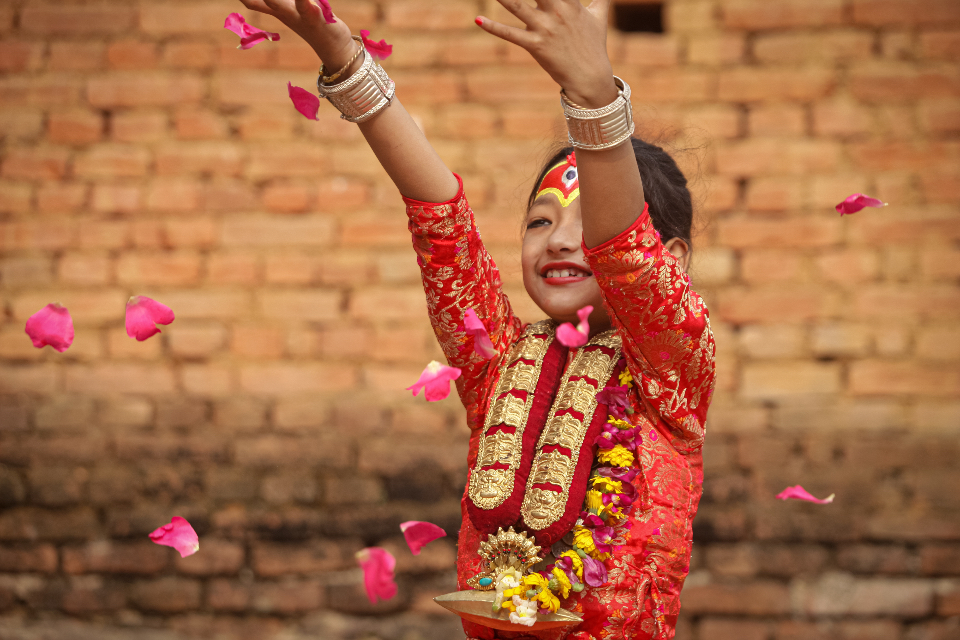
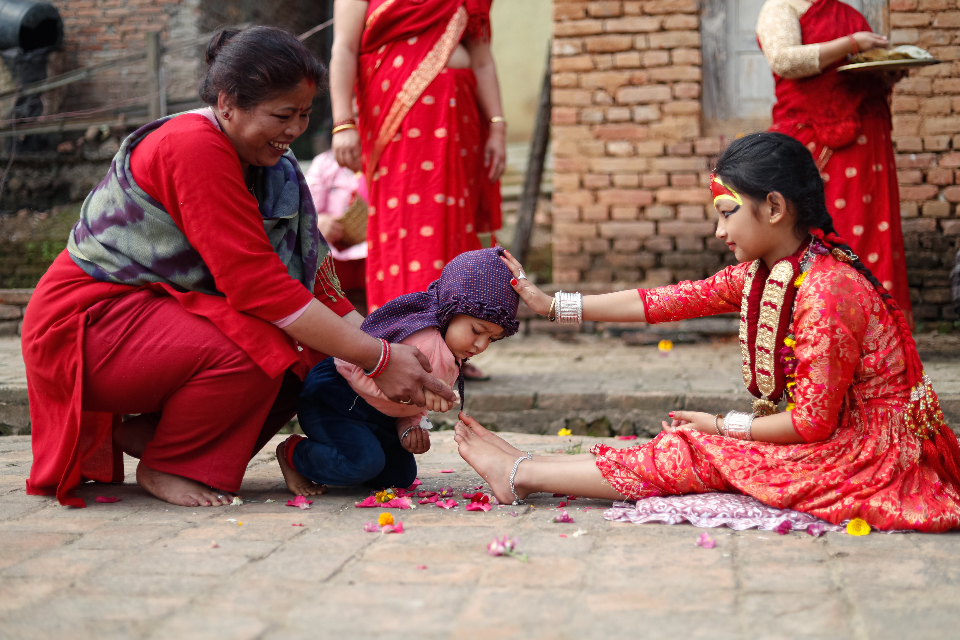
Last week on Ram Nawami, Ojaswi Gulu woke up earlier than usual and took a ritual bath. Once done, instead of her everyday clothes, she put on a sacred red attire that she wears on special occasions like this.
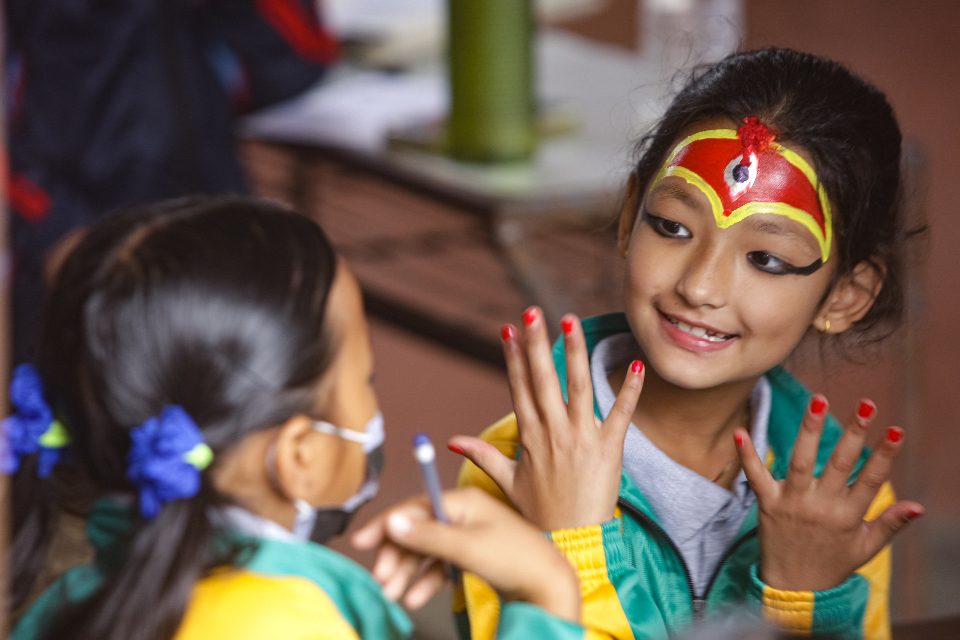
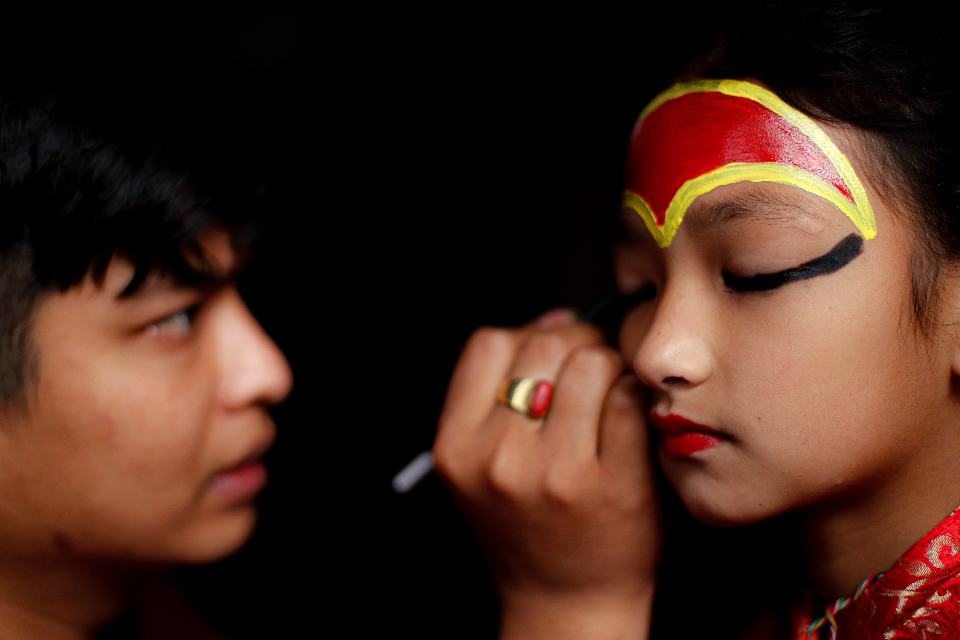
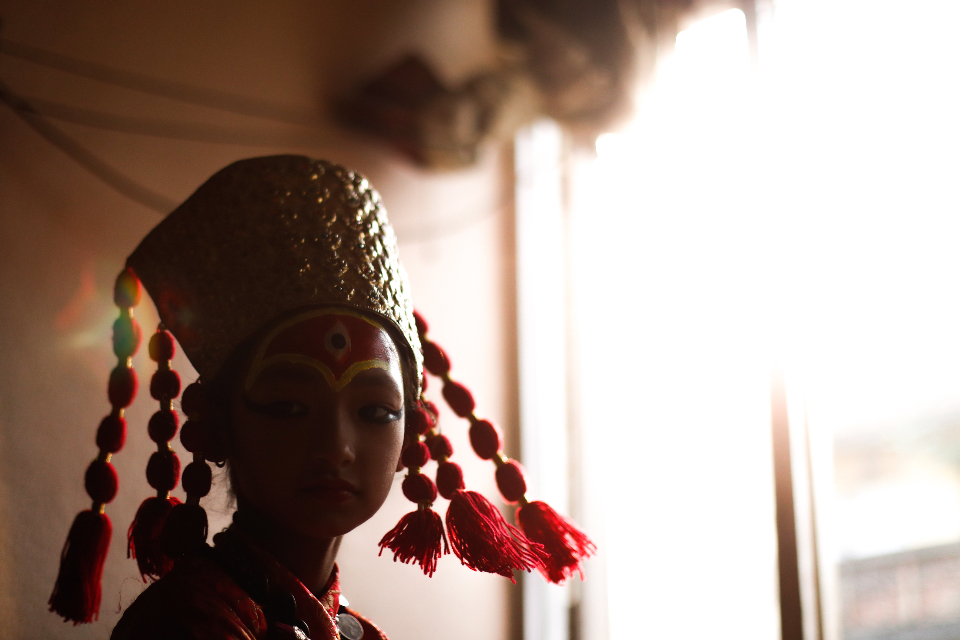
Her uncle Prabin Shrestha then painted a crimson moon with yellow lining on her forehead and adjusted her crown and Vajra, the third eye that distinguishes her from the mere mortals.
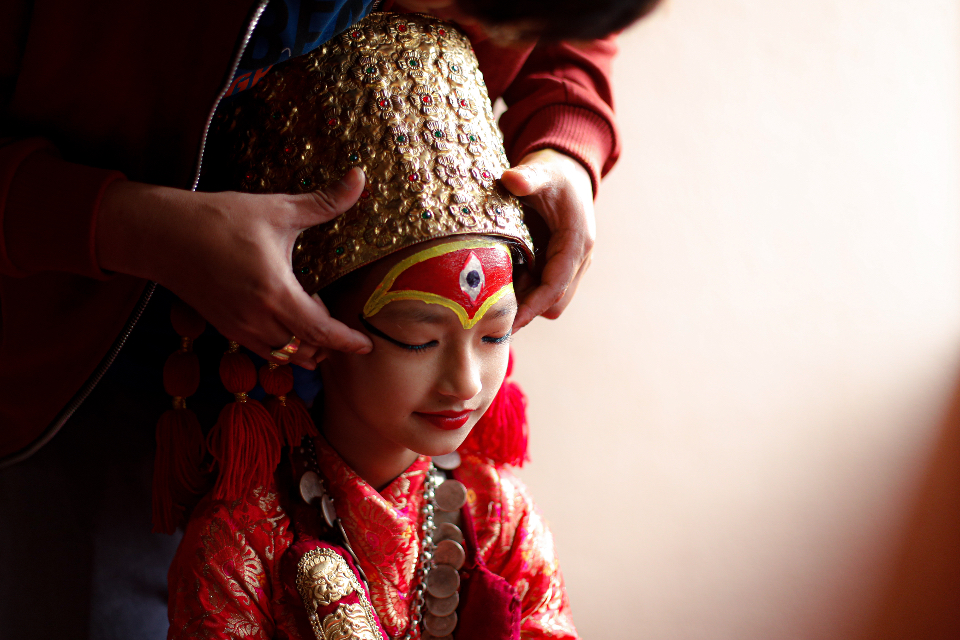
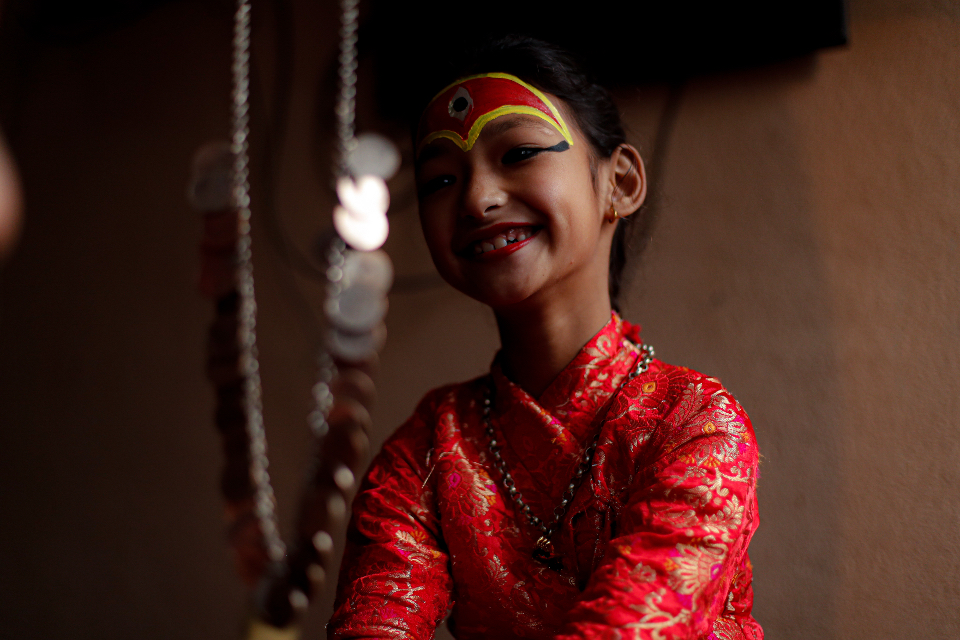
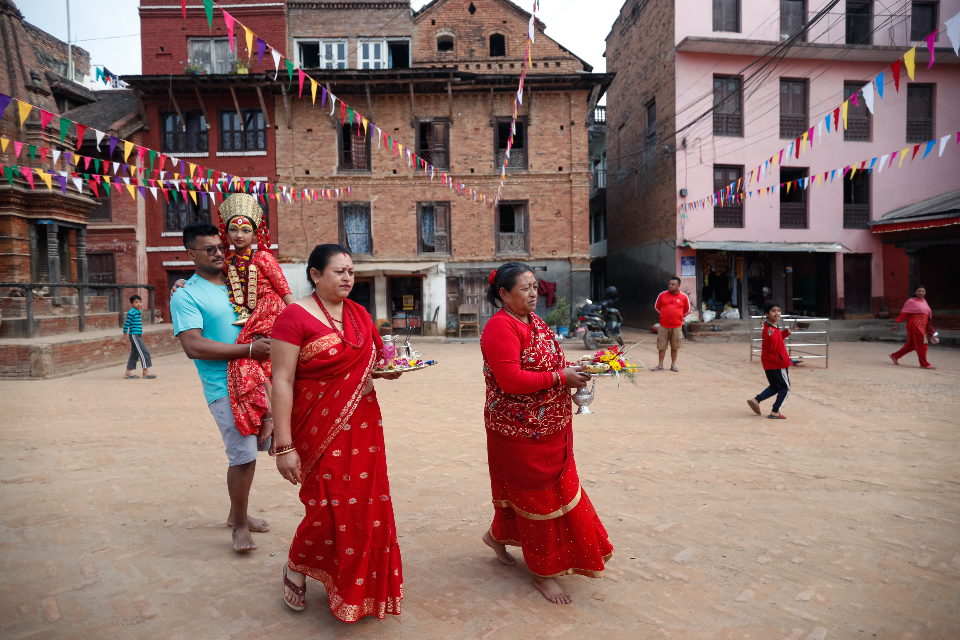
Dressed in her regalia, she made her way to the altar throne on the prayer room on the top floor of her house. Her father then carried her to the Layaku Darbar 15 minutes away, where she participated in a puja for the goddess Taleju Bhawani, of whom she is considered a reincarnation.
Eight-year-old Ojashwi is the Kumari, the living goddess of Panauti, an ancient Newa town 35km east of Kathmandu. She was selected when she was just eight months old while still being breast-fed by her mother. She is now almost at the end of reign as the living goddess.
Read also: A goddess among people, Shristi Karki
“We already have informed the hyumat, that she would need to undergo the process of Ihi: and Gufa life rituals since she is at the age of mensuration,” explains her mother Rohini Gulu, referring to the administrators of the House of the Kumari.
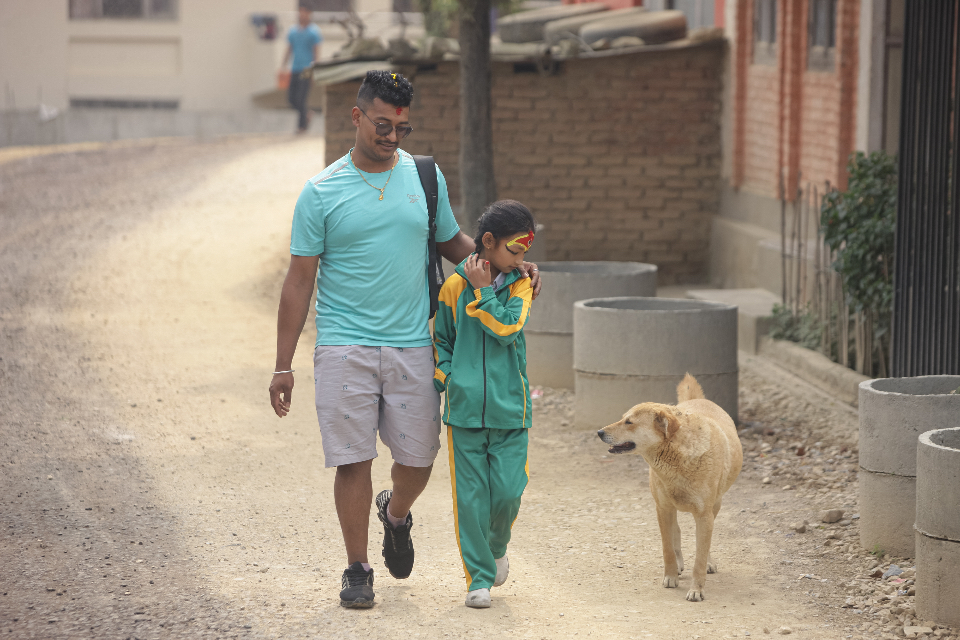
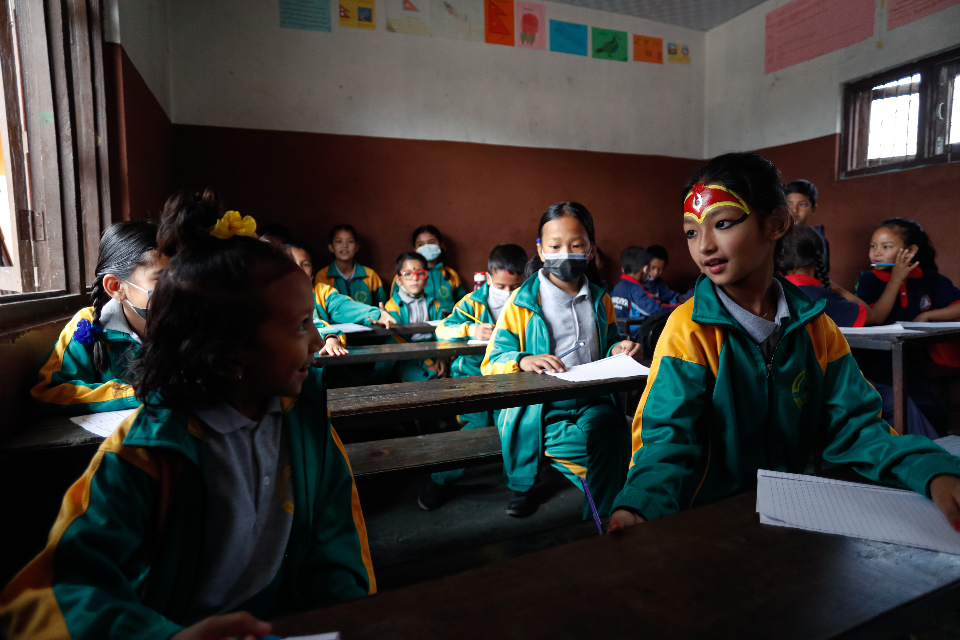
Unlike the royal Kumari of Kathmandu who has to reside in a special house in Basantapur away from her family, the living goddess of Panauti stays with her parents, goes to school like every other child and spends time playing and watching tv.
On any other day, her schedule starts with preparing for school, and walking to school with her brother, Manan, and one of their parents.