
Only a handful of people who witnessed the 1934 megaquake as children are still alive. And the memories of 2015 are fading fast.
We were shaken, but have not stirred into action. We have not even started preparing to be prepared for the inevitable, for it is not a question of ‘if’ but ‘when’.
Thursday 15 January was National Earthquake Safety Day commemorating the 1934 disaster that killed 10,000 people in Kathmandu Valley at a time when its population was barely 100,000.
Nepal is in an active seismic zone, and a really big one is overdue in the seismic gap in western Nepal where there has not been a megaquake for 500 years. The 7.8M quake in 2015 did not completely release the tectonic stress below Central Nepal.
An 8M+ earthquake epicentred in western Nepal will be even more violent than the 2015 one in Kathmandu and will be powerful enough to cause destruction across northern India as well.
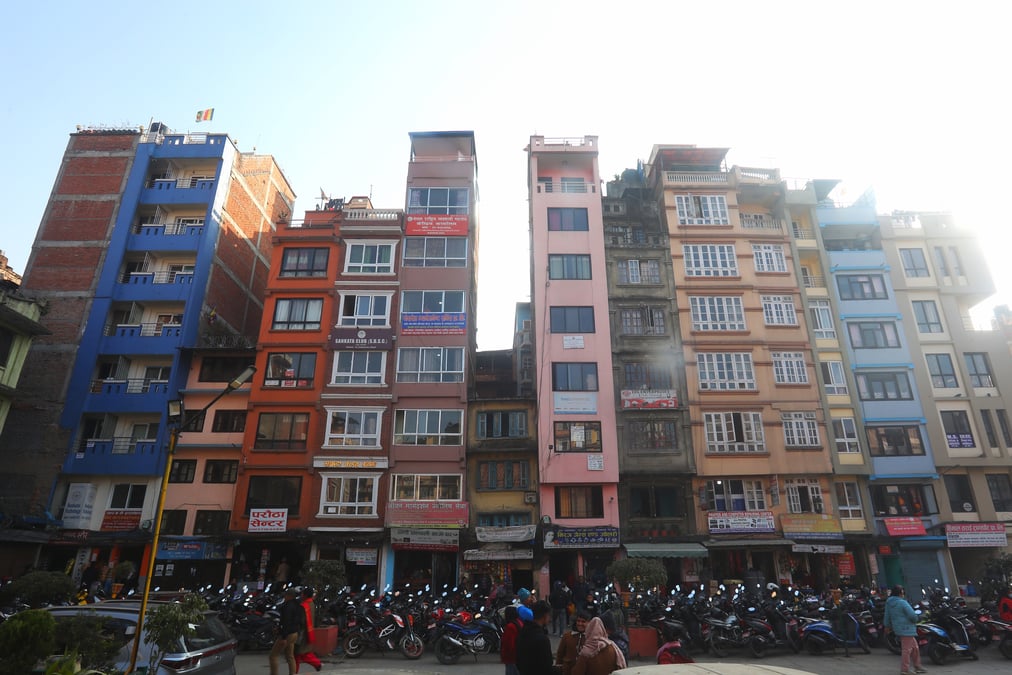
We Nepalis are resilient, but we are also complacent and fatalistic. How else does one explain the unsafe and unplanned building construction in Kathmandu, Pokhara and other towns despite frequent reminders of what quakes can do?
Most designs are ad hoc and follow no engineering logic. Reinforced Cement Concrete (RCC) is now widespread across the country since such structures mostly withstood the 2015 event. But structural engineers say most concrete buildings are substandard, and can be death traps. Also, the country lacks equipment and training for search and rescue in cement houses.
FIRE HAZARD
If an earthquake struck Kathmandu on a windy winter evening, there is the added risk of fires from gas cylinders in collapsed buildings spreading across the densely packed city core. Fire trucks will not be able to reach those areas because the streets will be blocked.
Seismic risk is now amplified by climate breakdown. Nepal now needs to factor in the co-hazard of massive avalanches and Glacial Lake Outburst Floods (GLOFs) triggered by future earthquakes. There are 41 potentially dangerous glacial lakes in the region, and 27 of them are in Tibet feeding rivers that flow into Nepal. A megaquake there could cause multiple simultaneous GLOFs.
If the 2015 earthquake had not happened on a Saturday, tens of thousands of children could have been killed in the 7,000 schools that were flattened. More than 2,500 government buildings came down, and would have killed and trapped many if it had not been a weekend.
Schools and health facilities retrofitted before the disaster were unscathed, and served as shelters for survivors. Chhatrapati Free Clinic (CFC) was reinforced three years before the earthquake for Rs5.2 million, and with support from National Society of Earthquake Technology (NSET), 800 community members were trained in search and rescue.
Bhuwaneswori Secondary School in Bhaktapur and Bal Bikas Secondary School in Kathmandu both survived 2015 because they had been retrofitted. Singha Darbar, the Supreme Court and the Department of Roads buildings were also made seismic resistant after 2015 quake, but the arson attacks on 9 September gutted them.
While many private residential homes built after 2015 continue to flout building codes, municipalities are now stricter. New schools and colleges, hospitals and high rises now have to meet stringent requirements for seismic resistance.
Nepal is a hotspot for many types of disasters — earthquakes, floods, droughts, glacial outbursts, wildfires. These are not ‘natural’ disasters, they are human induced. Earthquakes do not kill people, poorly-built buildings do. Climate breakdown is anthropogenic.
Waiting for a disaster to strike means we have waited too long. Search and rescue readiness are well and good, but much more important is preparedness — seismic resistance structures especially of public buildings, strict zoning to establish open spaces, pre-positioning supplies and simulated drills.
We do not know how much time we have before the next one. But it is not too late to start preparing.
Sonia Awale