Four months ago, videos of Nepal’s rich, famous, and well-connected spread like wildfire on digital platforms. They were flaunting their lavish lifestyles while many Nepalis could not make enough to get by.
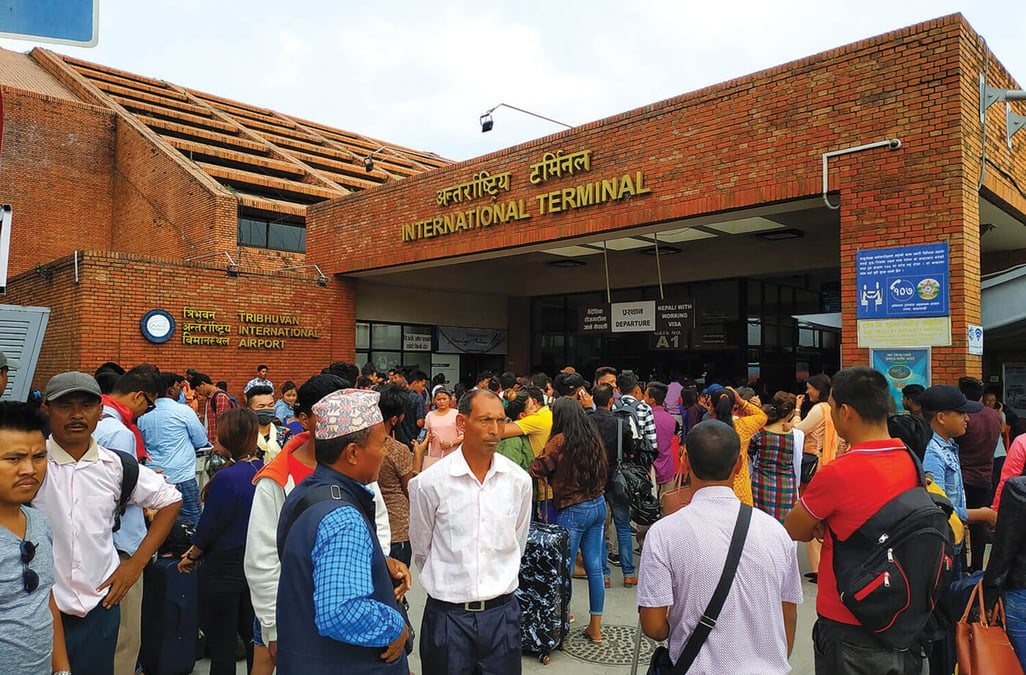
This display of nepotistic privilege resonated in particular among the millions of Nepalis who are toiling overseas, or will soon have to migrate to provide for their families.
What started out as a protest against #NepoKids and corruption snowballed into violence that brought down the government. The youth envisioned a future where they would not be compelled to leave a country where rulers offer nothing to them.
Ironically, the arson and vandalism of international hotel brands, corporate houses and businessmen has dampened the investment climate which is driving more Nepalis abroad. The Labour Ministry has announced plans to make it easier for those affected by the protests to obtain overseas working permits.
Even those who wanted to stay in Nepal might now find it easier and more prudent to leave. Over 200,000 Nepalis have obtained labour permits in the four months since the September unrest.
Since 2011, 7.6 million Nepalis have officially gone to work overseas, according to the 2024 Nepal Labour Migration Report released by the Ministry of Labour, Employment and Social Security last month. Of them, 2.8 million have renewed their permits.
The report highlights labour migration trends, governance, policies, and data for the fiscal years 2022/23 and 2023/24, and although a bit outdated, the figures give an idea of the scale and spread of Nepal’s migrant workers.
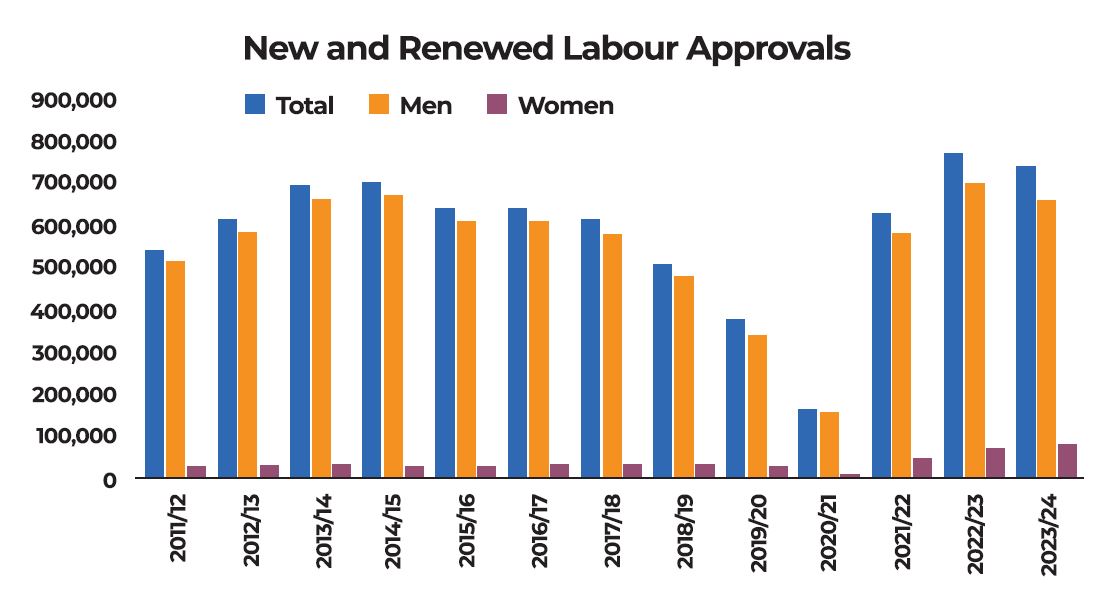
Some highlights: 954, 319 new labour approvals were issued in 2022/23 and 2023/24, 113,056 of which were obtained by women. Half of the total migrant workforce were between the ages of 25-34.
Kosi and Madhes Provinces account for the highest share of labour approvals, while Karnali and Sudurpaschim have the lowest. Most of the migrant workers going to India were from those two far-western provinces.
The report categorises migration by year, district, province, age, and sex. But it would have done well to disaggregate socio-economic status, caste and ethnicity, and geographical data.
The report also highlights strides made towards ensuring better and fairer migration. Since 2023, labour permits are valid for the duration of the contract signed between workers and employers, as opposed to a fixed term of two years previously. Steps have been taken to ensure 'employers pay' with some destinations so that workers do not have to pay exorbitant recruitment fees.