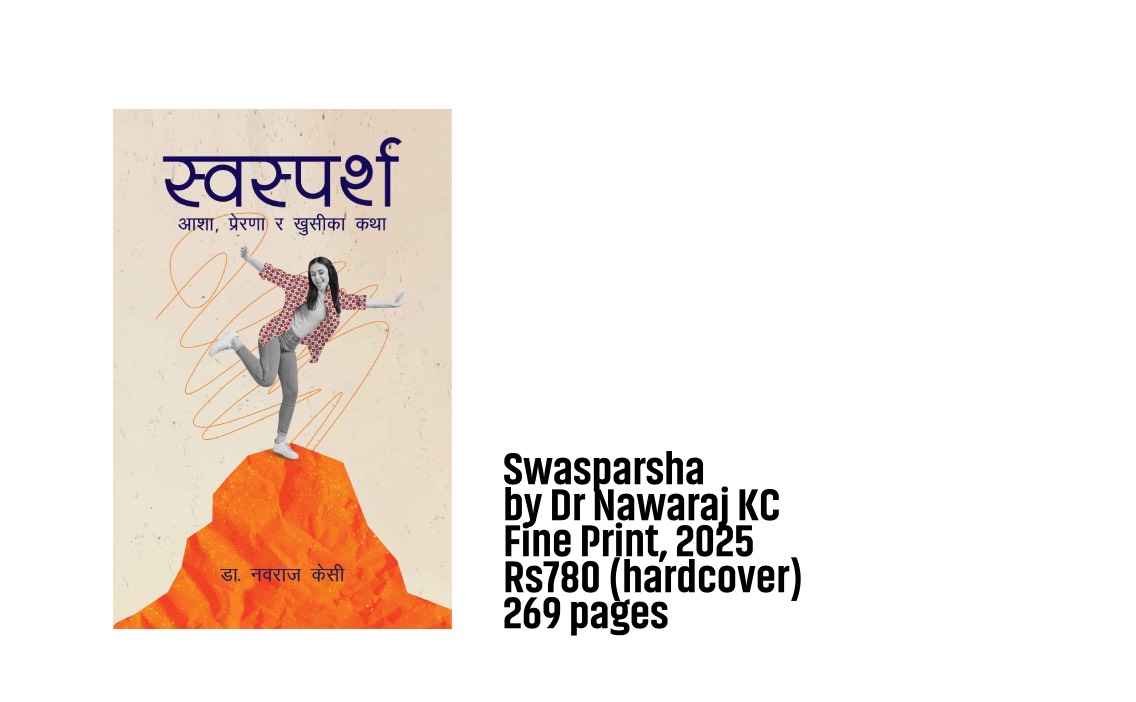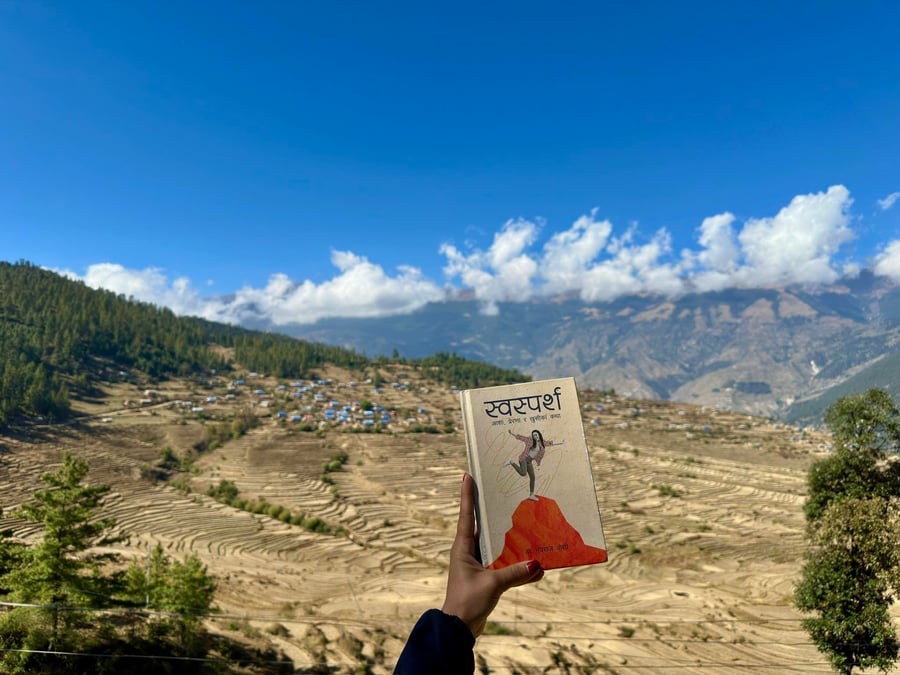
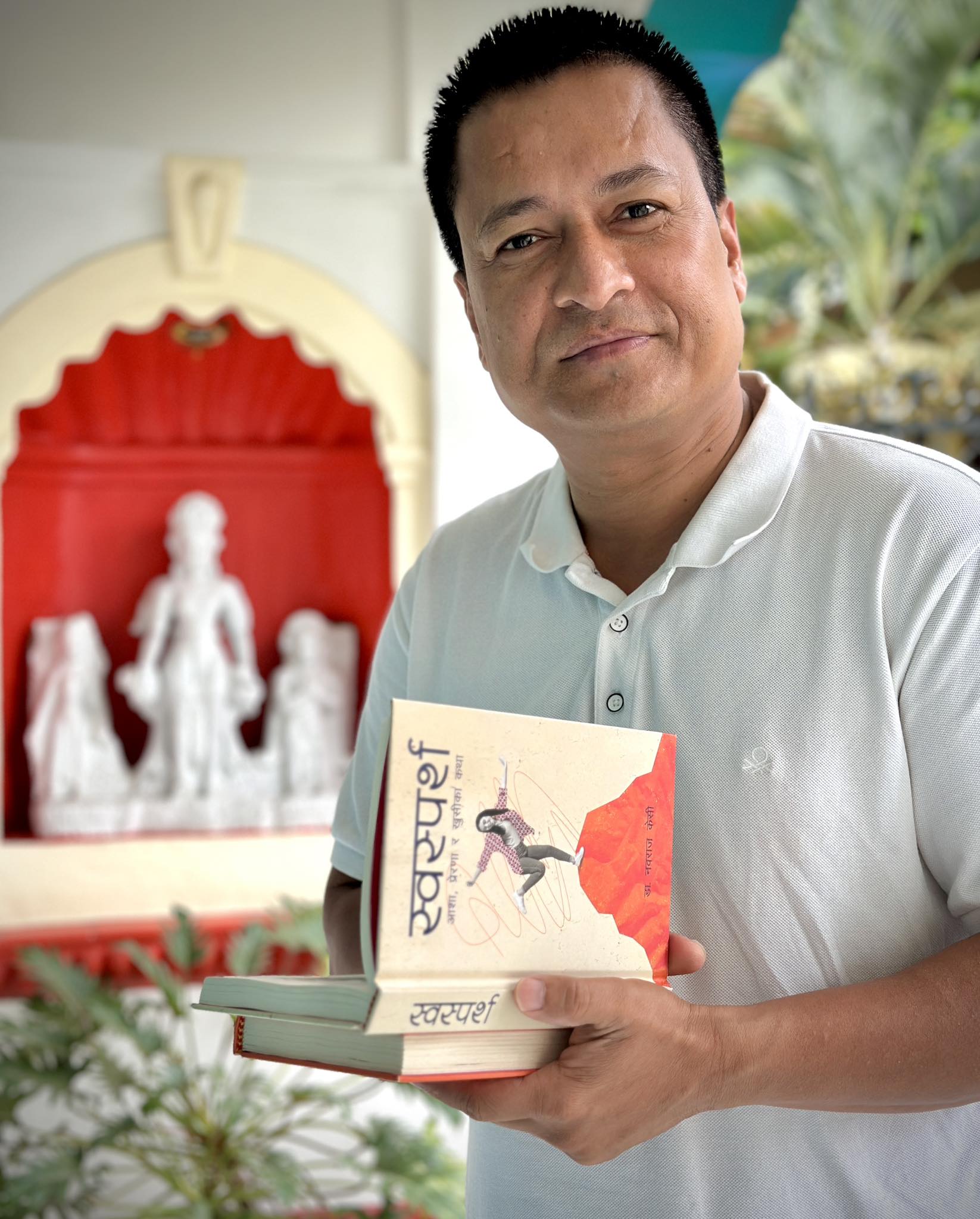
After his critically acclaimed 2023 book of essays सुन्यताको मुल्य on the state of women and children in the Karnali, paediatrician and writer Nawaraj KC has come out with a next one, Swasparsh.
The new book is almost a sequel to the first one, with real-life stories drawn from his medical practice and social engagement. Both are powerful accounts of suffering, resilience, and the search for human dignity in Nepal’s most remote and underserved districts.
The book opens with deeply disturbing yet real incidents of the suicide of a Grade 2 student. A frantic mother rushes in with a son who had already written a suicide note but was saved at the last moment. There is a desperate call from a young woman threatening to jump into the Karnali River.
We meet children carrying immense trauma: a toddler who refuses to eat after losing her mother, and another child who stops speaking after experiencing sexual abuse within the family.
The emotional climax comes when KC himself falls into depression after being violently attacked by a drug addict patient, leaving him with a serious head injury.
But this is not a book of only sad stories of deprivation and poverty. It is how people who find themselves in the worst circumstances struggle to overcome what life has thrown their way, and triumph in the end. By just surviving against all odds, people emerge stronger, often with a renewed commitment to helping others.
As a paediatrician working out of his native Surkhet in Karnali Province, KC's work brings him face-to-face with the human side of what a centralised government’s neglect and apathy can do to communities in Nepal’s most far-flung region.
KC shows empathy not just to human beings in trouble, but also animals and underlines the importance of coexisting with the natural world. By helping others individuals ultimately help themselves.
Although a paediatrician by profession, KC demonstrates a deep understanding of structural oppression, gender discrimination, caste hierarchy, class inequality, and regional marginalisation within the Nepali state.
He also captures moments of tenderness, such as young couples supporting one another through hardship. How poverty can drive families to take heartbreaking decisions — like a patient forced to discontinue life-saving medicine in order to qualify for disability allowances needed to repay debt.
A former teacher is forced to beg despite receiving treatment, exposing the failure of conventional development models that ignore sustainable livelihoods.
Then there are inspirational stories like the one of Mandire, who ran away at age 12 to work as a labourer in India, suffered severe burns while unloading coal, and lost a hand. Despite this, his infectious smile and fortitude transformed him into a local symbol of hope both in India and Nepal.
Even in old age, he is always smiling and helping others less fortunate.
Through Mandire’s story, KC explores the science of the healing power of a smile, the positive psychology of a ‘mental gymnasium’ in which optimism is cultivated through conscious practice.