
 |
The grand festival of Dasain is finally over. What's changed and what's not in the way we celebrate such an event tells us something about the way we ourselves are adapting to life that is more commercialised, westernised, and reflective of the developments of the last few years.
The general trajectory of this season of festivals has long remained the same. Once the monsoon begins to clear, we all start preparing, mentally and materially, for the working holidays to come (for work it is for many of us, whether it's shopping for the family, hosting parties, or making social visits). Judging by the proliferation of malls and Dasain offers in the Kathmandu Valley, shopping is an altogether more fraught affair these days. But clearly there are people lining up to buy motorbikes (get a free camera!), cameras (win a motorbike!), and falling for the usual sales
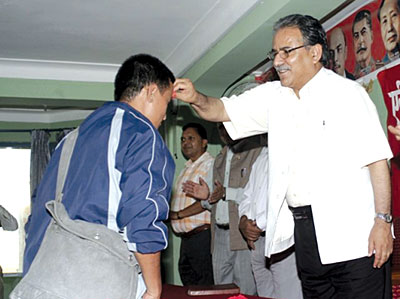
Dasain is meant to be about meeting, eating, drinking and gambling with family and friends. There are plenty who choose to take advantage of other offers to up and leave the country altogether these days, but for most Nepalis the fundamental joy of catching up with one's extended family is undiminished. Yes, people complain that they have to spend hot days (and a couple of rainy ones this year) trooping across country and city to receive tika from people they may not see for the rest of the year, but I'd like to think they don't really mind. At least once a year, a circle is completed of one's blood relations, and this grounds an individual within the most ancient part of his or her society. And if you can't quite travel to pharen to be with all your loved ones, you can at least, through wire and web, see just how they are celebrating little Dasains, in Boston, in Doha, in Pune.