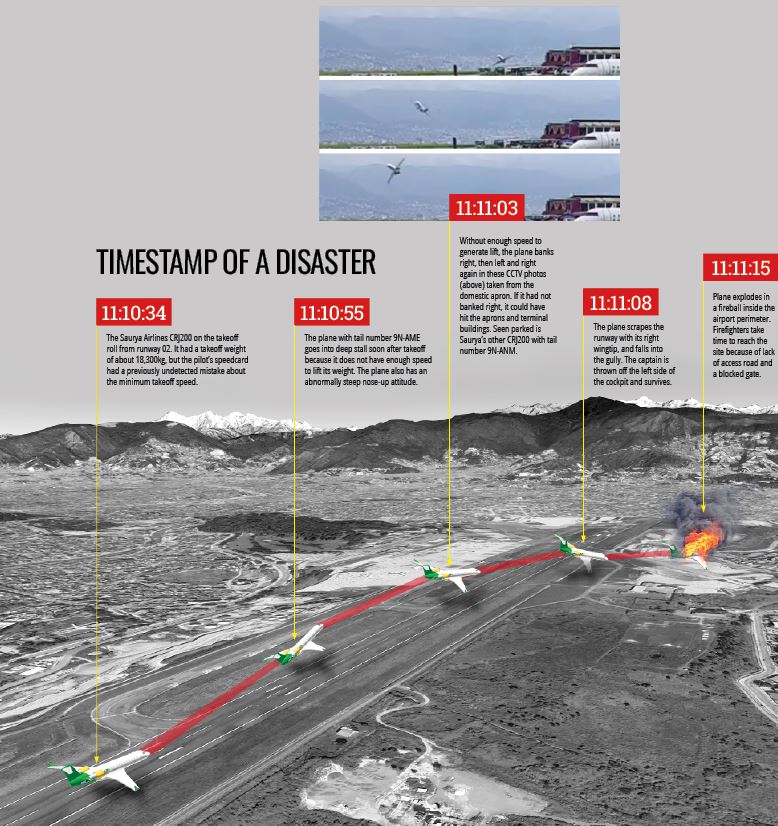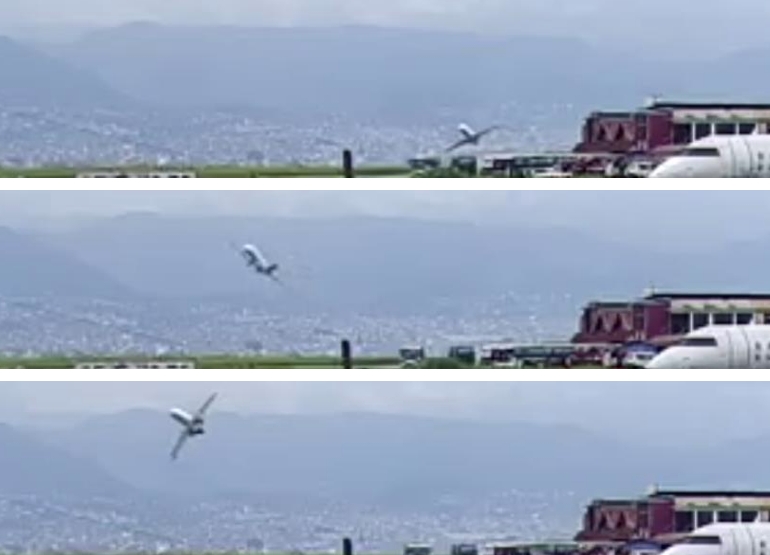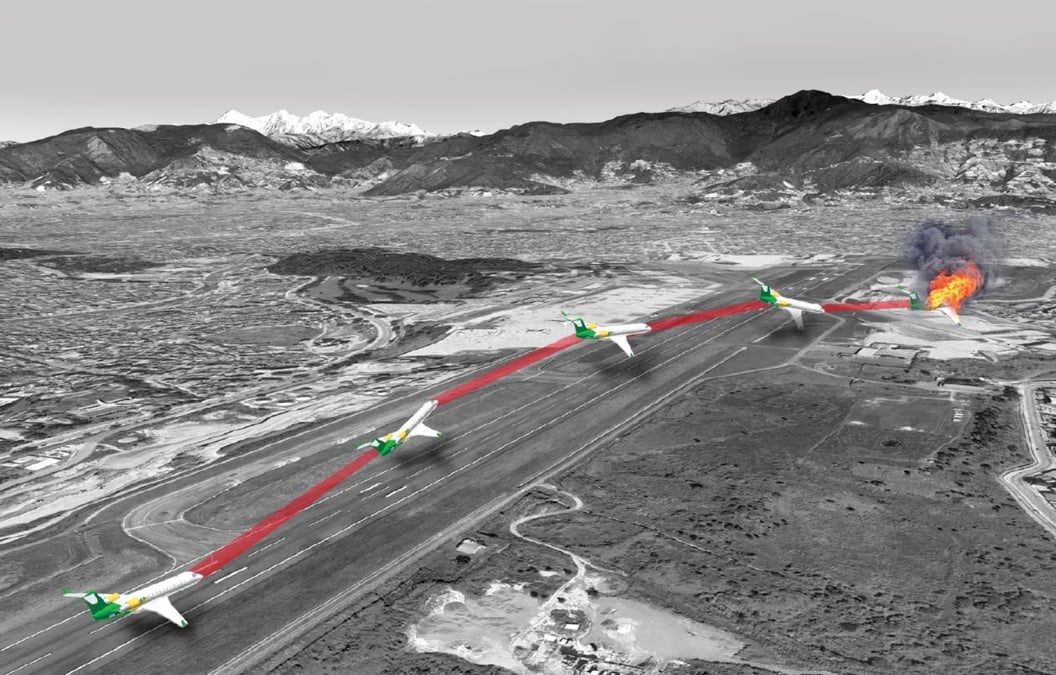
The final investigation report on the crash of a Saurya Airlines jet on 24 July 2024 at Kathmandu airport has revealed flaws in the carrier’s technical operation procedures, poor monitoring by the Civil Aviation Authority of Nepal (CAAN) and gaps in the airport’s emergency response.
Eighteen people including a child were killed, and only the captain survived as the plane plunged seconds after takeoff, crashing within the airport perimeter.
This was the latest in a series of aircraft accidents in previous years, and further tarnished Nepal’s already poor aviation safety record and contributed to the country being retained in the EU’s air safety list.
The circumstances in the Saurya crash were different from the Yeti Airlines crash in Pokhara in January 2022 that killed all 72 on board, and two Tara Air crashes in February 2016 and May 2022 on approach to Jomsom that together claimed 45 lives. However, all four tragedies were a result of negligence of carriers and crew, failure to follow procedures, regulatory slackness, and overconfidence.
The Saurya crash, especially, was a glaring example of how an ailing airline broke its own rules to allow passengers, including non-employees, a joy ride to Pokhara on a maintenance ferry flight.
CRASH REPORT
The Final Investigation Report prepared by the Aircraft Accident Investigation Commission and released on the first anniversary of the crash last week carried a long list of rules that were ignored or broken, and of regulatory failure.
The first mistake was to cram spares, tools and inflammable chemicals needed for the aircraft’s C-Check in Pokhara into the cargo hold flouting its own ground handling procedures.
There was no check-in of passengers, some of whom were not even employees – even though regulations say only flight and maintenance crew should be on board a maintenance positioning flight. Many brought their own luggage into the plane and stored it unsecured in the cabin. There was no flight attendant to give a safety briefing to passengers.
The load and trim charts given to the flight crew were rough estimates, and the total takeoff weight of the plane was 18,300kg plus or minus 200 kg. That would still have been all right, but there was a glaring mistake in the speedchart Saurya pilots were using to calculate the minimum takeoff speed (known as VR), and it had been wrong ever since the 21-year-old aircraft entered service with the airline in 2017.
FAULTY DATA
The Commission probed Flight Data Recorder inputs from previous takeoffs of the Canadian-built CRJ200-LR in 2023-2024 and found that the undetected error in the speedchart had caused the plane to pitch up at an abnormal rotation rate at least 18 times on previous takeoffs.
Any rotation rate more than 3°/sec is regarded as unusual. But on at least two occasions, this aircraft with tail number 9N-AME had rotation rates of 5.8°/sec and 5.5°/sec, the second one was when the pilot who survived was flying in March 2024.