
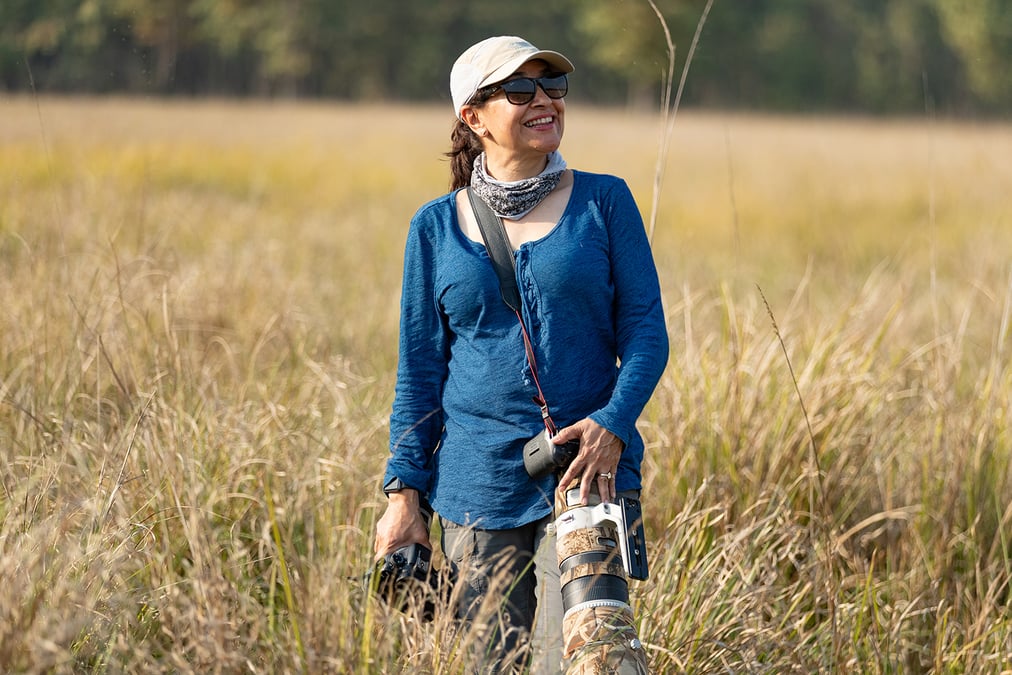
Shovna Upadhyay’s curiosity about wildlife first took root in Nepal, where she grew up. Sitting high up on a tree branch, watching bright-eyed bats and tiny babies clinging to their furry underbellies, she discovered a whole new world.
There were birds, insects, and many little creatures that shared the tree with her. Around waterlogged pools, she waited for tadpoles to turn into frogs, caterpillars into butterflies, and snakes to shed skins. Her curiosity inspired her to look a little closer at everything around her.
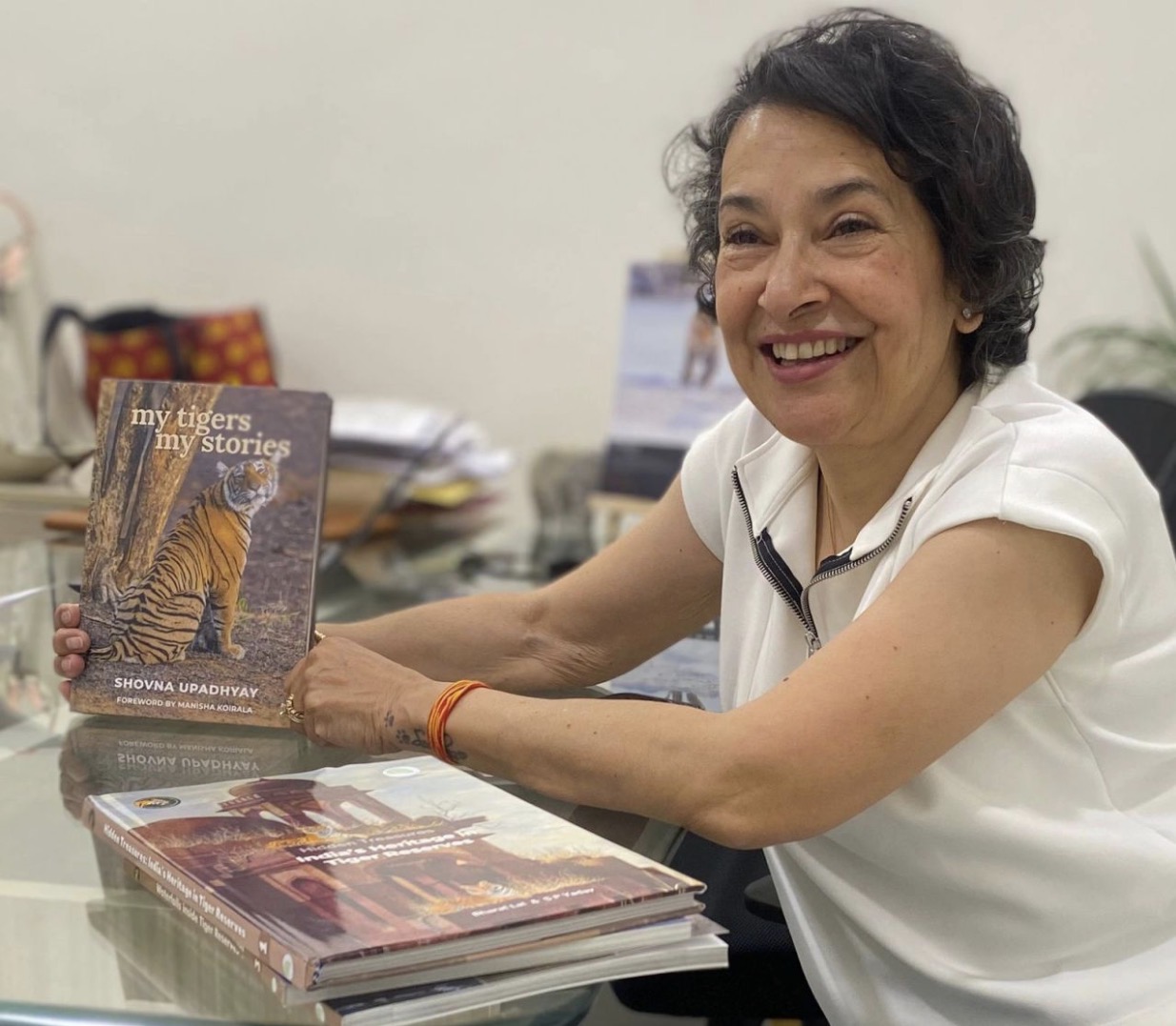
It was only later in life, as she lived in Bhutan, the UK, Thailand, and finally settling down in Delhi, that she truly answered the call of the wild. Coming face-to-face with a tigress named Kankatti in Bandhavgarh and later with Sundari in Ranthambhore Tiger Reserve changed her life forever.
Upadhyay recalls, “Kankatti lowered her head from behind the shrubs and looked directly at me. As our eyes met, I realised that she had only one eye. There was something incredibly powerful and moving about that encounter with a one-eyed tigress.”
Today, she is a noted writer and wildlife photographer, known internationally for capturing animals in their most candid moments.
Male tigers are solitary, and for generations writers and fables have perpetuated the myth that they are inherently dangerous predators. Upadhyay’s first book, My Tigers, My Stories, grew out of her concern that many children encounter wild animals through stories that portray them as villains.
She sought to change the narrative and present tigers as they truly are – powerful, intelligent animals with distinct behaviour and personality, rather than creatures that exist only to threaten humans.
Her second book, Our Jungles, My Stories, was released recently in New Delhi and Kathmandu. In it, she ventures beyond tigers to share a collection of adventures from the wild, including unexpected encounters, memorable safaris, and stories of people living alongside wildlife.
When asked about the BBC documentary Tiger Island, Upadhyay said what particularly stood out was the behaviour of two tigresses that appeared to be sharing the responsibility of caring for each other's cubs. Together, they were looking after five cubs, which she found remarkable.
“We often believe that we understand tiger behaviour quite well after decades of research, but moments like these remind us how much remains unknown,” she adds. “I am also proud of the women naturalists in the film, including Sushila Mahatara with whom I have done safaris.”
Aside from the narration, it is Shovna Upadhyay's photographs and watercolour illustrations that stand out. She says, “Wildlife photography taught me patience and respect for the natural world. Spending long hours in the jungle helped me understand animal behaviour first-hand.”
Over the years, she followed her passion and began writing wildlife books for children that adults can enjoy as well. By nurturing children's curiosity and compassion for wildlife through books, she believes they can inspire not only young readers but also the adults around them. Some children may even grow up to become wildlife biologists, veterinarians, conservationists, photographers, or writers.
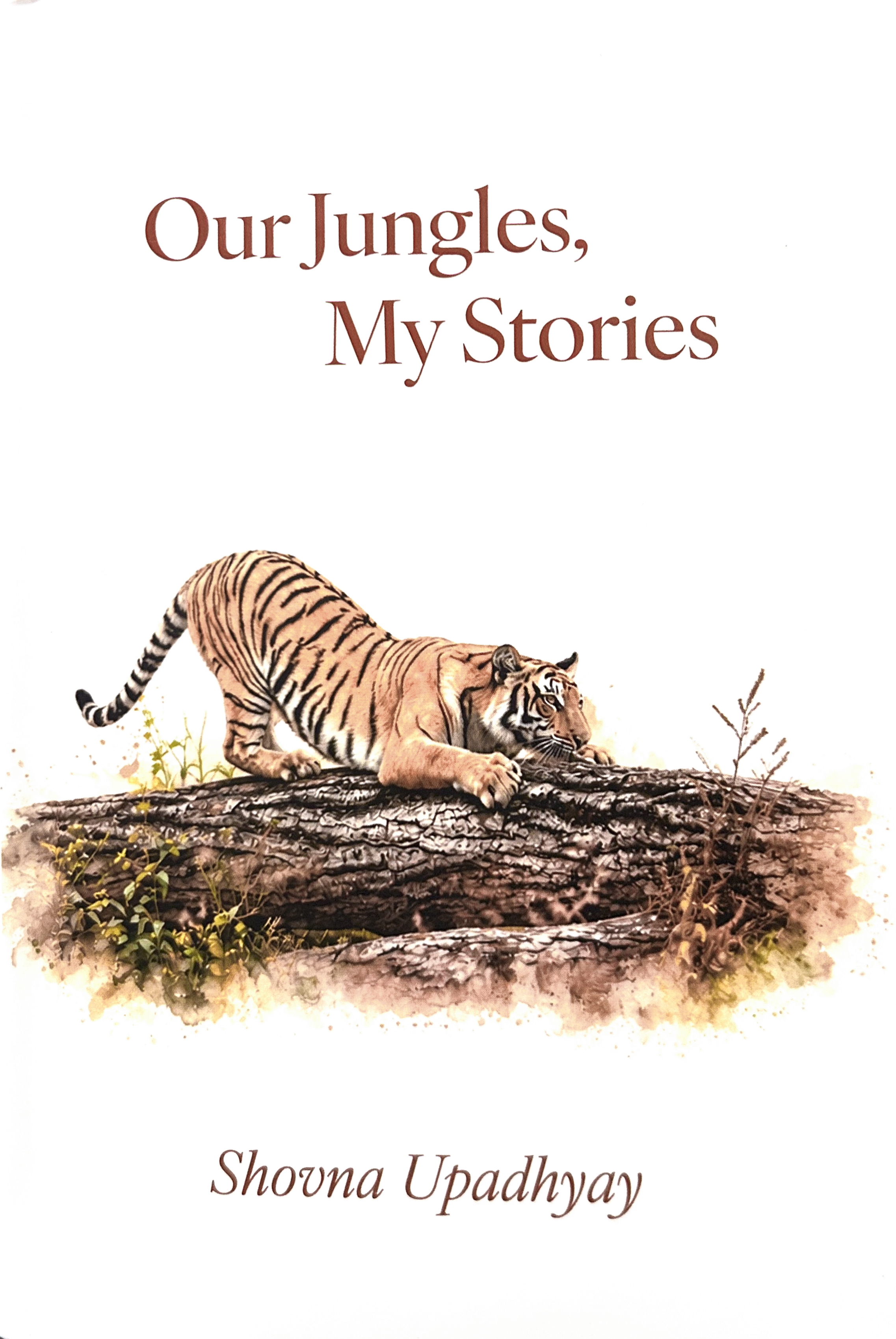
Whatever Upadhyay cannot convey through her photographs and prose, she expresses through poetry. In doing so, she moves beyond simply sharing information to connecting with readers emotionally, reminding them of humanity's enduring relationship with nature and wildlife.
She describes wildlife as an essential part of the jungle ecosystem. Conservation matters because the well-being of humans and wildlife is closely intertwined. Forests provide clean air, water, and a stable climate while serving as homes for countless species. As human populations grow and natural habitats shrink, protecting these ecosystems becomes increasingly important.
Conservation is not just about saving animals; it is about preserving the natural world that sustains all life on Earth, including our own.
Upadhyay’s writing is easy-going and unpretentious. There is no attempt to overdramatise her adventures, instead she serves as the reader's eyewitness to the natural world. She hopes that Our Jungles, My Stories will encourage young readers to see animals and nature in a different light.
She says, “I want children to develop compassion and respect for wildlife. Animals are not separate from us; they are our co-inhabitants on this one Earth. Just as we need space to live and thrive, so do they.”
Our Jungles, My Stories
Shovna Upadhyay (Author and Publisher)
2026
Rs1,250