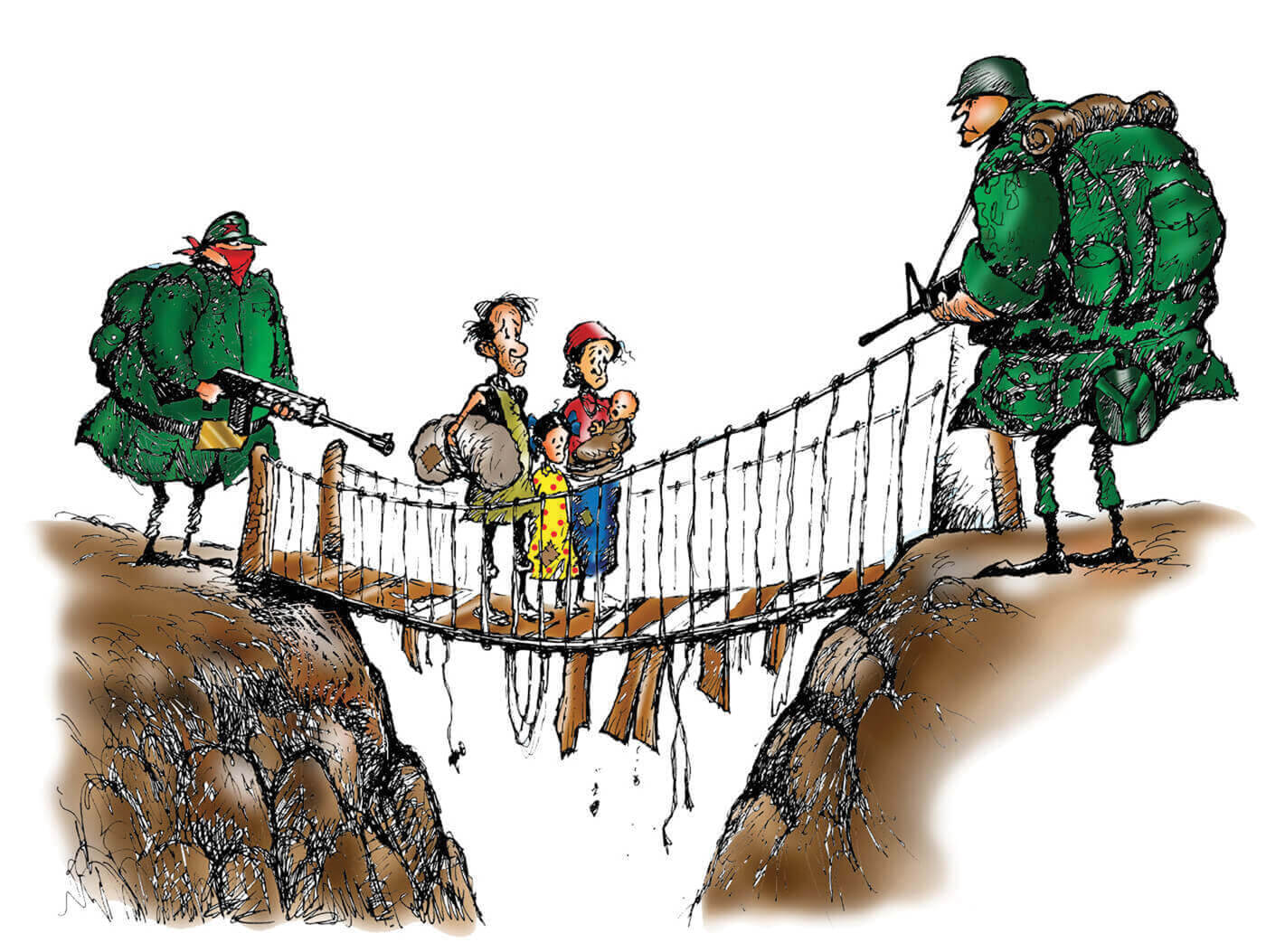
On paper, the Government of Nepal’s human rights pledges are exemplary. In practice, the two warring sides in the ruling party, the opposition and the security forces are all intent on sweeping wartime atrocities under the carpet.
Even though it is one of 47 member countries of the United Nations Human Rights Council in Geneva, Nepal’s own track record on transitional justice has been far from satisfactory. The mandate of the HRC is ‘the promotion and protection of all human rights around the globe’.
On 15 July, six human rights experts wrote to the government with concerns about proposed changes to the law governing the National Human Rights Commission, the NHRC Act.
The experts zeroed in on three of the government’s suggested revisions: 1. Giving the Attorney-General explicit power to approve NHRC investigations, 2. Barring the NHRC from receiving funding from sources other than the government, 3. Preventing the NHRC from opening offices outside of Kathmandu.
Noting that the Attorney-General is appointed by the government, the experts said the first proposal ‘raises concerns over the independence of the NHRC and its ability to address and take action on cases of human rights violations, without undue interference of the executive power through the attorney general. Overall, this may negatively impact the ability of the NHRC to protect and promote human rights in Nepal’.
The suggestion of limiting NHRC funding ‘would in practice enable the Ministry of Finance to control the work of the NHRC, and ultimately limit the independence and efficiency of the NHRC’s programmes’, wrote the UN experts. While the revised law would prevent the Commission from opening new offices, they are concerned it could also lead to closure of the NHRC’s 10 regional and sub-regional offices.
‘Taking into account the extremely low rate of implementation of human rights-related recommendations of the NHRC, we are concerned that the new requirements may negatively affect the ability of victims of human rights violations, their families and human rights defenders to access justice in Nepal,’ notes the letter.
Since the NHRC came into being in 2000, just 12% percent of its 810 recommendations have been fully implemented, 48% were implemented partially and 39% are under consideration. These statistics are misleading as the only recommendations acted upon concern compensation — those calling for action against perpetrators have been ignored.
While the current government often repeats that it can complete the transitional justice process without outside help (read ‘interference’), it continues to engage with the UN experts, which is a positive sign. In a 7 June letter, the Permanent Mission of Nepal to the UN in Geneva responded to an earlier letter from human rights experts, which critiqued the current transitional justice process.