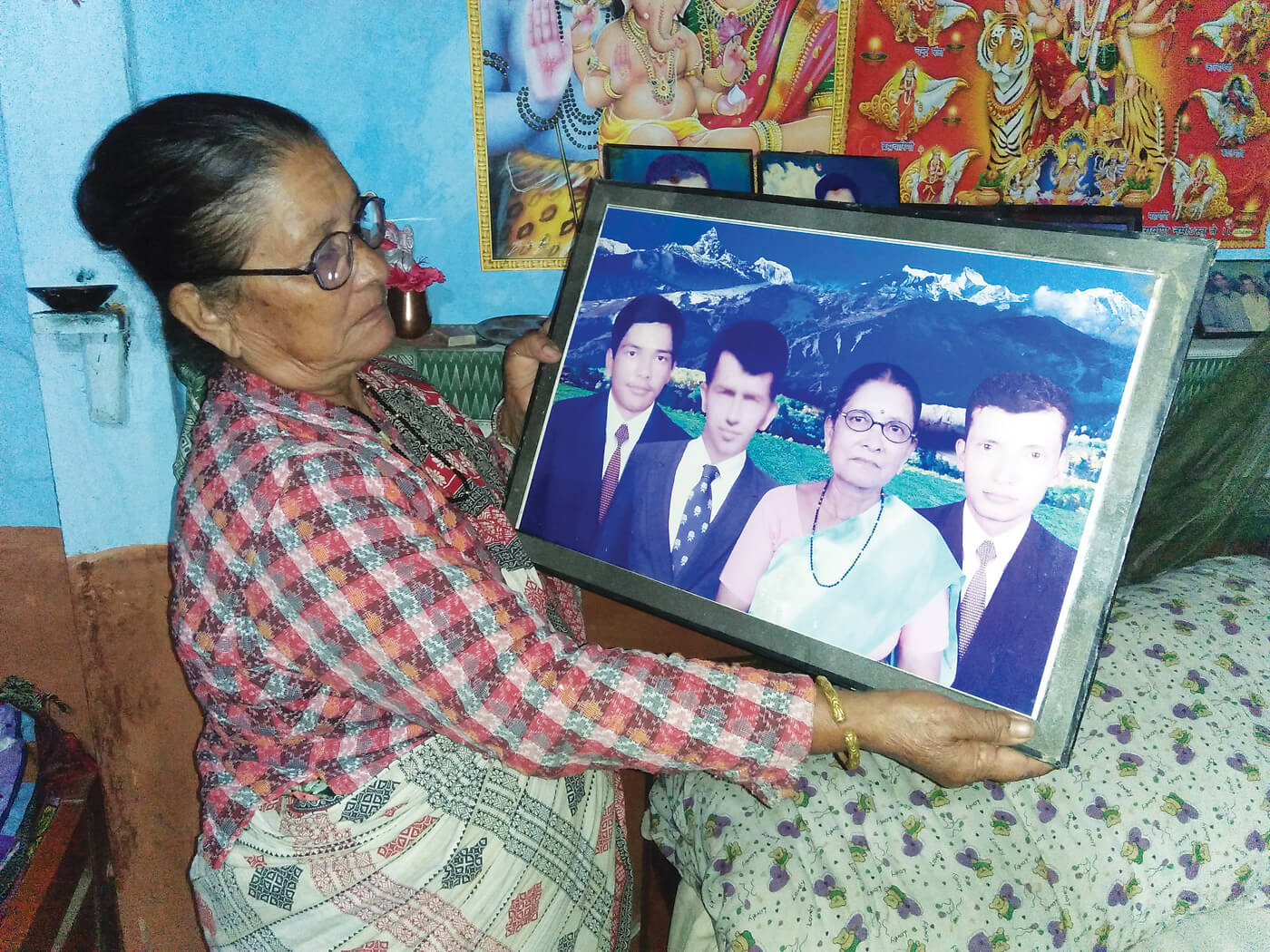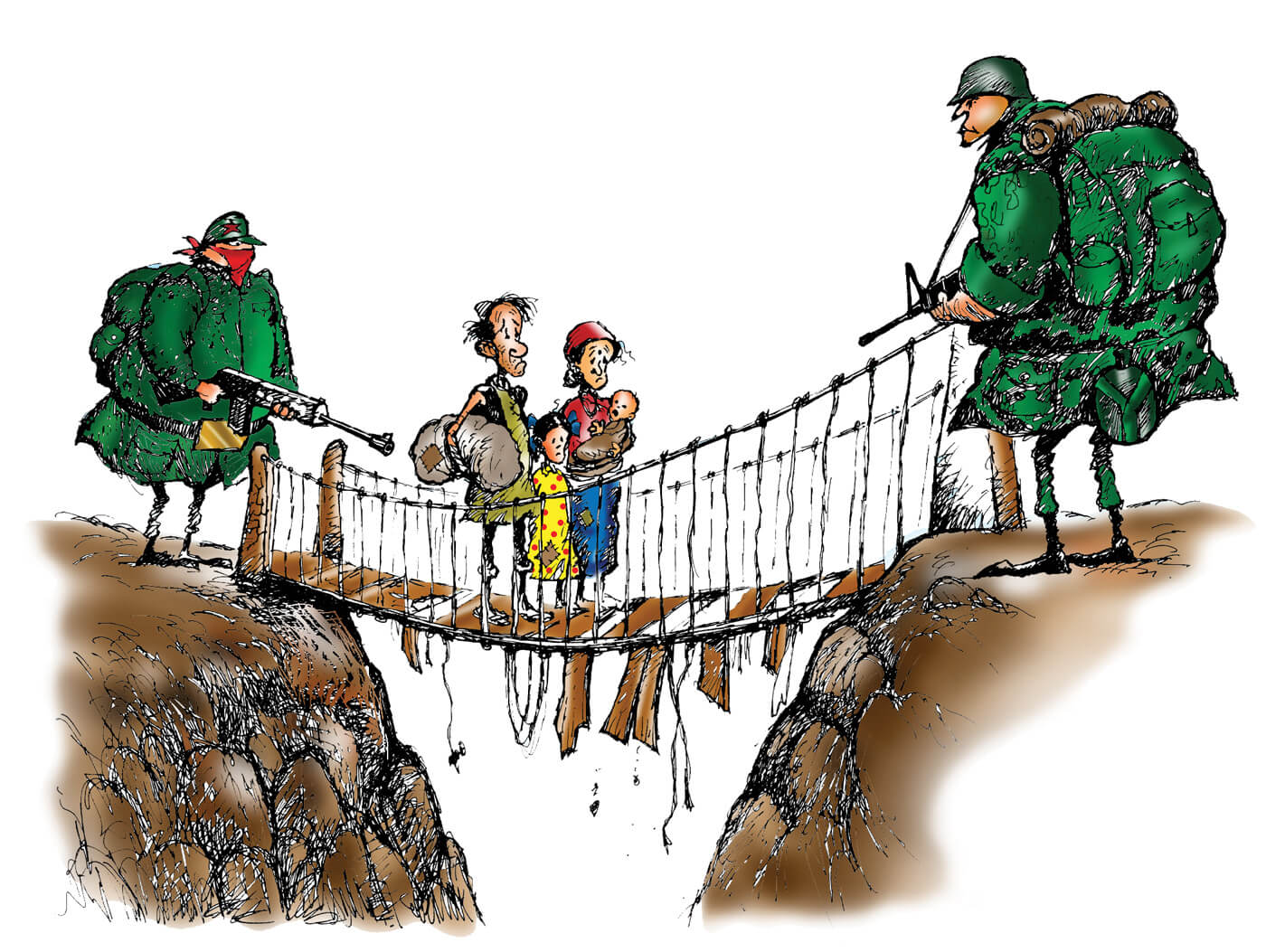
Twelve years after the end of the conflict in 2006, victims and relatives suffered another setback this week with a nasty split in the movement seeking truth and justice for wartime atrocities.
The Conflict Victims’ Common Platform (CVCP), an umbrella body made up of activist groups seeking reparations, marked the 12th anniversary of the Comprehensive Peace Accord this year with a charter demanding a new high-level mechanism to address war crimes that would include victims, the government, and political parties.
This prompted a component of the CVCP to split from the group on Wednesday, saying the government had ‘infiltrated’ the movement to let perpetrators off the hook. The 2006 peace accord between the rebels and the government had agreed to ‘probe serious violations of human rights and crimes against humanity’ to help in reconciliation.
In 2014, the government had finally formed the Truth and Reconciliation Commission (TRC) and Commission for the Investigation of Enforced Disappeared Persons (CIEDP) to investigate wartime abuses. Activists and victims groups initially welcomed this, but it was soon clear that the Transitional Justice Act was too lenient, allowing pardons, amnesty and proposing ‘open-air jail’ and community service as punishment to perpetrators.
Read also: Justice in transition, David Seddon
The CVCP proposed a new high-level mechanism as a way out of the lack of progress by the two commissions, unsatisfactory laws, and expecting greater involvement of all stakeholders.
“Other components of the peace process like the constitution and army integration succeeded because political parties took ownership of these initiatives, but that is lacking in the two commissions, which is why they have stalled. We want a space where they too can be accountable,” said Suman Adhikari, a former president of CVCP and a supporter of the mechanism. Adhikari's father, Muktinath Adhikari, a teacher and human rights activist, was executed by the Maoists in January 2002 in Lamjung.
However, a faction led by Ram Bhandari, Devi Sunar, Sabitri Shrestha, Gita Rasaili and others said the participation of party cadre in the new mechanism would invite political interference in the transitional justice process, and this week they united under the banner of a new National Alliance of Conflict Victims.
“What the CVCP is proposing will make it lenient towards perpetrators, and we are concerned that this will lead to a general amnesty,” said Devi Sunar, mother of 14-year-old Maina, who was tortured, raped and killed in Army custody in 2004. Despite the names of the perpetrators being known, they have never faced justice.
The group is concerned that the proposed mechanism will nullify the complaints registered at the two commissions, and even scrap them. Ram Bhandari, whose father was disappeared by the Army in Lamjung in December 2001, says the proposal to form a new mechanism would “hijack” the transitional justice process and would invite political interference in the victims’ movement.
“The Conflict Victims’ Common Platform has in fact become perpetrators’ common platform. Being in the same forum with perpetrators will not give us justice,” said Bhandari.
An emotional Sabitri Shrestha agreed: “This move to go for cursory reconciliation is not acceptable to us.”
Read also: Rocky Transition to Justice, Editorial
Doors closed, Om Astha Rai

However, CVCP President Bhagiram Chaudhary says its charter does not seek to dismiss the two commissions but to strengthen them by interacting with all concerned through a new mechanism.
“The Commissions were foisted on us by the government, and never had meaningful participation of victims. The independent body that we propose will take the needs of victims into account. It will focus not just on truth, but also on reparation,” Chaudhary explained.
Independent experts agree that the two existing Commissions have lacked teeth, and an alternative was needed to address the diverse needs of victims: displaced persons have not been rehabilitated, many struggle with financial needs for food and education, families of the disappeared, especially widows, struggle with legal difficulties in transferring property.