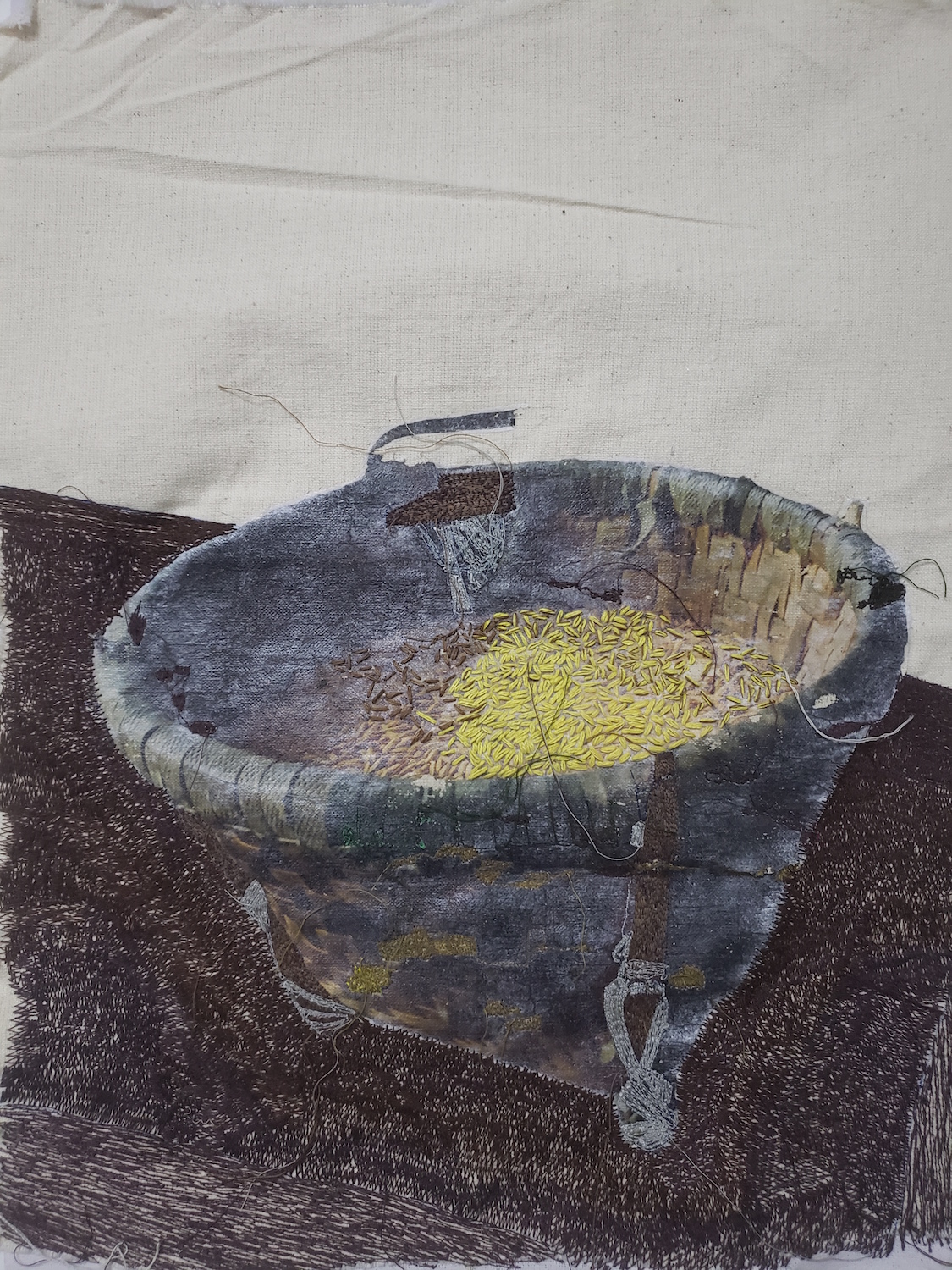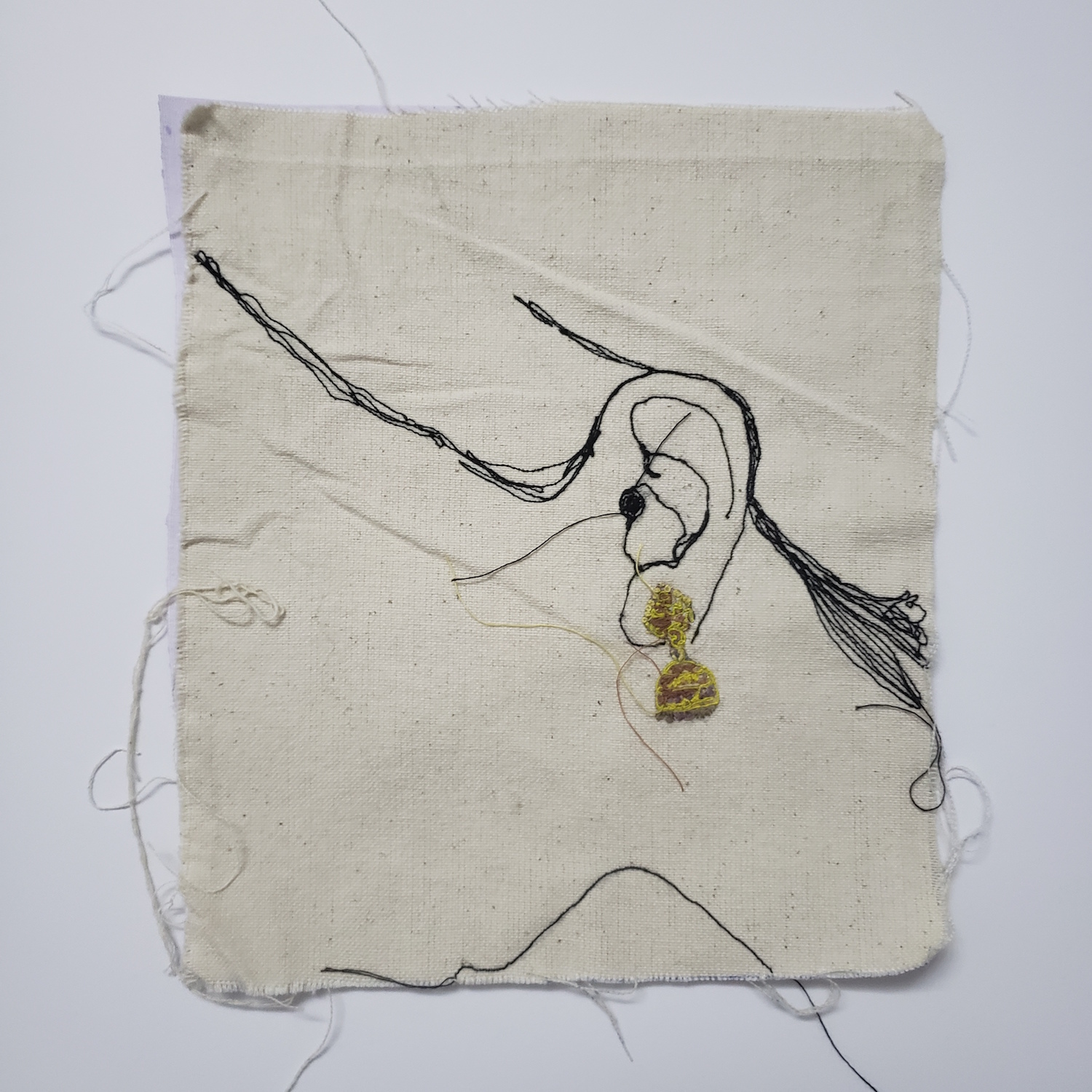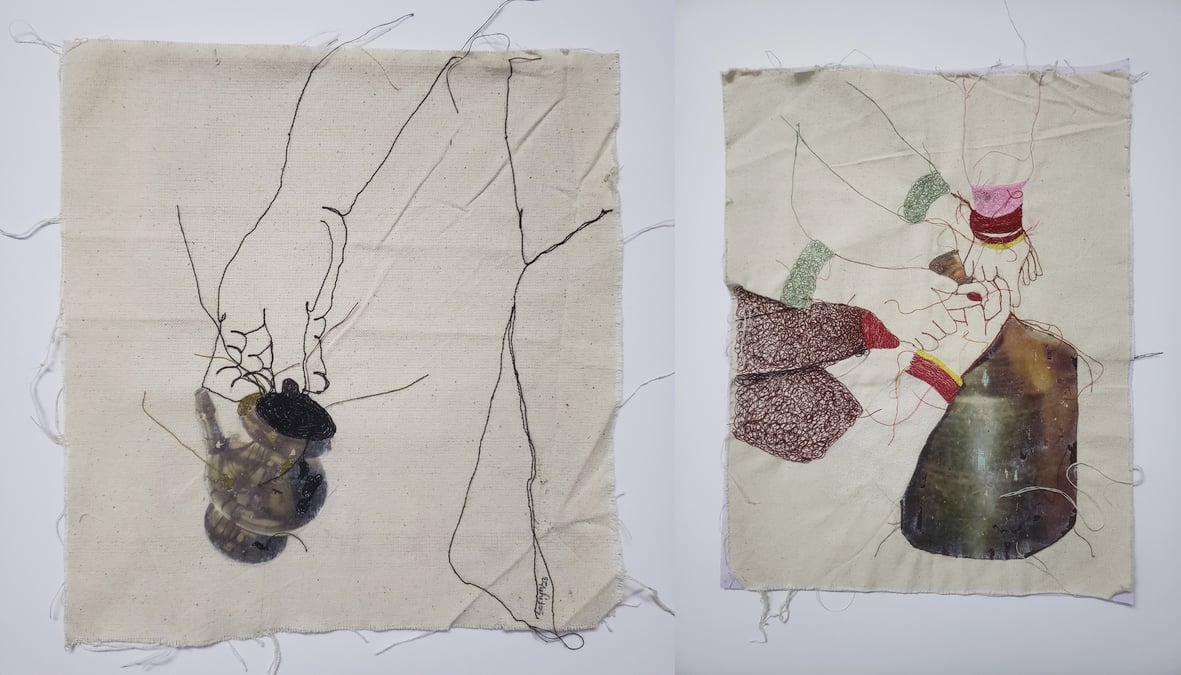
A piece of fabric can take on a dynamic meaning in art, as evidenced by eeSofiya Maharjan’s works currently on display at Dalai La Art Space in Thamel. Viewers are made aware of delicate childhood memories: clutching on to one’s mother’s hem for a sense of security, or perhaps to call, to seek attention, to be invited into a world that is at the outset far from reach for a young child.
Maharjan plays not only with her own memory but also that of her mother’s, and this is the central theme of the exhibition Absence Unbothered. Raised by a single mother who left her husband when Maharjan was only eight, she is as inspired by her mother’s nostalgia for her own childhood as she is by how that yearning and the stories told by her mother shaped her own experience growing up.
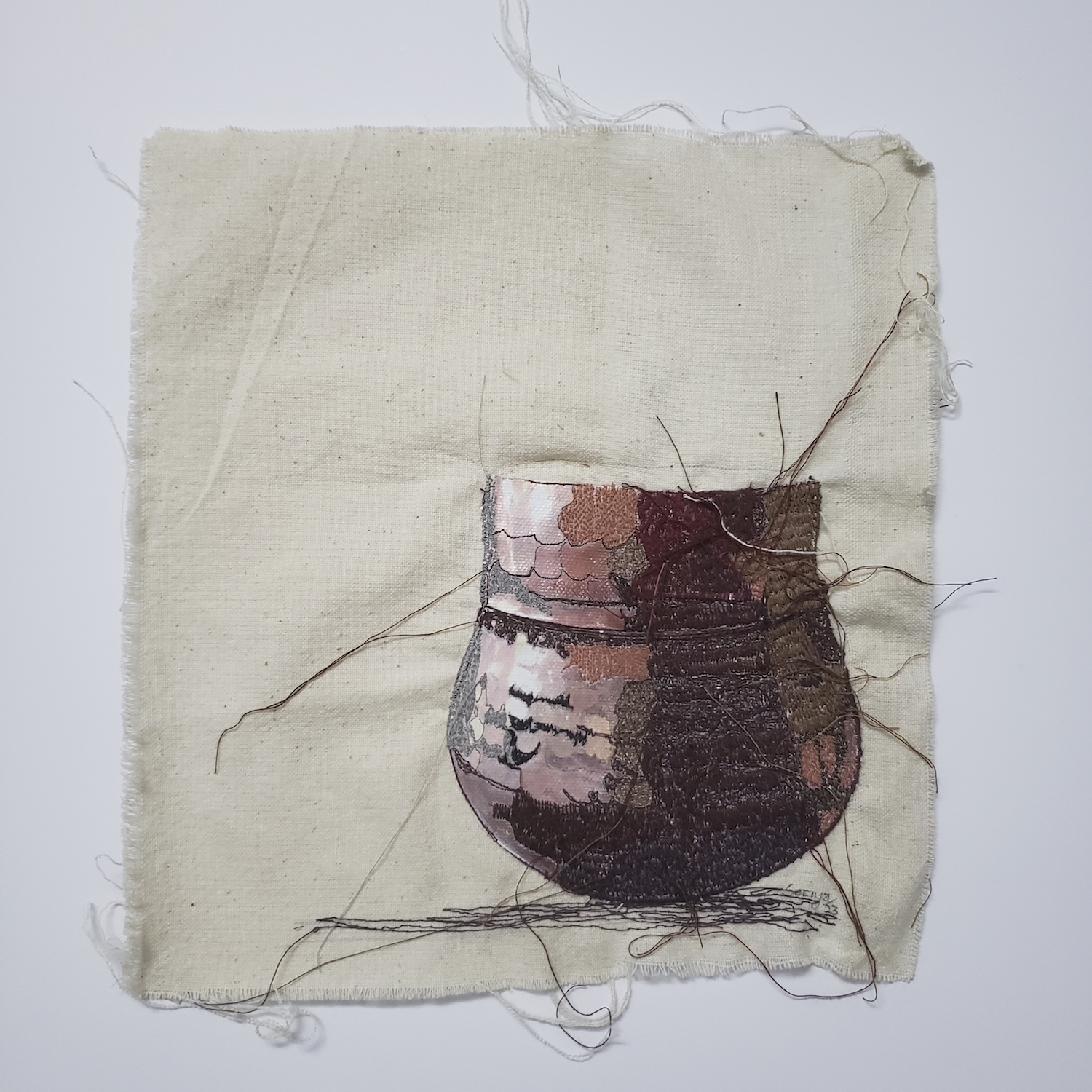
Maharjan’s works are visually striking and unique in their execution. Using white fabric, stitch and photo transfer, a vision of an absence is rendered to canvas – an absence of a man, a father, and that her mother made sure the children never felt in their lives. The artworks express a profound sense of loss worsened by the patriarchal fist that limits a woman’s choice, freedom and desires, but at their core, they are about an absence that is not present. The absence also gave her brother an opportunity to step up, filling in the role of her father, as shown by ‘Jhin Nima’.
The idea had been in the back of Maharjan’s mind for some time, but it did not start to take form until her third year in college when she worked with her family archives. “At the time, I was not entirely sure what the idea looked like concretely,” she recalls, “but it was in the middle of the pandemic and that allowed me a chance to know my mother more intimately.”
She began to collect stories of her mamaghar, where she was close with her mother's family. Her mother, too, would tell her and her brother stories of her own childhood in fragments, which then Maharjan would piece together like stitching together a large, colourful tapestry of joys and sorrows, laughter and comfort – almost a precursor to her matured works in the exhibition, where these emotions and stories get concrete shape in objects such as gherwa lamps, karuwa, dalchaa and gha.