
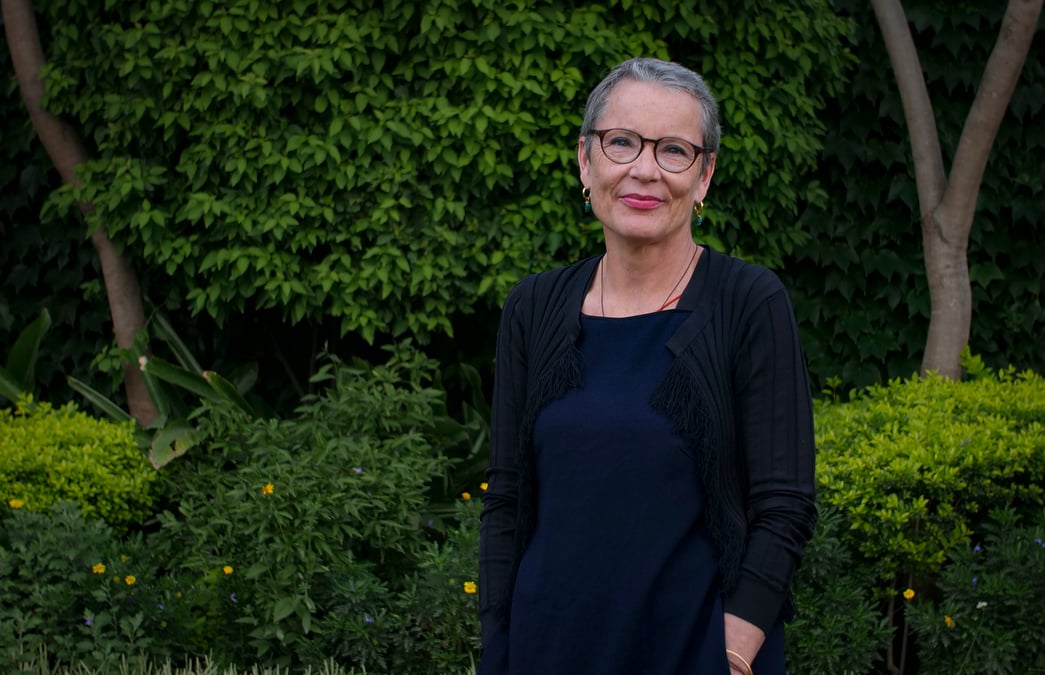
Swiss Ambassador Elisabeth von Capeller Oswald has been in Nepal for over a decade and in that time, has seen the country undergo significant political and socio-economic change in real time. Von Capeller first came to Nepal in 2007 with the Swiss Agency for Development and Cooperation (SDC). She then served as Head of the South Asia Division of SDC in 2011, and was appointed the Ambassador to Nepal in January 2018.
Von Capeller is finishing her tenure in Nepal and will be leaving the Swiss Foreign Service. She spoke to Nepali Times about her experience here and Switzerland’s changing focus in Nepal’s development over the decades. Excerpts:
Nepali Times: What are some of the lasting impressions of Nepal that you will take back with you?
Elisabeth von Capeller: I have seen a country which has changed very fast in recent years, from a closed, rural society to an urban, global society. I have also seen Nepal go through many ups and downs, including being hit by many crises. But it also overcame them, which goes on to show a certain strength of the people. We have also seen the women, they have changed the most. They are so positive, their body language is so different than 10 years ago, and they are much more present in the public sphere and private sectors.
Yet there are many more changes Nepal needs to address, social injustice is still very much prevalent. Also, one thing that worries me is the rapid environmental destruction, and I hope there will be more sensitivity towards nature because Nepal is destroying essentially its wealth, beauty and future potential.
Switzerland has had a 70-year history of development cooperation with Nepal. How has the nature of Swiss assistance changed in that time?
I believe we have always been a consistent partner that Nepal could rely on. We started with technical assistance but during the insurgency, we got involved in service delivery because the state was not present. Also during the insurgency, we came up with a diplomatic instrument to accomplish the peace accord. After the peace agreement, we helped Nepal with the implementation of the new Constitution. We have always been able to adapt as per the context and situation. Nowadays, local and provincial levels are carrying out service delivery, and we support them as well as the federal level in the building of the institution.
What are some of the lessons Nepal could learn from Switzerland, another landlocked country surrounded by bigger neighbours?
When you are in this field, you always have areas where you are not satisfied, you also have failures. But what we have done is always try to adapt our programs relevant to the political as well as economic context. We have had technical solutions to political problems but we also need political solutions to political problems. As you know, development cooperation, even more humanitarian ones, are political. Our concern has always been that we do no harm which is why we always did a good analysis of the political context and reflected on what and how we did it.
Many Nepalis are now questioning if it can deliver true devolution through federalism. What are some of Switzerland’s experience in making federalism work?