
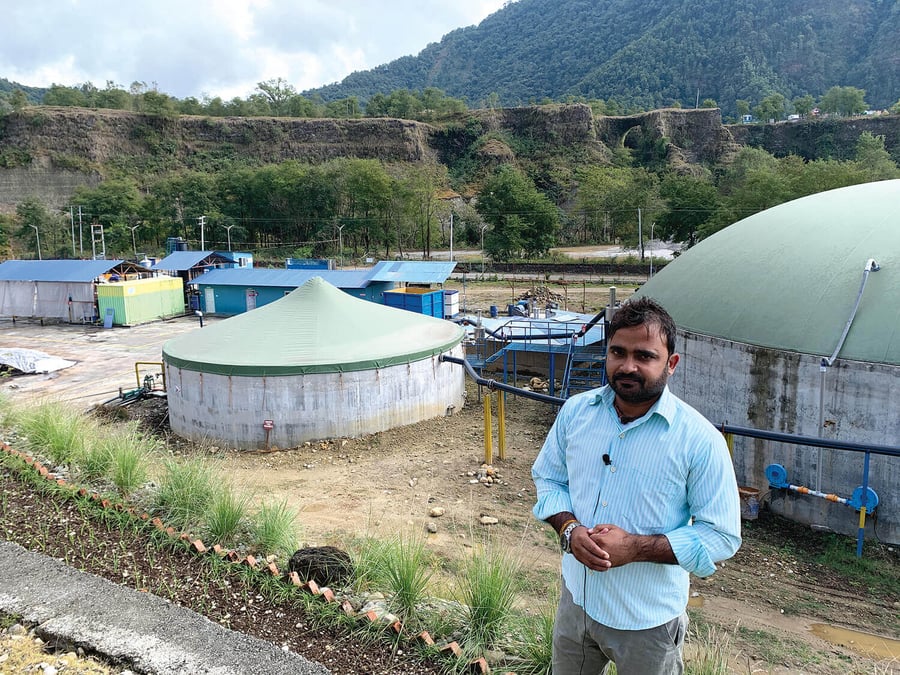
The price of cooking gas that Nepal imports from the Gulf countries via India has hit record highs, even as the nation’s plan to install large-scale biogas plants falters.
Liquefied petroleum gas (LPG) prices have risen from Rs1,910 for a 14.2kg cylinder before the West Asia War to Rs2,010 today. The only reason it has not doubled like the price of petrol and aviation turbine fuel is government subsidy.
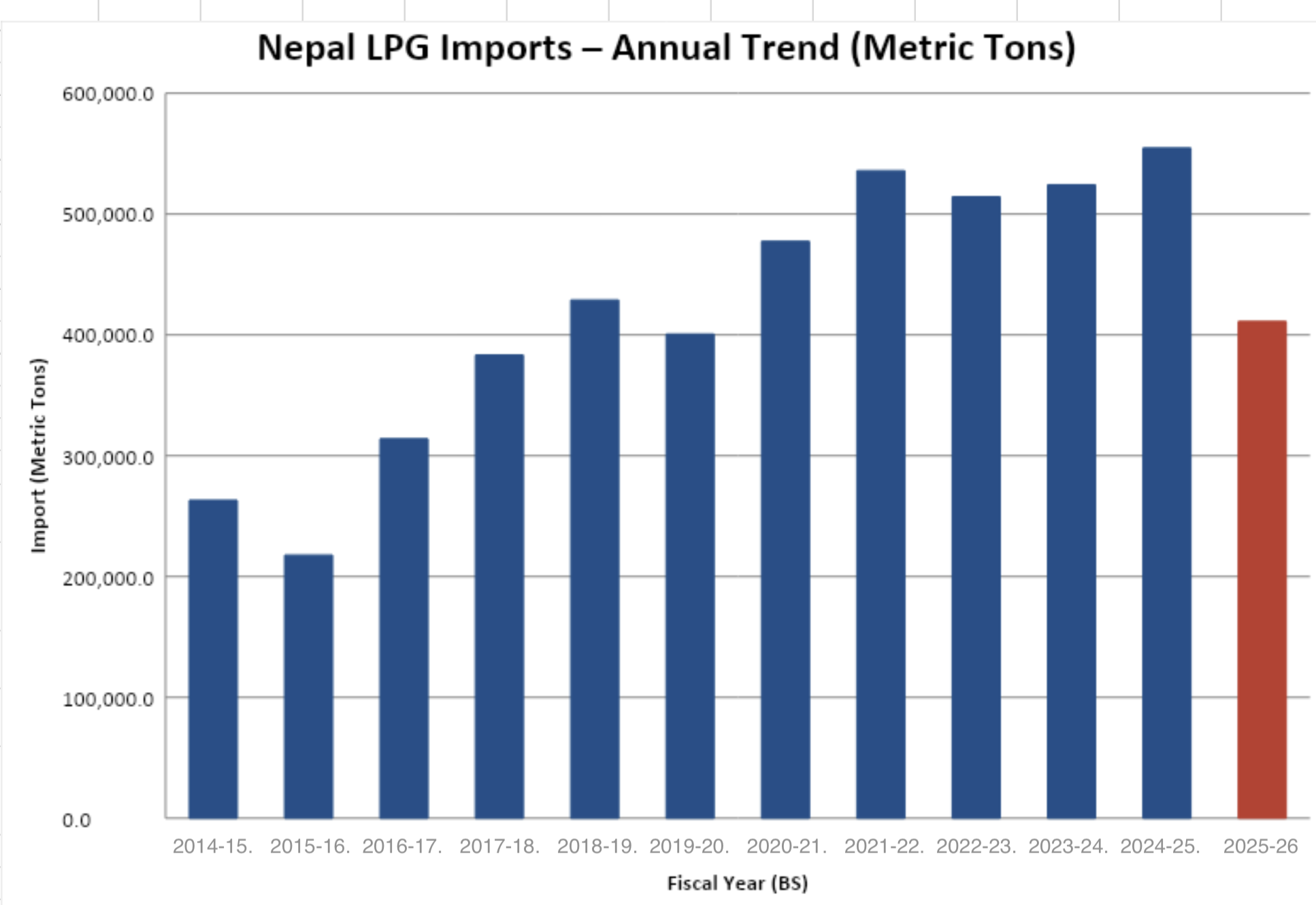
The spread of LPG even to the remotest areas has reduced pressure on forests for fuel, and improved pollution levels inside homes, but it comes at increased cost of imports. Nearly a quarter of Nepal’s total import bill is for refined petroleum products from India, and the cost of LPG has risen most sharply in the past decade (chart).
Now, a study by Kathmandu University (KU) Renewable and Sustainable Energy Laboratory (RSEL) has found why Nepal’s primary alternative — household and large-scale commercial biogas — are failing to deliver on its promise.
A successful campaign in the 1980s spread household biogas to 400,000 homes, reducing firewood consumption, improving infant and maternal health and providing fertiliser for farms. But a recent survey found that only half the plants are still operational due to outmigration, a decrease in livestock and the spread of LPG.
The KU research published in the Journal of Cleaner Production is about large scale biogas generation from urban waste, and warns that 18 such plants across Nepal risk becoming ‘expensive monuments of planning failure’.
With operational plants currently running at less than 30% of their designed capacity, the study highlights a critical gap between ambitious energy plans and ground-level implementation.
The survey showed that six commercial plants from Jhapa in the east to Kailali in the west were designed to be the backbone of Nepal’s energy independence.
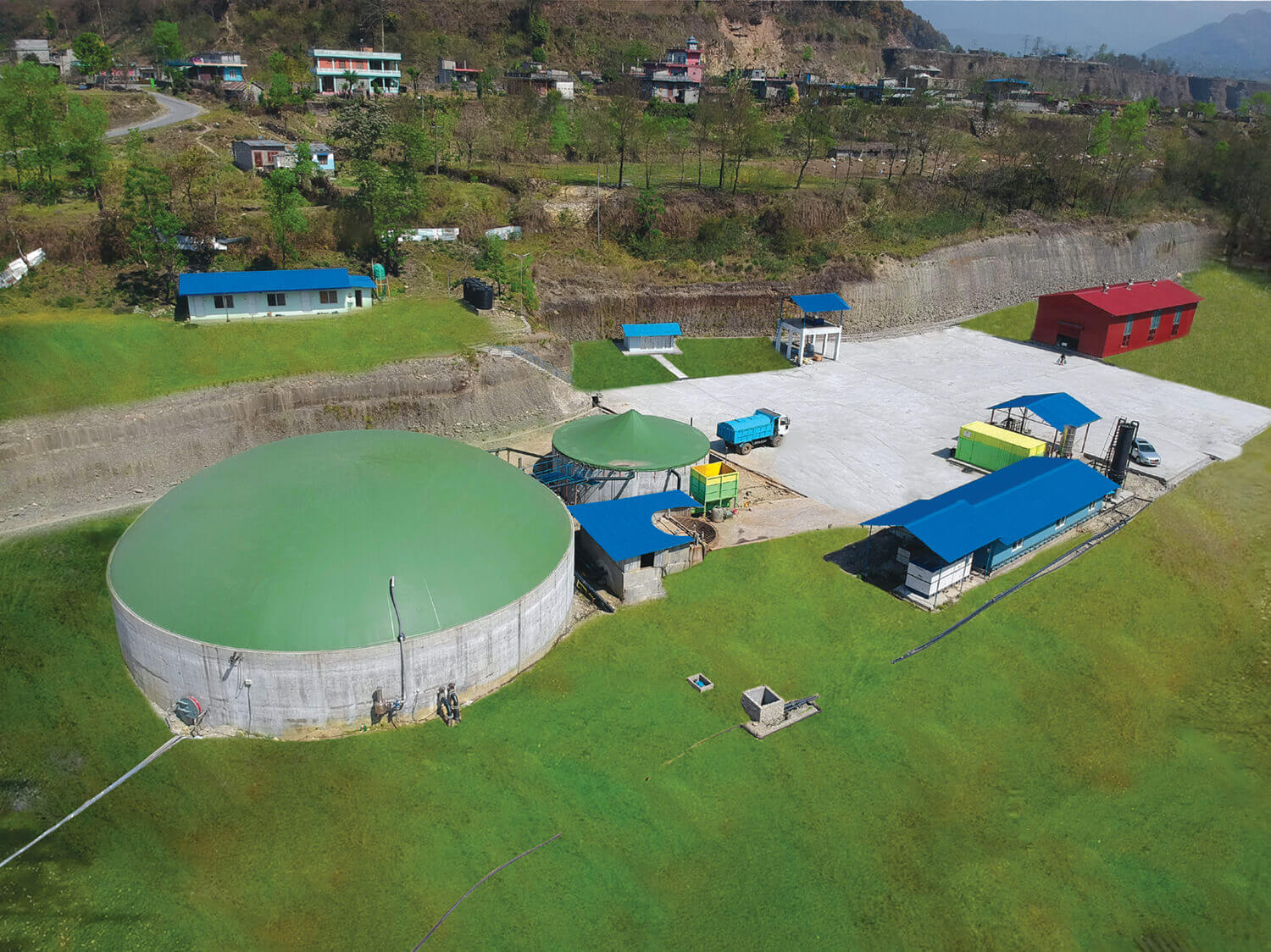
However, RSEL’s audit shows that even the first plants are producing less gas than targeted not for technical reasons but because of bad management of feedstock and insufficient marketing of the methane gas produced.
This raises fears that 12 more projects currently under construction may become white elephants too. The report says that Nepal’s energy security is held hostage to cross-border supply chains, its large scale commercial biogas plants are operating at less than a third of their capacity, becoming ‘stranded assets’ at a time when they are needed most.
As of April 2026, Nepal Oil Corporation (NOC) is facing monthly losses of billions of rupees even with LPG cylinders now priced at Rs 2,010 and domestic fuel prices reaching historic peaks. The current supply disruption has led to panic buying and a shortage of nearly 30,000 cylinders daily.
“Nepal cannot afford to keep importing energy while sitting on enormous untapped potential of organic waste,” say Sunil Prasad Lohani, lead author of the study. “Large-scale biogas isn’t just an environmental choice anymore. It is a survival strategy for our national economy. But right now, the gap between our high-flying designs and ground reality is a systemic failure.”
The RSEL study provides the first rigorous empirical assessment of a flagship 4,000 cubic metre biogas facility. Despite World Bank financing and 40% government subsidies, the results are troubling. The plant produces only 700 cubic metres of biogas daily, against a design target of 2,500. This means the projected annual revenue of Rs102.9 million is just Rs18.6 million.
The effluent spent slurry from biogas plants make organic fertiliser. This fertiliser would be a valuable alternative at a time when Nepal faces a critical shortage of chemical fertilisers due to the blockade of the Strait of Hormuz.
But the bio-fertiliser digestate output from the plants is at a mere 10% of its projected capacity. This raises serious concerns about the credibility of the projects' feasibility study and business plan, pointing to a systemic failure in planning.
The study identifies that the failure is not in the technology, but in the infrastructure of the market. There are currently no formal supply contracts for feedstock of organic waste to fill the digester with, and no government-supported transport to move organic waste from cities and farms to the plants.
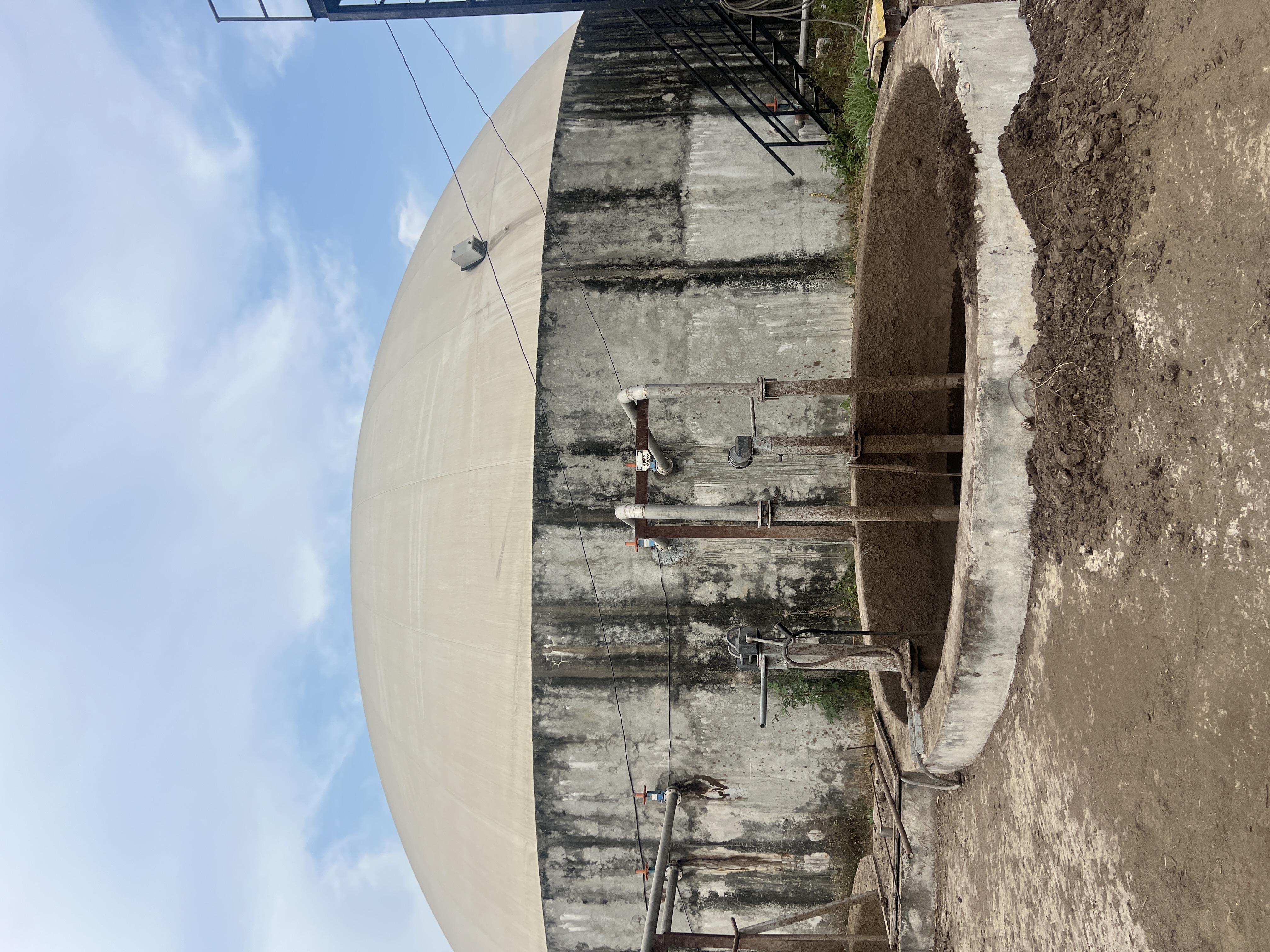
Furthermore, despite the current fertiliser crisis—where urea prices jumped by $100 per tonne in a single week—there are no awareness campaigns and pragmatic pathways to help Nepali farmers transition to the nutrient-rich organic slurry produced by these biogas plants.
KU researchers warn that Nepal is on track to build 12 more ‘monuments of inefficiency’ unless the government integrates biogas logistics into broader waste management and energy frameworks.
‘Building the plant is only half the job,’ the report concludes. ‘The other 50% is building the market where we are failing currently, leaving our energy security in a state of high-priced dependency.’