
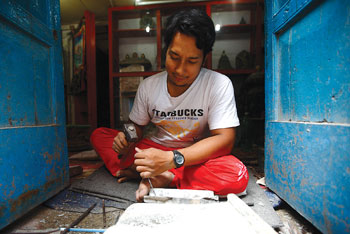
It takes him the best part of a week to carve out these figurines, most of which will be part of larger pieces. Since tourists usually buy trinkets, Bajracharya who has been in the business since he was 10, hopes to sell these pieces to foreign businessmen who come looking for Buddhist statues to sell to patrons back home.
But there is stiff competition on the roads that lead you from Patan Dhoka to the Darbar Area and beyond to Sundhara – every other shop is now a handicrafts showroom. The boom in tourist numbers in the last six years means that when a grocery shop shifts, it is quickly replaced by a handicraft one. According to the Tourism Ministry, tourist arrival almost tripled in the last 10 years. Nepal received more than 800,000 visitors in 2012 alone. Significantly for Patan’s handicrafts boom, nine per cent of these were Chinese, who are known for their spending prowess.
Sampurna Shakya, who owns a handicrafts shop here, has seen shops mushroom all around him. “With more Chinese buyers coming to Patan, everyone wants to enter the business,” he says.
Raj Bajracharya owned a showroom in Patan Sundhara but felt the industry passed him by. A month ago he set up shop in Khachche – the previous tenants were tailors – to tap into the Chinese market. “The old one is still open, but I’m counting on this to boost income,” he says.
Last year total export volume of Nepali handicrafts crossed U$ 6 million, of which 17 percent went to our northern neighbour. Total handicrafts trade to China has increased by 79 per cent from 2011 to 2012, with metal-crafts rising by 98 per cent.
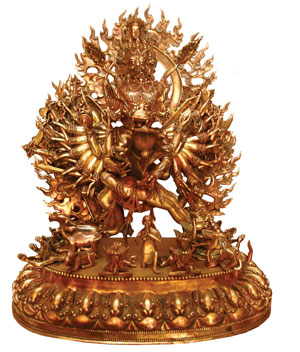
“The weather there does not suit the type of traditional Nepali statue-making,” explains Tenzin Rabyang, 29, whose family has been in the business for 45 years. According to Rabyang, traditional Chinese clay work pieces are of inferior quality to Nepali metalwork and plenty of patrons who sell yarsagumba want to buy the gold-worked statues as markers of wealth.
As long as this bubble exists, handicrafts sellers from Patan Dhoka to Sundhara, will look to replicate what Lalitpur of yore was known for.