
Nepal Made profiles Nepali products and the people who make them possible.
After graduating with a degree in aerospace engineering from the Singapore University of Technology and Design, Kajol Sethia (pictured right) came to Nepal for a break, where she discovered her love for the Himalaya.

A vegetarian all her life, Sethia had become vegan while in Singapore and set up Vegan Dairy Nepal in 2018. After realising that much of the food people consume was not just unhealthy but also ethically wrong, she became an animal rights activist.
She received the Outstanding Activist Award from PETA Asia in 2019, while meeting a growing demand for plant-based superfoods back in Nepal with a loyal customer base for Vegan Dairy Nepal primarily through social media and word of mouth.
Then, during a trek to Humla at an altitude of 4,000m, she came across bushes of sea buckthorn berries (Hippophae rhamnoides) that are indigenous to the Himalaya. Known as Dalle Chuk in Nepali, the sour fruit is found across the mountains from Mugu to Taplejung, and is a rich source of vitamin C and omega fatty acids.
“Farmers knew about sea buckthorn and other local herbal plants and used them for traditional medicine but did not know how or where to sell them,” recalls Sethia. “That is when I decided to fill the gap.”
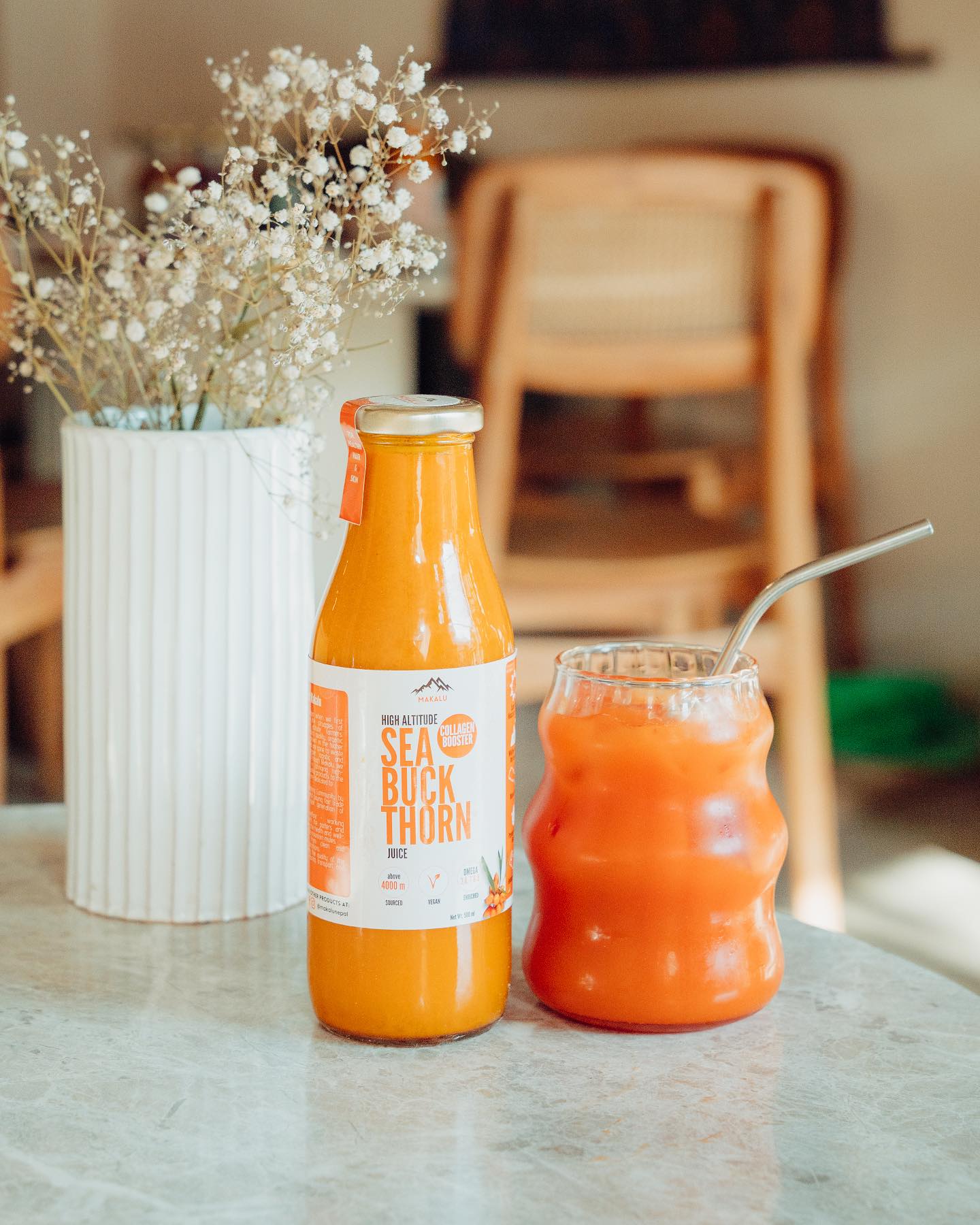
Passionate about healthy living and eating, she had always dreamt of opening a Nepali specialised food wellness brand, and she launched Makalu Food and Beverages in 2023 to market Himalayan food. Sea buckthorn juice is one of its most popular products and is sold at kar.ma Coffee and Himalayan Java outlets, as well as in stores in Kathmandu and Pokhara.
As with many other products, the Covid pandemic raised public awareness around the world and Nepal about healthy living and eating choices. “Before Covid, it was difficult to make people understand the health benefits of our products,” Sethia told us. “Now they have become more aware and make conscious choices.”
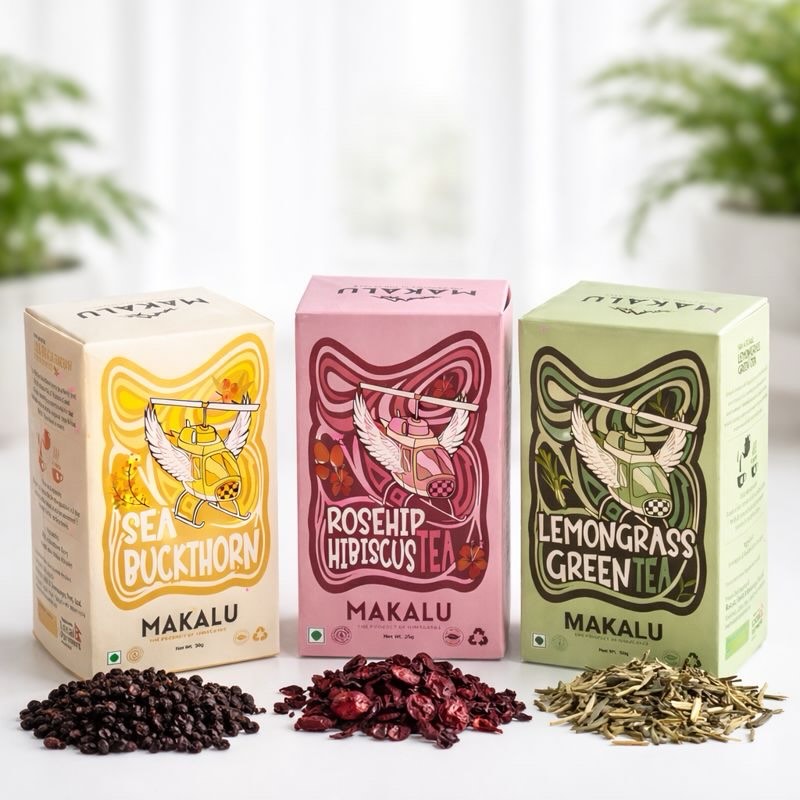
Other Makalu products include lentils, marsi red rice, spices, a range of teas. Sethia’s personal favourite kombucha flavour is rhododendron, but she says silajit is more popular among her customers.
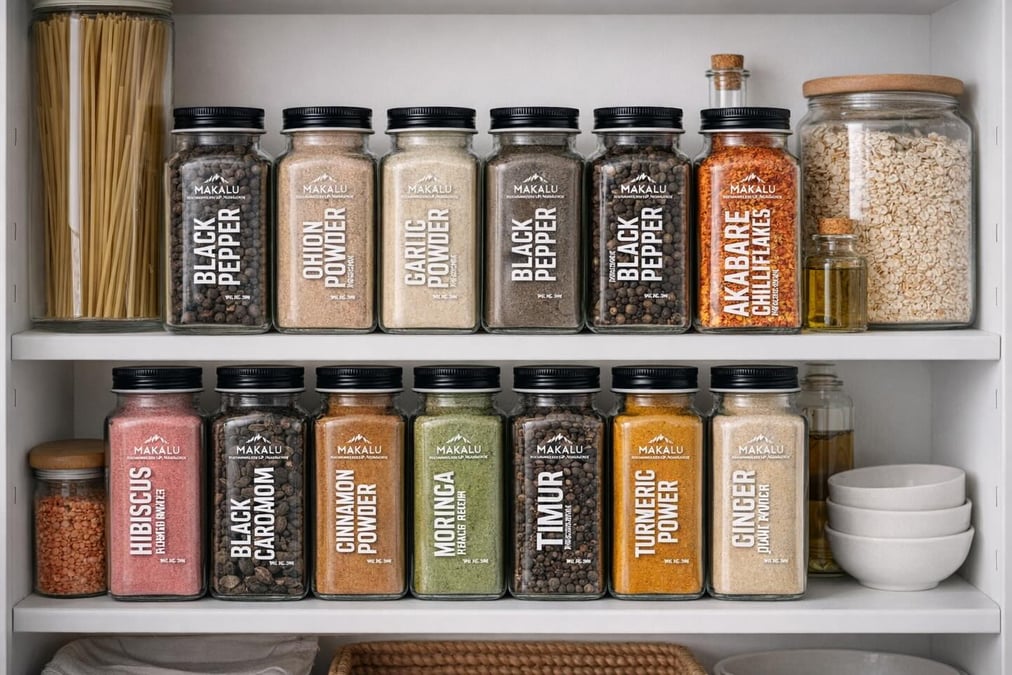
The company’s success stems from sourcing proven and wholesome Himalayan raw material, using tastefully designed and international quality packaging with carefully chosen colour palette and then marketing it in Nepal and abroad. The spices, for instance, come in handy glass bottles with sifter caps.
Sethia is always on the lookout for new products, and has her eyes set on working with chili farmers in eastern Nepal to market akbare to the diaspora. Indeed, there is no reason why hot akbare sauce cannot one day become as popular internationally as Tabasco.
ETHICAL CONSUMPTION
Genuine fair trade and climate consciousness these days are not just essential for marketing, ethical business practices must keep up with increasing consumer awareness. Which is why Makalu Foods regards sustainability as an important component of its food and wellness products.
Carbon neutrality is a comparatively new concept among Nepali companies, but Sethia says keeping a low footprint is a hallmark of her business. She works with Climeworks AG, a Swiss company specialising in direct carbon capture and sequestration technology. “We calculate the amount of carbon dioxide released, then buy the same amount from Climeworks to remove it from the air.”
While carbon offsetting is controversial because it has been used by companies to greenwash by funding unverified climate projects to keep on emitting greenhouse gases, the Swiss company directly scrubs carbon dioxide from the atmosphere for customers around the world.
Sethia, who was named in the Forbes 30 Under 30 list in 2024, notes that climate breakdown can be slowed if people shifted to a vegetarian diet and climate-friendly products. “Fifty one per cent of carbon lies in our plates, so it is all in our hands,” she says.
Makalu Food products is now also sold in India, and Sethia is working to expand the market in Europe. But first, she wants to work some more in Humla and other mountain communities in Nepal to create jobs. Many of the products are derived from herbs that grow wild and cannot be farmed, so sustainable extraction has to be a priority.
“A lot of people have migrated from the mountains, there are very few left to farm,” says Kajol Sethia. “We want to provide employment so those who remain can sustain livelihoods through agriculture. Makalu is for the farmers who make it all possible, then it is for our consumers. And the profit we earn will go to fund animal welfare.”