
This is the 80th episode of Diaspora Diaries, a Nepali Times series in collaboration with Migration Lab providing a platform to share experiences of living, working and studying abroad.
I worked in Kuwait for 11 years before deciding to call it quits. I had not visited Nepal in nine years. A broker from eastern Nepal had arranged the migration of 15 of us, and I was the only one from Jajarkot.
Since the government did not allow domestic workers to migrate, we went through India. We were afraid he might sell us off in India. I had never left my village. As a precaution, we made the female broker accompany us to India till we flew out to Kuwait.
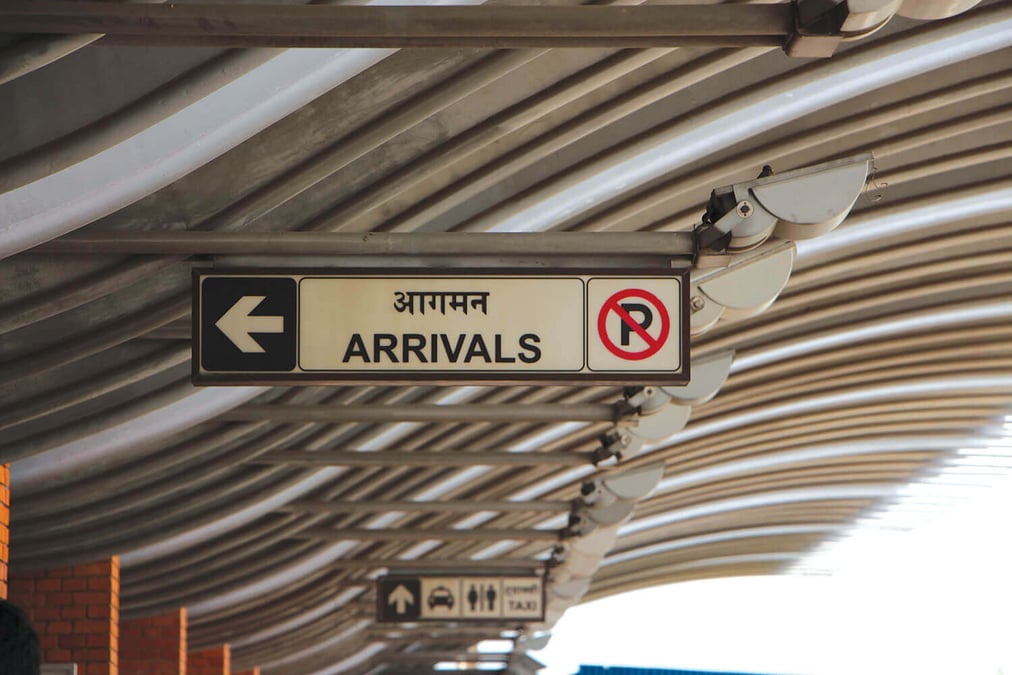
At the airport in Kuwait, no one came to pick us up and we waited there for two days. We did not have any money so we had to beg for food and water. Some gave us noodles, biscuits and water. Others ignored us.
We even drank water from used bottles from the trash. The Indian agent finally came to pick us up but we were too scared to confront him.
The first house I was placed in was not good. I did not speak Arabic and I did not know how to use the iron or washing machine. A Filipino worker helped me, but madam kept following me around and making me do everything twice. It was not easy at all.
Not able to understand the language I was like someone dumb and deaf. Hand gestures were not sufficient. I don’t know how I passed those two years before returning to Nepal. But there were no jobs, no money. So I decided to migrate again to Kuwait because it felt familiar, and by this time I spoke Arabic.
This time, I stayed with the same family for nine years. All four children in the house were born when I was there, so they are very attached to me. Madam was all right although she made me work a lot and micromanaged me. Every family member in Kuwait had their car and driver. Back home we don’t even own personal bicycles.
Taking care of children meant that I could go wherever they went so I got to travel and eat pizzas and burgers. They paid me on time, and I sent money home to take care of my sister, a cancer survivor.
With my savings I also bought land and built a small house in Surkhet. I have no educational background or work experience, so this was a big deal.
For nine years, I did not see a reason to return because of my obligations to my sister and her son. In Kuwait, I met with colleagues from different countries like the Philippines, Sri Lanka, Indonesia and India but we communicated in Arabic. We worked for different families but got to meet every Thursday when madams used to go to her mother’s house.
We got along and fought like sisters, but most of our time went running after the children. There was no time for anything else. Madam’s house where I spent nine years was good, but it is actually how well the employers treat us that is important.
I watched Tiktok videos during my free time. Mostly deuda songs. During the GenZ movement, I was glued to social media. I supported it, but wished they had not burnt down government offices. I was not allowed to post on social media.
By the time I left, I was making around 180 Kuwait dinar a month ($580). I have heard horror stories from Nepali sisters about their employers, but mine paid me well and on time. She could have been better by allowing me to rest more, to use the phone more freely.
Between preparing children for school, ironing, washing, cleaning the house, cooking, taking care of the children, I had no time for anything. Not even to sleep properly. What can we do?
Back in Nepal I often wonder how the children are doing. If they are eating well. You get attached to them, but as they grow older, they also complain about us. I used to sing and dance with the kids. They depended on me for everything and I had watched them right from the time they were born.
Sometimes, they used to refer to me as their mother which my madam did not like. I don’t have my own kids. That is why when I made up my mind to leave, I felt bad leaving them behind, especially the youngest one who relied on me for everything.
Even now, when I think about it, my eyes tear up. Madam asked me to take a long vacation and return to Kuwait, but I had made up my mind to go back to Nepal. A Sri Lankan woman replaced me, and we overlapped for a month as I trained her and the children got used to her.
On my last day, Madam and I decided that I should sneak out without telling the children because they would not be able to handle it. I asked the Sri Lankan woman how the children are holding up, and she said the youngest one still cries asking about me. Madam was also emotional about me leaving, she gave me olive oil, clothes and sweets but no money. I cannot describe how happy I was to get on the plane to return home, my heart was full of excitement.
Since I came back, it has been a very different experience. After nine years of living in someone else’s house where my every move was monitored, I feel so free. I can use the phone as I please. I can sleep as I please. I need to catch up on my sleep. There is so much freedom.
Because of the children, I had developed a taste for pizzas and burgers but they are not as tasty in Nepal, I don’t know why. But the meal I was craving for when I came home was freshly made rice, lentils and mustard greens. I went to the hospital here, and I saw nurses in uniform and it reminded me of the domestic workermaid’s clothes I wore in Kuwait.
I am worried about money running out, even though it has only been a few weeks. Expenses are high in Nepal. The monthly income has stopped. When I went a decade ago, I relied on others financially. Now, there are others who depend on me.
Author wants to remain anonymous.