
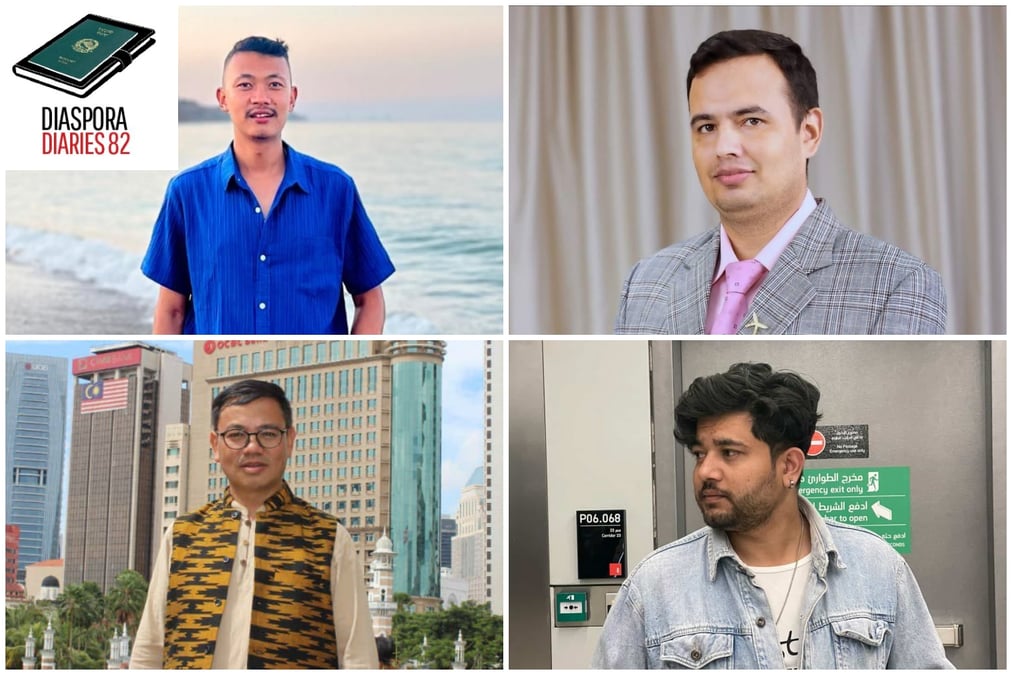
This is the 82nd episode of Diaspora Diaries, a Nepali Times series in collaboration with Migration Lab providing a platform to share experiences of living, working and studying abroad.
In September, under pressure from GenZ activists, Home Minister Om Prakash Aryal pledged to ensure that overseas Nepalis would be able to vote in the March election.
The analysis from experts, election officials, and much of the public was that the Election Commission was not prepared to ensure out-of-country voting in such a short time.
But just because the diaspora cannot exercise its franchise does not mean Nepalis abroad cannot influence the election outcome. The 2021 census said 2.1 million Nepalis lived abroad, but realistically three times more live, work and study overseas.
Being breadwinners also makes them decision makers for families back home. Most have left because they could not get meaningful jobs and sought opportunities abroad, which means they are not happy with the way Nepal has been governed by the established parties and leaders.
The diaspora is therefore mostly an anti-incumbent vote bank, which was one reason the political leadership blocked out-of-country voting for so long – despite a Supreme Court ruling that all citizens had a constitutional right to vote, wherever they lived.
In the 2022 polls, overseas Nepalis had already shown considerable influence by backing newer and alternative candidates like Balendra Shah for Kathmandu mayor, and parties like the RSP.
In the four years since, and especially since the GenZ movement, support for a political shakeup has grown even stronger. So has technological reach that enables the diaspora to politically organise from overseas.
‘Technology has reduced the distance in communication, but has also lowered the barrier in a way that allows overseas Nepalis to pressure family members,’ author Narayan Wagle wrote in an op-ed on Setopati this week.
Indeed, all it takes for family members to be convinced whom to vote for is an ultimatum that relatives will stop sending money.
With less than a month to go for the 5 March election, many Nepalis overseas are campaigning remotely for preferred candidates, even if they cannot themselves cast ballots.
The overwhelming feeling seems to be that younger candidates should be given a chance.
Read what some Nepalis abroad have to say.
NEPAL'S NON-VOTING MIGRANTS
My Respected Parents
Anil Gole, Romania
[This letter is a letter to my parents ahead of the election. They are UML supporters, my uncle is for the Nepali Congress (NC), and my grandfather supports the Nepali Communist Party (NCP).]
My Respected Parents, I hear that election fever has picked up in the village. New faces with new ways of thinking have emerged this time. I don’t really understand politics, so what I say may feel bitter.
But Father, when I see the flag with the sun in your hands, I remember the heat of Qatar from 12 years ago, your sunburnt skin and mother’s cheeks wrinkled with worry. Perhaps Uncle, too, found the Saudi heat so intolerable that he returned home. That may be why while seeking shade, he found the NC tree symbol endearing.
Great uncle spent his whole life back home in the village, which is perhaps why he identifies with symbols like the plough, the sickle, and the hoe.
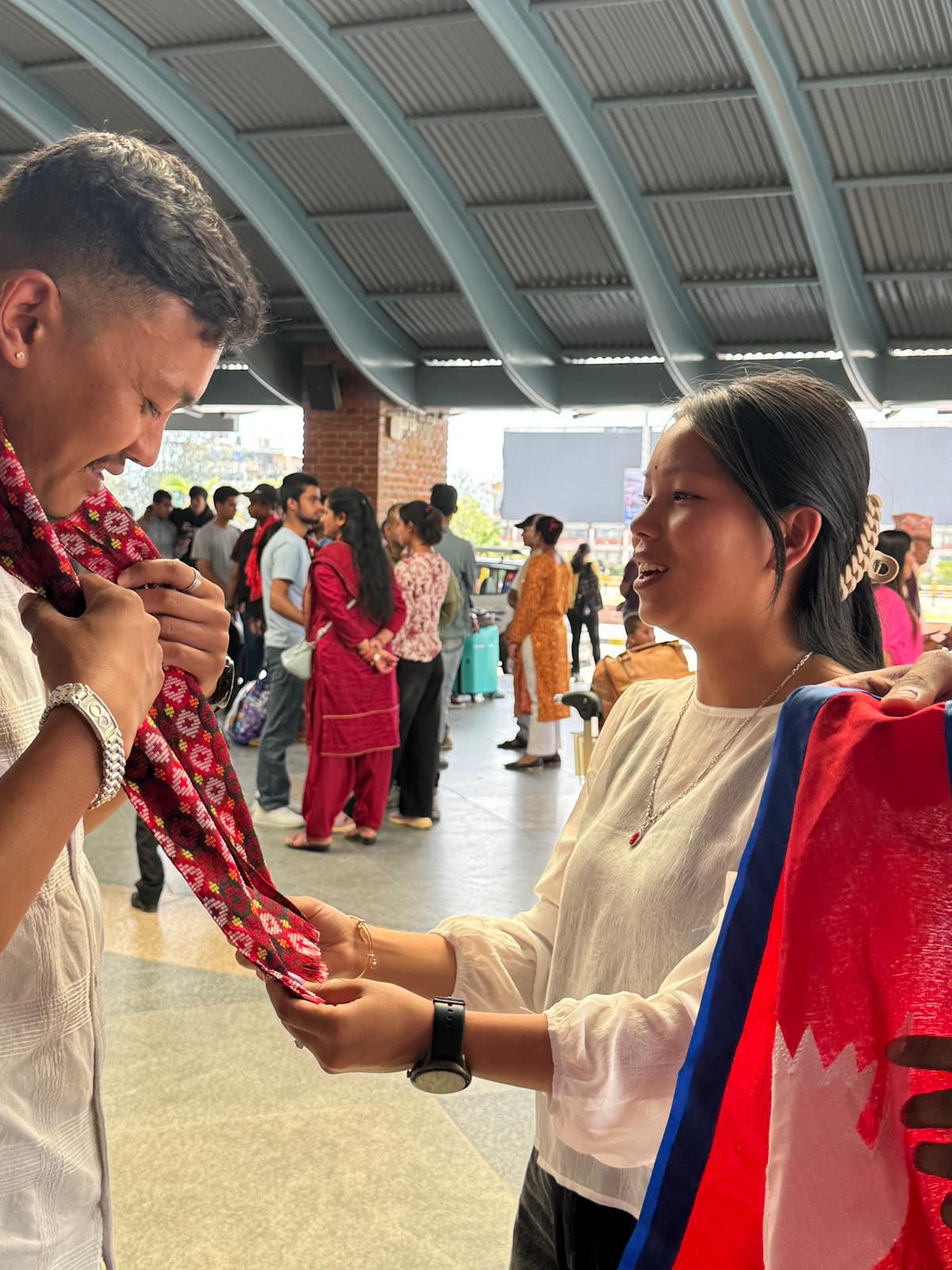
Even then, at any cost, vote for the same politicians. Vote for the same politicians who have not developed the country, who have not fed the poor, whose sons have not been shot.
What if the country does not change? I have changed my country. When homesick, I have learnt what it feels like to suffocate in tears under a blanket. Now my younger brother is old enough. Send him here as well. We brothers will earn together. We will marry off our sister in a grand way.
So what if the country does not develop? We will build a small, cute house with a big yard. You can play with the grandchildren there. And when they grow up, they too can migrate.
But if you vote for the right people and the country gets good leaders, future generations will not have to sweat in foreign lands. They will not have to leave the comfort of a mother’s lap to spend nights abroad in unknown cities. No matter how hard things get, they will not have to lie in letters to their mothers,saying, “I’m doing fine, Mother.”
I have not lost courage because of your blessings. My body is here, but my mind is always back home in Nepal. Your children are here, but my children’s future is in your hands. That is why vote for the same politicians whose hearts did not bleed even when the young were killed, the same politicians whose children have not come home in a box. Mother and Father, please take care of each other.
Yours truly,
Your fortunate migrant son
Algorithm versus vision
Ambika Paudel, Qatar
I have been in Qatar for 18 years, and work in the facilities management, engineering, shipping and logistics industry. I get to interact with people from across the world, and they are closely connected with their embassies through online systems and communities. I lead the Nepal Expatriate Community that has multidisciplinary professionals and have observed the need to revise the narrative around migrants.
We are here for our families. The sacrifices we make are for them. We are working for our own career growth and families because there were no opportunities back home. Many of us have achieved a good standard of living through our hard work and merit. When I send money to Nepal, it is for my family and the benefit to the government is a byproduct.
It would have been good if we got to vote, too. That possibility and promise got lost somewhere in the policy confusion and lack of technical capacity. Overseas Nepalis are also deeply invested in the election, but it is largely algorithm based. We are not questioning the vision of the candidates.
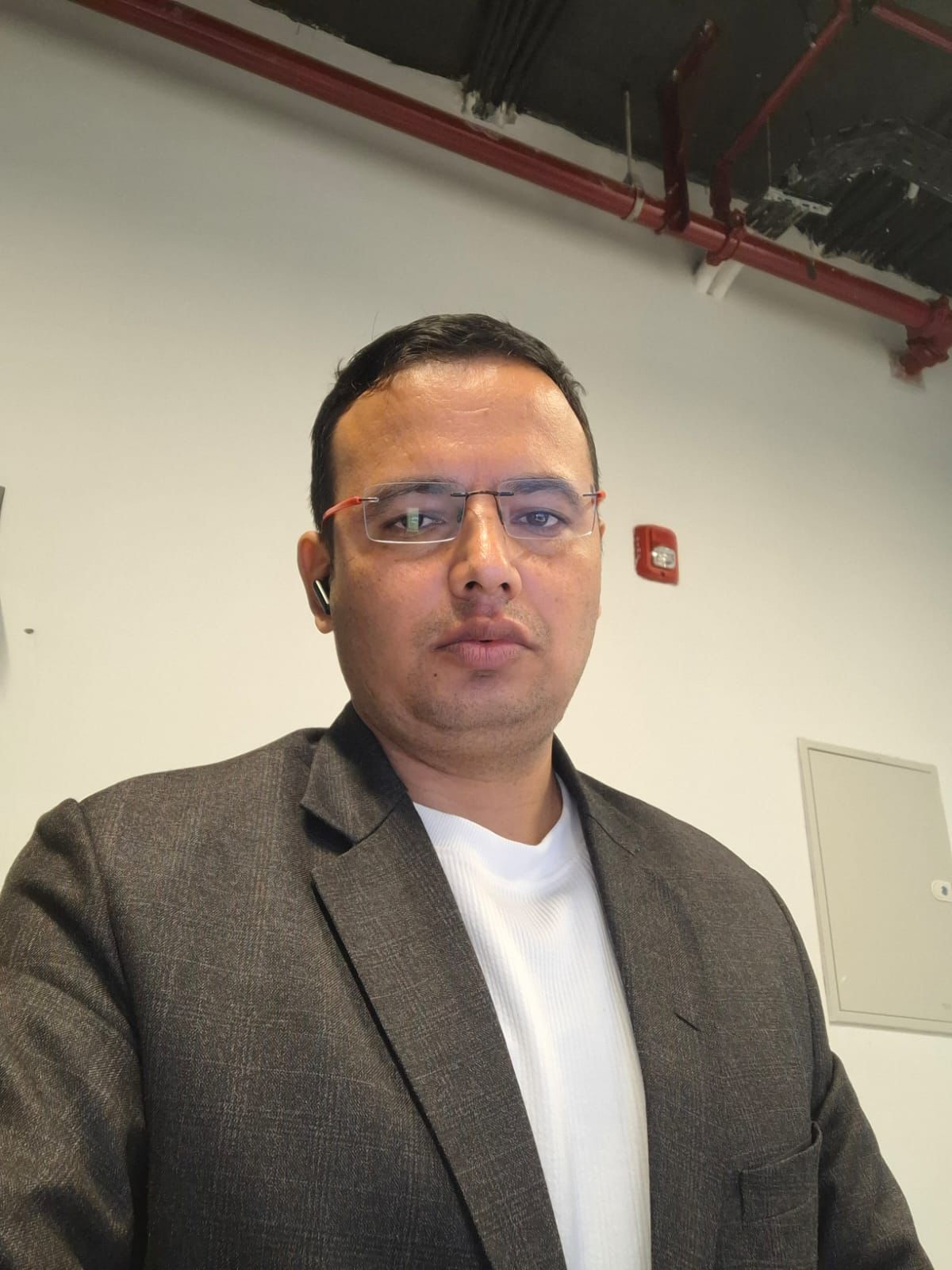
Our parents back home are the actual voters, and those overseas are talking to them. I don’t think they will be swayed just based on calls, and they shouldn’t be either. We are prioritising algorithms and words and social media boosts over vision, experience, and concrete plans.
I am for the NC but I am not a blind supporter. Despite being at the forefront of every significant democratic change in Nepal’s history, the party has had lapses but it is currently on a new trajectory. Not all candidates of all parties are good so we have to elect competent leaders and question them. Whatever promises they make need to be examined for delivery and vision.
There are also Congress loyalists who are swayed and influenced by the new, but I let it be — it is their right, their choice. Change requires vision and experience, it should not be based on hype, I remind them. Over online conversations, I tell them to vote wisely so they don’t regret it later. I returned from my break just recently so I cannot come home to vote as it will be too expensive.
There are good human resources back in Nepal and in the diaspora which can be used. There are people in decision-making positions in their companies who are very capable and intelligent who could contribute to Nepal. These are missed opportunities in our policymaking and governance: Nepal needs to create opportunities for capable Nepalis.
The new government can make the investment climate better through a one-door system so that services are accessible, quick and there is no need to go to multiple offices to start a company or pay taxes. This would also stop unnecessary bribes and other hassles.
I don’t have plans to return in the near future. I have a good job and am earning well. I came to Nepal between 2016 and 2019 and remigrated again after things did not work out.
The young need convincing
Jeevan Kumar Dewan, Malaysia
I have been living in Malaysia since 2001, and am an active member of the UML wing here. There is excitement about the upcoming election, but we are bound by contracts so cannot go home to vote.
There was hope that we would be able to vote from overseas, but there were questions of security. Even though we won’t be able to vote, people are actively participating online and using social media to show their support to their candidates and parties of choice.
Political parties prioritise organisational expansion overseas but there is no direct campaigning during elections. It is through conversations and social media engagement that people are participating, debating and expressing their support and loyalty.

As a UML supporter, it is my duty to remind people to cut through the noise and to separate facts and truth. While elderly voters don’t need much convincing as they are loyal to the party, I do engage a fair amount with the young voters. I have to remind them not to get distracted by the videos shared in social media platforms. All new is not good just because it is new if there is no real political agenda.
There is no doubt that we need change but being new is not enough nor can we overlook the contributions and experience of the old parties. All we can do is talk to the voters and try to get our message across.
It is important to prioritise better managed migration and also to ensure migrants have proper guidance on how to invest their hard-earned money in productive sectors, even when it is not much, so they have something to fall back on after returning.
I don’t have plans to return immediately, I go back and forth quite frequently. I have a stable job and I have seen how my friends who left secure jobs to return home ended up remigrating after their investment failed. I will stay here and continue with my job which I am happy with.
The old need convincing
Prajwal Poudel, Saudi Arabia
I work as a data entry analyst in Saudi Arabia. People overseas have seen development, but have also experienced challenges of being away from home. Politicians are aware of this and didn’t want us to vote.
When I was in Nepal, I did not care much about politics. It was not for me. But overseas we care about Nepal even more. Perhaps you don’t know the value of something unless you lose it.
Perhaps distance makes hearts grow fonder. I am definitely more invested in Nepali politics after leaving.
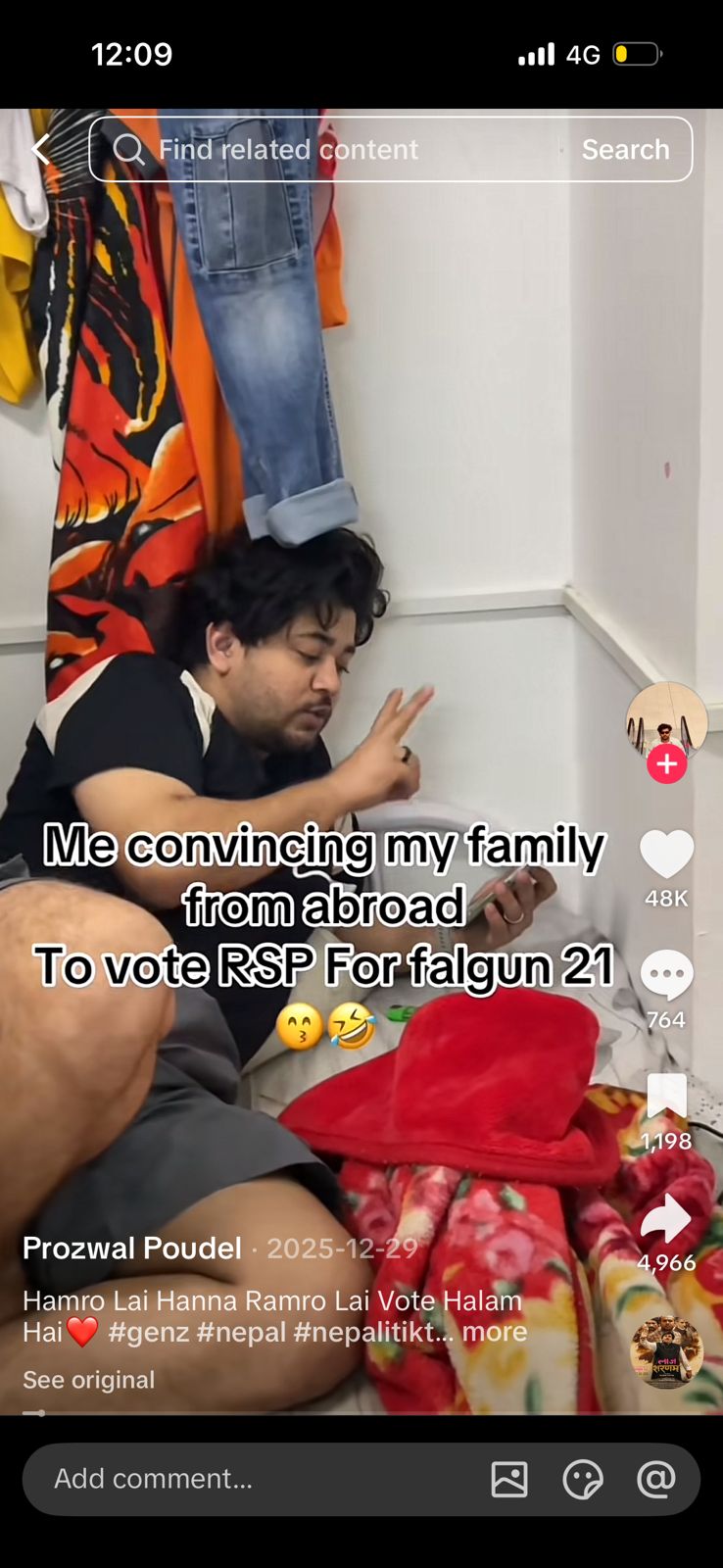
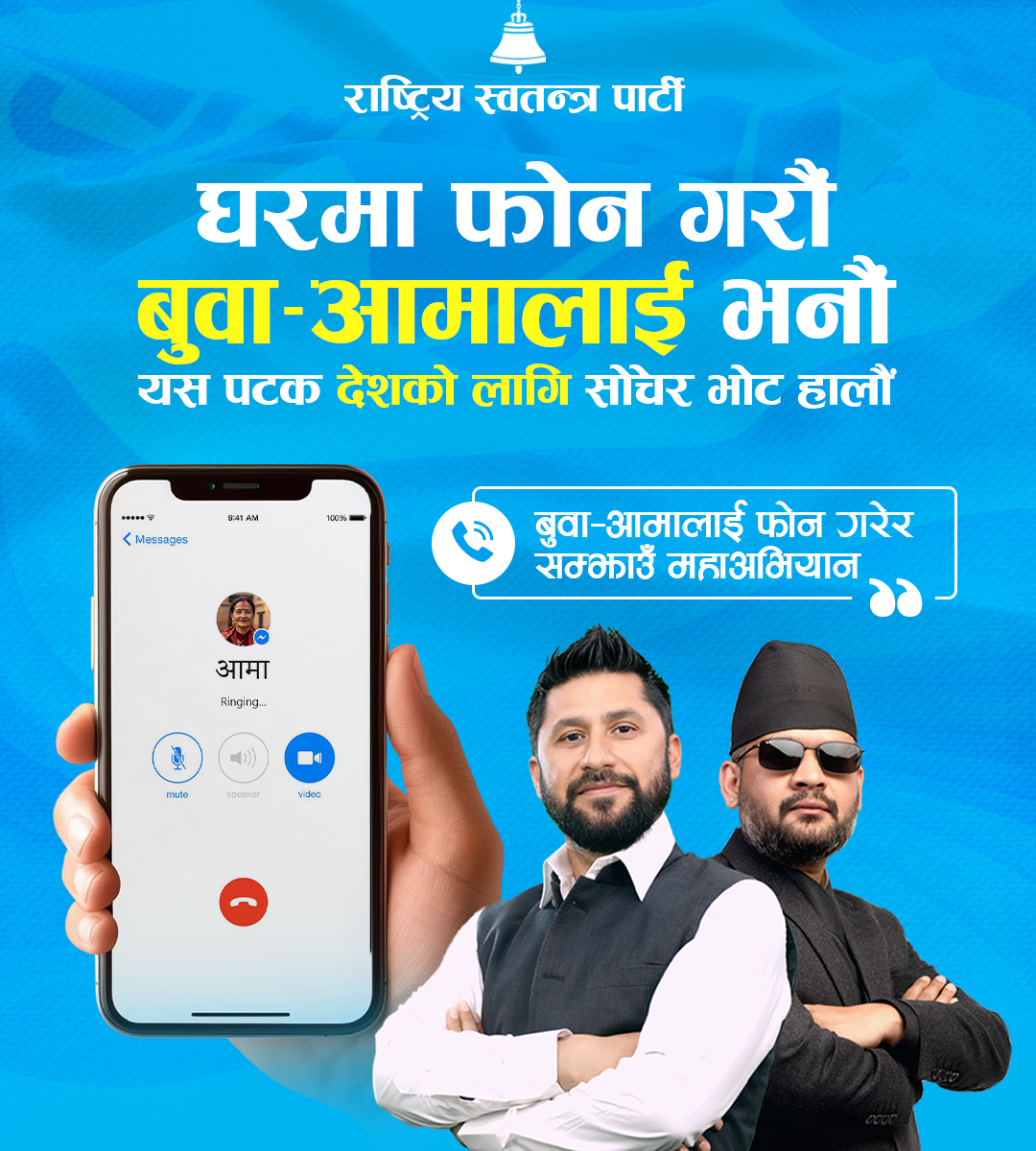
So I have to make sure that family members back home make the right decision this election. My cousin is also with me in Saudi Arabia and I was talking to his parents and telling them to vote correctly. They have voted for the same faces for two decades. I said that if there had been changes we would not have had to migrate. That this time they should accept the masu-bhat and alcohol, say UML-Congress jindaawaad, take the money offered but finally stamp on Ghanti.
My cousin posted a recording of that call spontaneously on Tiktok. It went viral perhaps because it resonated with the youth. We cannot vote but we have to make sure at least our close family members vote correctly. My mother also seems ready for a change despite her loyalty to the UML, but I tell her she does not need to change her party just change her vote this year.

We need to give the new ones a chance. But it’s also true that the new will not bring dramatic changes overnight. Conversations here are all about the election back home. We talk about who is getting elected from their areas. Who they think will win. But the hottest topic of conversation is of course Jhapa.
For those of us abroad, the government should make our embassies stronger. Back home, I hope corruption will be curbed and that good roads will reach all corners of the country. This will allow people to develop the country themselves.
I am the son of a Malaysia returnee. I even worked as a teacher in Nepal. I could not even afford decent clothes so I left everything and came here. I don’t know when I will return.