Nepal's community forestry program doubled tree cover to 45% in 30 years. Nature sanctuaries make up a quarter of the country's area.
Two years ago, Nepal’s national parks marked five years with zero rhino poaching. Nepal is also the first tiger range country to nearly triple its population of the big cats.
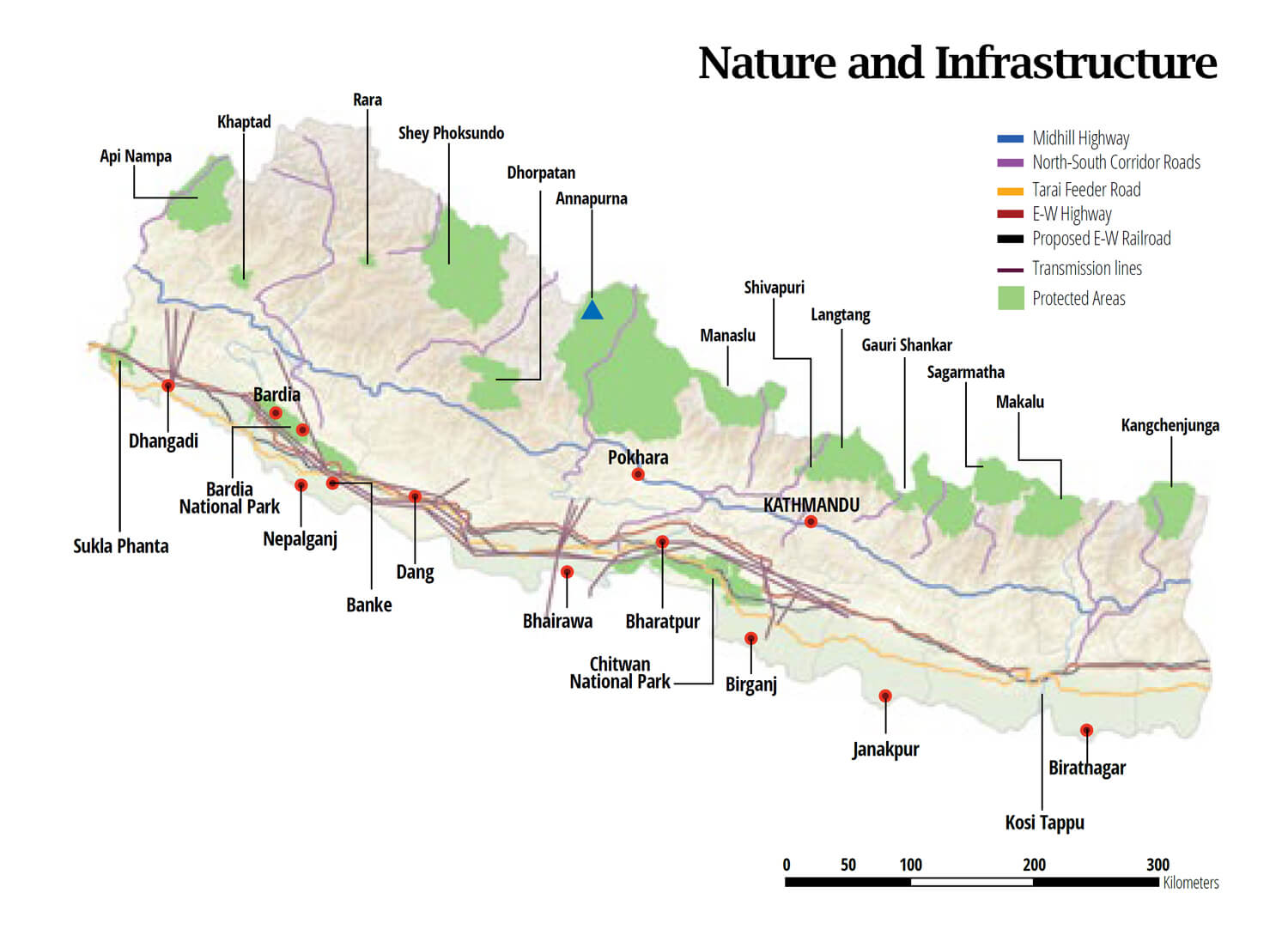
But new linear infrastructure projects will soon be crisscrossing national parks along the Tarai, disturbing the habitat and blocking wildlife migration routes.
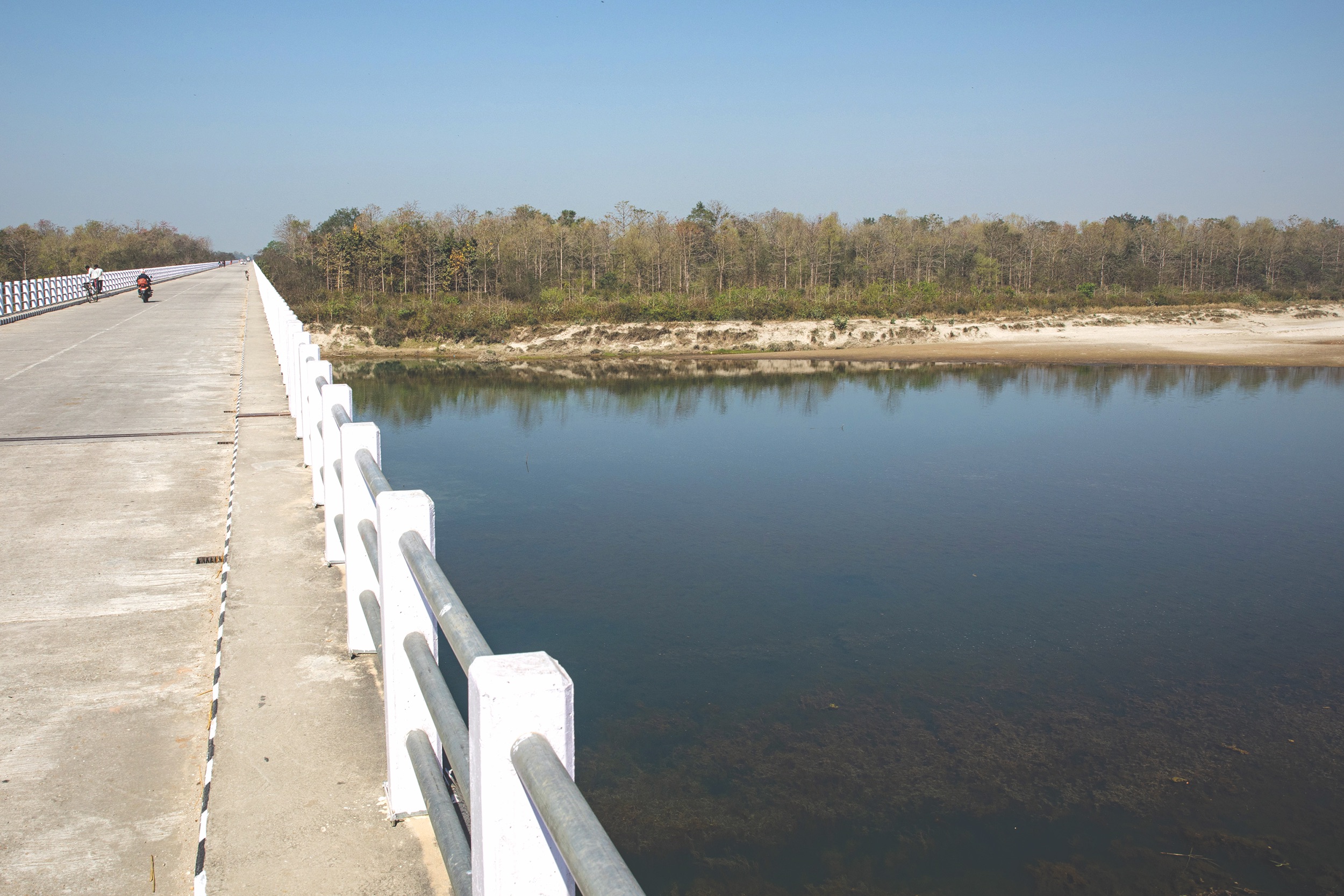
Nearly 400km of the 1,028km East-West Highway slices through national parks in Parsa, Chitwan, Bardia and Banke districts. Transmission lines have been built through protected areas, more are planned. Irrigation canals such as Babai, Ranijamara and Sitka obstruct wildlife movement pathways.
“Nepal is among the fastest growing countries in terms of infrastructure, but projects are also the least well planned,” says World Wildlife Fund Nepal (WWF-N) Country Director Ghana Gurung.
Development vs conservation has been a longstanding dilemma for countries like Nepal, but experts say it need not be. Around the world, planners are now building infrastructure with climate-smart and wildlife-friendly safeguards. With technical expertise and investment, there is no reason Nepal cannot do the same.
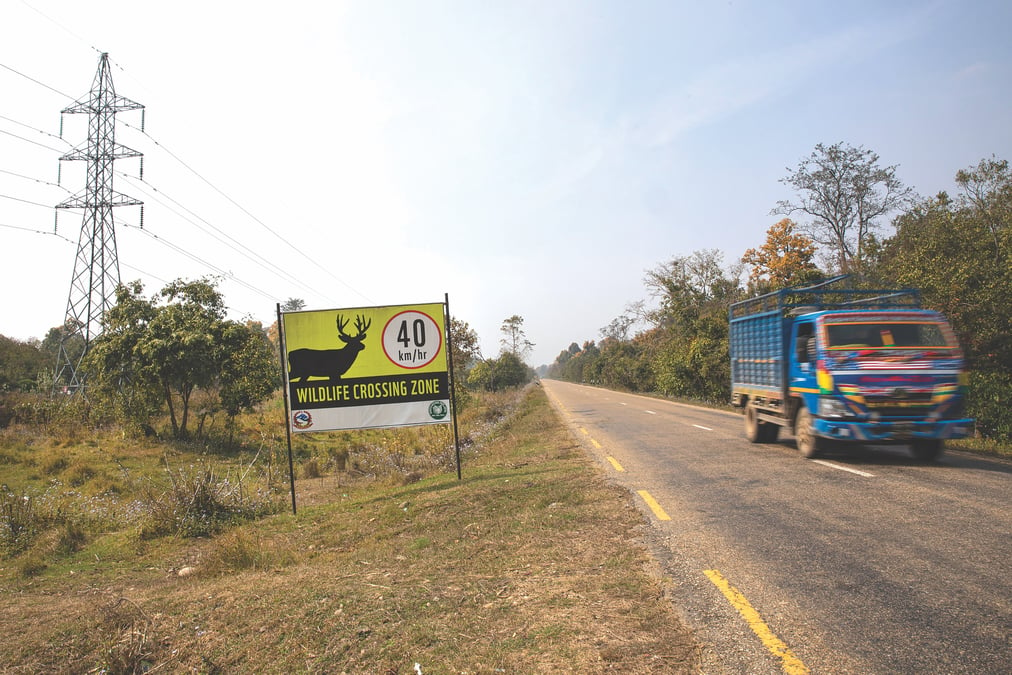
In fact, the 30km Narayanghat-Mugling Highway features the first two of Nepal’s wildlife underpasses where the busy highway artery passes through an important animal migration corridor. Camera traps at underpasses showed deer, wild boar and other animals used them regularly, with half the wildlife movement occurring in winter when animals search for water
The Narayanghat-Butwal highway, which is being upgraded, will have 40 wildlife crossings along the Daunne-Gaidakot section. Their location is being determined after monitoring wildlife movement in the area. The project funded by the Asian Development Bank (ADB) will also monitor how much the animals use the crossings.
The facilities are necessary not just to prevent the fragmentation of wildlife habitats, but also to reduce roadkill of endangered species.
But there is contradiction between road engineers and conservationists, with the former prioritising connectivity while the latter are blamed for one-dimensional advocacy for wildlife.
Bridging this gap is the recently launched Asia’s Linear Infrastructure safeGuarding Nature (ALIGN) project which aims to protect protected areas from the impact of new infrastructure.
Funded by USAID and implemented by WWF, the ALIGN project was launched at the United Nations Biodiversity Conference in Montreal in December 2022 with an initial focus on three countries: Nepal for its rich biodiversity, Mongolia for its fragile protected areas, and India which is accelerating investment in infrastructure.
ALIGN has three main objectives: refine and strengthen existing policies such that they align with international best practices, enhance partnerships to promote and support investment, and implement safeguards for linear infrastructure and capacity building.