Two weeks ago, Prime Minister KP Sharma Oli announced jubilantly on social media that Nepal had achieved a historic annual growth of 81.8% in exports.
He was right. Nepal’s trade did take a great leap forward compared to last year. But the dramatic rise was mainly due to processed soya bean oil.
However, Nepal does not produce the edible oil it exports. In fact, the soya and palm oil that make up 44% of total exports are imported from Southeast Asia and South America, and simply re-exported, mostly to India.
Under the SAFTA (South Asian Free Trade Area) Agreement, Nepal can export products to India duty-free if it has at least 30% value-added. Nepal’s traders have taken advantage of SAFTA even though the edible oils they export do not reach that value addition threshold.
“The 30% value addition requirement is often only on paper,” says former commerce secretary Purushottam Ojha. “It is clear that simply packaging edible oils in Nepal does not fulfil the terms of the trade agreement.”
Prime Minister Oli is aware of this, and even called Nepal’s export figures “fake” at an earlier event.
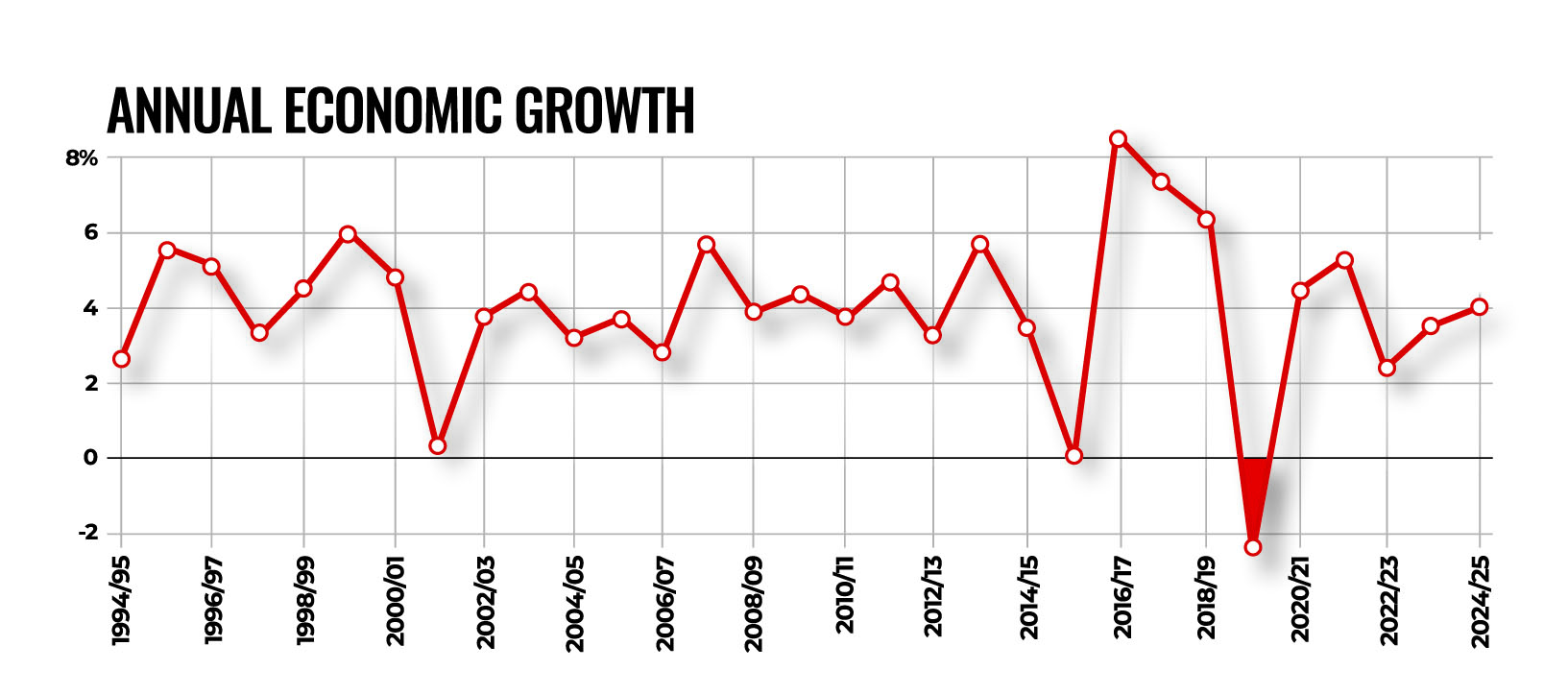
The government is relying on other iffy figures to suggest that Nepal’s economy is strong and getting stronger. For example, the value of imports rose by 13.25% in 2024-25 compared to the previous fiscal year.
Some of it was due to a jump in electric vehicle imports worth Rs 31.76 billion, but mostly it was because more wholesale soya oil was imported to be re-packaged and sold in India.
The very fact that the government boasts about increased imports is an indication of how much it relies on taxing them for revenue. Touting such trade figures cannot be the basis to claim an economic rebound.
“A jump in the value of imports can be interpreted as an increase in purchasing power, but it is not evidence of a stronger economy,” says economist Keshav Acharya. “Even though imports have increased, Nepal's domestic production and productive capacity have not improved.”
Nepal Rastra Bank's semi-annual economic activity study report shows that industrial production was down in the first six months of the last fiscal year.
This despite an increase in the number of new industries registered and investment commitments. Out of the Rs70.2 billion proposed foreign investment, Nepal received only Rs17.9 billion last year.
Meanwhile, the rate of capital formation was limited to 24% last year, which is lower than the year before, suggesting that new investment, job creation and economic expansion all declined.
If domestic production does not improve in relation to this year’s inflated trade figures, the outflow will put pressure on foreign exchange reserves like it did three years ago. At that time, Nepal borrowed from the IMF under its Extended Credit Facility Program to kickstart the economy.