Nepal got a radically new and young government this week, and among the many choices it has to make will be to decide on embracing bleeding edge technology like cryptocurrency and the blockchain.
All crypto activities are currently banned by Nepal Rastra Bank (NRB), and violations can be punished by confiscation of bought goods, fines of three times more, and prison time.
“This ban comes from ignorance, not strategy,” says blockchain expert Bijay Bogati, Head of Engineering at Mandarix IT services. “Nobody at the policy-making level in Nepal really understands the technology.”
Bogati is also building the Himalayan Art Council’s art certification blockchain, which tracks and archives the transaction history of traditional Paubha paintings as non-fungible assets, ensuring the original artists are credited and paid if the artwork changes hands.
This group of technology, often called Web3, is not a fringe movement anymore. Some governments recognise that digital assets have to be integrated into their economies, although there are also those who say it is a corrupt bubble.
Donald Trump announced a strategic bitcoin reserve for the US government a year ago. El Salvador has adopted bitcoin as legal tender, and even has ATMs for conversion. France recognises it.
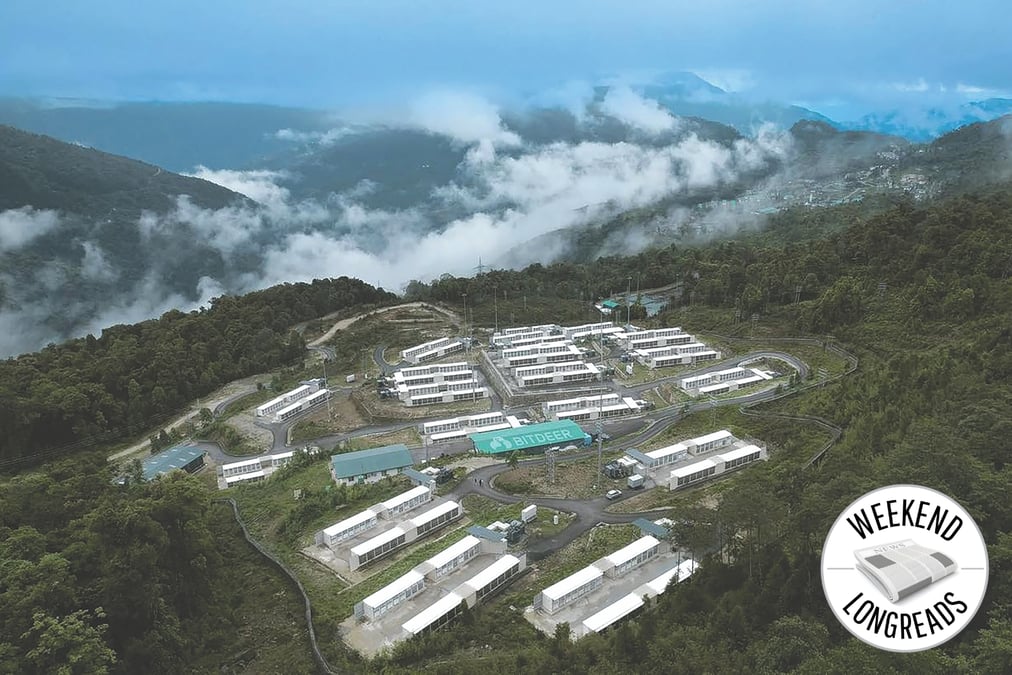
Bhutan uses its surplus hydroelectricity to mine bitcoin at its Gedu data center and has used earnings to invest in its Gelephu Mindfulness City project, boost civilservant salaries, and curb the brain drain.
In this month’s GenZ-inspired election, Nepal’s voters replaced the older generation of leaders with mostly millennials who are more fluent with new technologies.
The tech sector has grown with the country exporting nearly $1 billion worth of software products last year. This is seen by some as the perfect timing to harness the technology in the national interest.
NEPAL’S BAN
Central banks and financial regulators are averse to switching to technology, and NRB fears crypto transactions could foster money laundering, terrorism financing, capital flight and tax evasion.
Critics say this is hypocritical, like a pot calling the kettle black, because it ignores the fact that Nepal’s centralised financial regulator has itself not been able to control rampant corruption, money laundering and tax malpractice.
The NRB justifies its ban by saying that people were getting scammed or were at risk of losing money when influenced to bet on digital assets. Others reject this reasoning, saying it dictates how people spend their money.
A real concern for Nepal in recognising crypto would be in maintaining ties with bodies like the International Monetary Fund (IMF) and other international creditors, just as the backlash some countries have faced.
In Nepal, it is the cybercrime department of the Central Investigation Bureau that invigilates, and it has made a handful of arrests since 2017.
But ambiguous laws and a lack of knowhow about the technology means enforcement has not been easy. Says Bogati: “Crypto persists in Nepal. The ban just pushes activity underground.”
BHUTAN’S PLAN
Bhutan started mining Bitcoin in 2019, when the price for one BTC was $5,000 -- it is now over $70,000. The logic was simple: the country had excess hydroelectricity which was used to power supercomputers to mine bitcoin.
The energy was renewable and fit in with Bhutan’s sustainability commitments. The country’s cold climate meant less heat was required to cool the machines.
It was state-owned entities doing the mining. Crypto was not something the average Bhutani used every day, and the country has accumulated over 13,000 BTC valued at up to $1.4 billion — 40% of its GDP. It has sold some BTC and used it to raise civil servant salaries and try to reverse youth outmigration.
Nepal also has surplus clean energy, especially in the monsoon, and also has natural cooling in the mountains. It also needs money. Every terawatt-hour (TWh) of electricity is worth roughly $84.8 million in gross mining revenue at current bitcoin prices. Nepal’s current surplus of about 3TWh would translate into $254 million a year. Selling the same amount of electricity to India earns Nepal only $56 million a year. In the near term Nepal’s surplus hydropower is expected to reach 14TWh, generating about $1.2 billion a year — almost 3% of its GDP.