

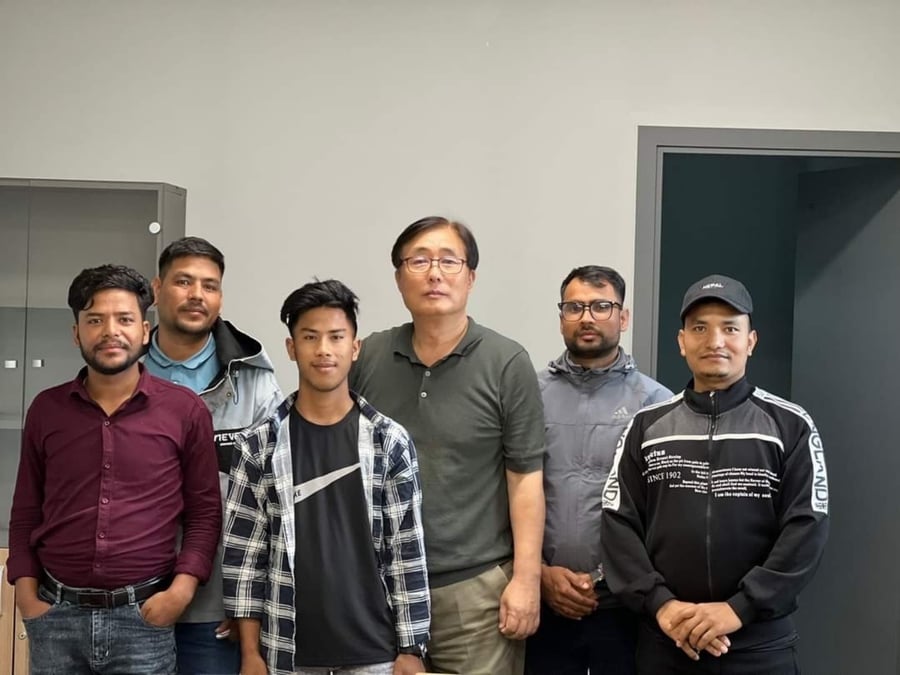
In 2025, Nepali Times has featured Korea returnees in its Diaspora Diaries series, but what about the other side? Who are the employers hiring Nepali workers? Employers play a critical role in determining if migration benefits workers or not, not just while in Korea but also after they return.
Jonga Sun is an employer under the Korean government’s Employer Permit Scheme (EPS) who has hired over 20 Nepali workers in the past ten years in his livestock farming businesses.We interviewed him on a recent visit to Nepal, and his responses were translated by Dip Kirati, a Nepali who has returned from Korea.
Nepali Times: What is your role as an EPS employer in Korea?
Jonga Sun: I have worked in animal husbandry for about 30 years and currently operate two parent chicken farms, two parent duck farms and three pig farms in Korea. I come from a very humble background. I did not go hungry during my childhood, but my parents’ generation sometimes survived just on water. I may not have got enough to eat, but I did not have to go hungry.
Korea was developing rapidly, and living standards were improving, which was reflected in their protein intake. When people start earning more, the demand for meat products goes up. I was lucky to get into this business just at the right time. Korean livestock farmers are doing better than others in the agriculture sector. It helps that the Korean government also provides us with incentives.
Initially, I did not know about the EPS scheme, or that I could hire workers from Nepal. I used to have farmhands from Vietnam and Thailand. The first group of Nepali workers I hired was already working in Korea at a farm that I took over. But since the last ten years, I started directly recruiting Nepalis through the EPS scheme and have hired 20 workers from Nepal in the last decade. The government procedure to hire EPS workers is not complicated.
What brings you to Nepal this time?
I have been to Nepal many times. The first time I was here in 2019 was for market research. In South Korea, broiler chickens usually weigh 1.5 to 1.8 kg and there was discussion about raising bigger chicken. Chicken in Nepal weigh 2-3kg and I wanted to explore this further. At that time, I met some EPS returnees including those who had worked on my farm and found they either did not have a job, or were waiting to migrate again despite the skills, experience and money they came back with. Although I had come to Nepal just to understand why chicken were bigger here, it pained me to see the state of some Korea returnees including my former workers. I wanted to see what role I could play in helping them get established here.
I am exploring how I can support Korea EPS workers both before migration and after they return. When Nepalis come to Korea, they are young and without adequate experience. They have language skills, but it would also be good if they had some basic knowledge about the work they will be doing. I cannot speak for sectors like manufacturing that also recruit foreign workers, but in livestock farming, this would be beneficial for both employers and workers. For employers, transitions would be easier if workers are more knowledgeable about their work and for workers, they would not just feel more prepared about their overseas stint but would be able to set proper visions and goals for themselves.
I want to help establish returnees as entrepreneurs so they don’t have to stay idle or re-migrate to Korea or elsewhere, which I have seen in many cases although I have also met many returnees who are running successful ventures. Some workers even go into hiding and work irregularly to avoid coming back. I am sure more EPS companies would be willing to support initiatives to help Nepali workers who have returned from Korea thrive as entrepreneurs.
But government policies need to be more friendly and less time consuming so that individuals who have other priorities with their core businesses in Korea are not dissuaded.
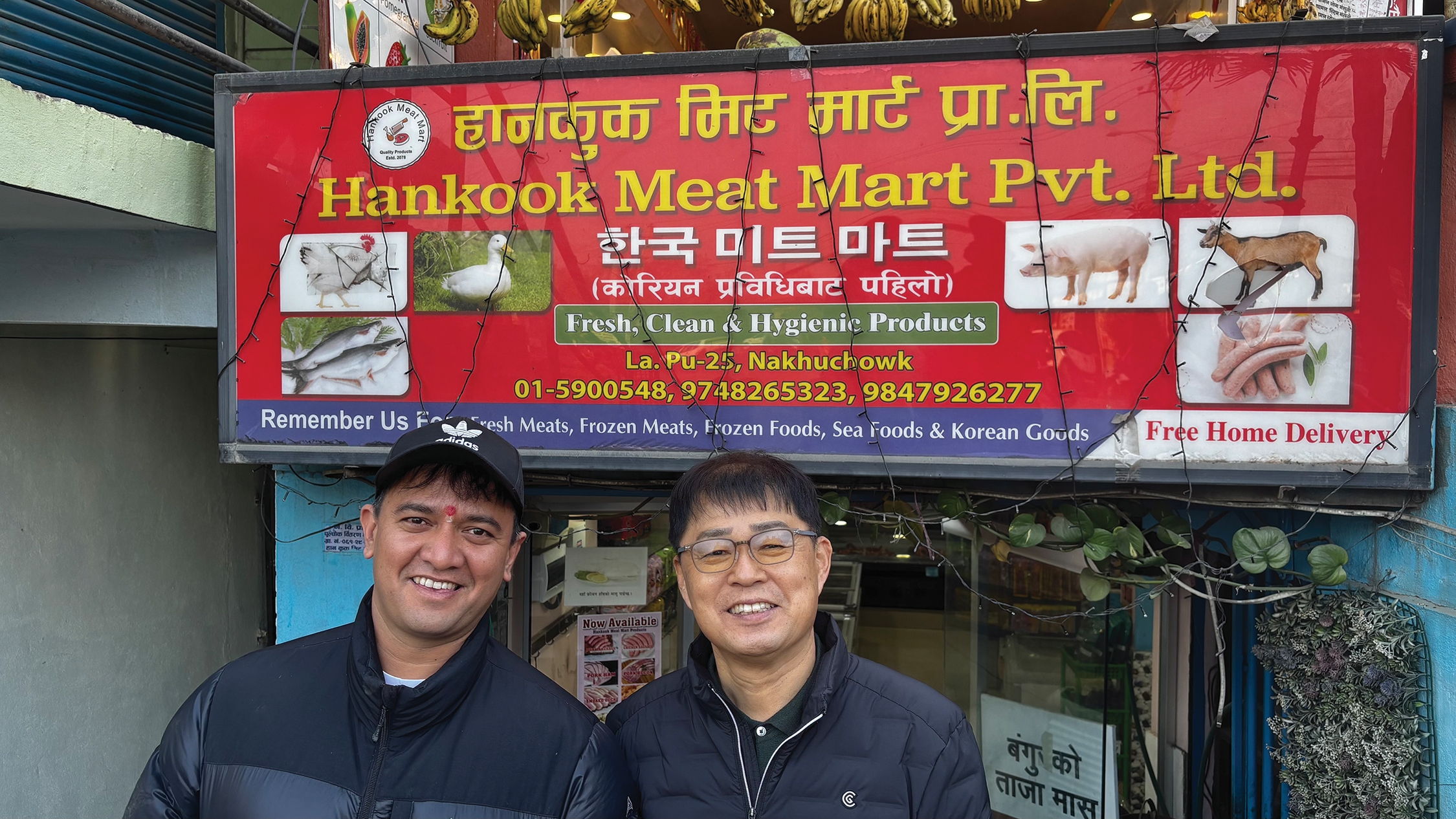
What is the reason for your continued engagement in Nepal?
My biggest priority is to help establish returnees in Nepal. Even if I managed to help 10 Korea returnee entrepreneurs in Nepal, I would be happy I benefited as an entrepreneur in Korea when the country was rapidly developing. I want to give that back by engaging with Nepalis who have returned from Korea, including those who have worked in my farm for years.
It would be meaningful if workers who have contributed to the Korean economy and to their employers also become entrepreneurs and job providers themselves in Nepal. If they can translate the knowledge, finances and experience that they get in Korea and we can play a hand to enable that, would make me happy.
Based on your experience with Nepali workers, how do they change from the time they arrive and at the time of their contracts?
They are young when they come. They are far away from their families. And work pressure is quite heavy in Korea, there is no denying that. So we improve the work environment, including accommodation and food. We can teach them a lot about farming, and these skills and experience will be useful back in Nepal.
But a lot of what they learn during their time abroad is focused on practical things they pick up at work. This may not always be sufficient because they may learn ‘how’, but not as much ‘why’ which is also needed if they want to become experts and start their own ventures. Theoretical background and sound in-depth knowledge are needed along with business and management skills.
There is a limit to what we can teach when they are employed. Of course, for those who are keen to learn, we are more than willing to guide them. Some even want to learn outside their work hours or work area thinking of their long term plans and what their options are once they head back. But for many, such resources also need to be made available after they return. It is also common for some workers to be enthusiastic about learning when they start out, but to prioritise earnings as time passes. It is still too early to tell how my former workers will fare back in Nepal.
What key lessons can Nepal draw from South Korea’s labour migration model?
Korea was very poor in the past. Many Koreans were migrant workers in West Germany in nursing and mining. Many went to Saudi Arabia. They did not just send back money, many returned to use their technical know-how, finances and skills in our economy, including the manufacturing sector which became the backbone of Korea’s economy. I do not come from that generation, but my parents did not go overseas because they were from rural Korea. They missed out on the migration wave.
Nepal too relies heavily on migrants and remittances. But it is sad that many Nepali returnees want to re-migrate even after spending almost a decade in Korea with their savings and experience. The Nepal government needs to change this and create the environment to provide opportunities to retain them.