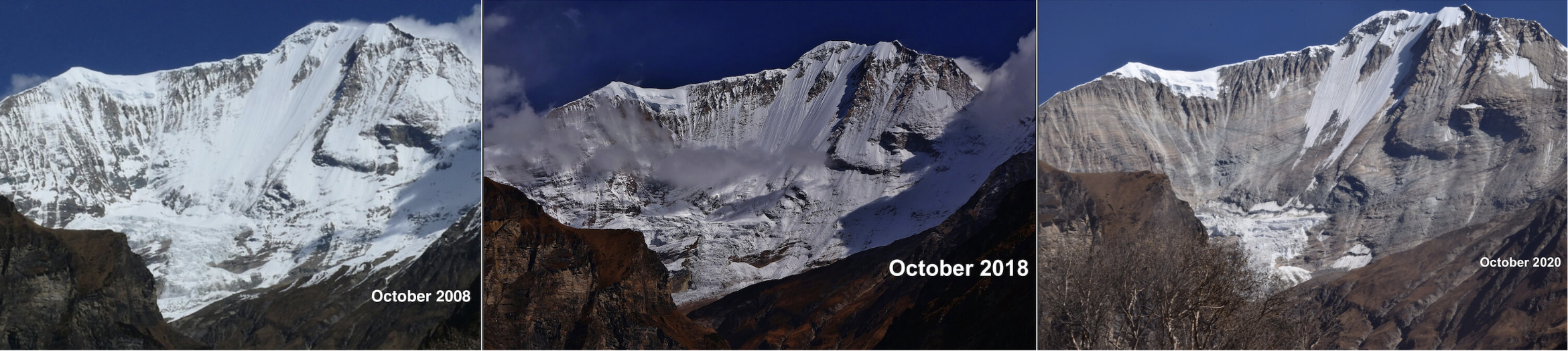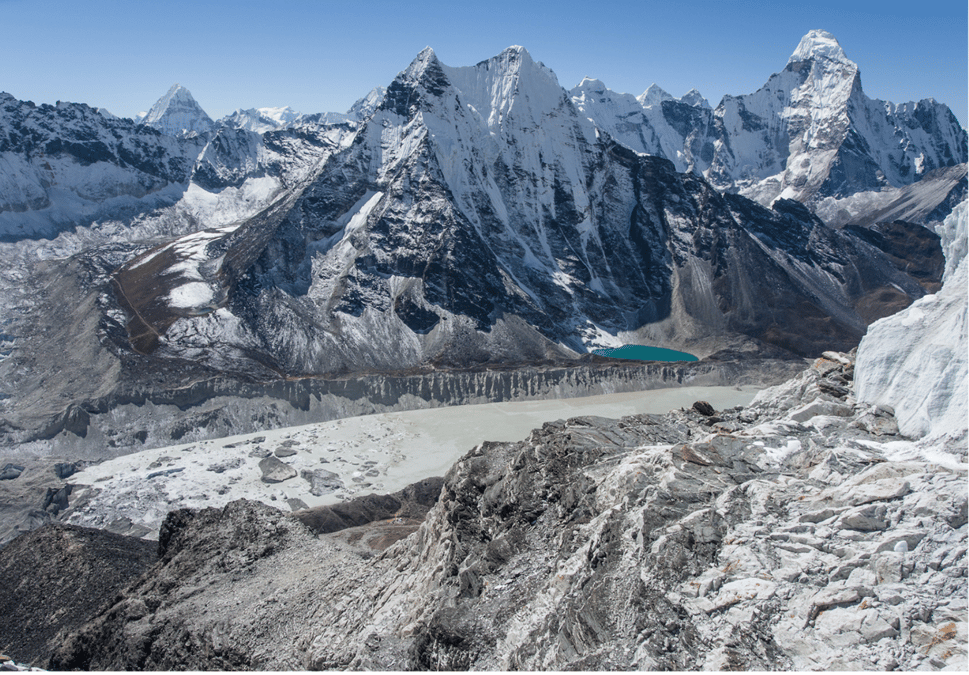
Four years after scientists put out a worrying report about the melting Himalayan icecap, they have now warned that the problem is even more serious than earlier thought.
The new study provides what is said to be the most accurate assessment of snow, ice, and permafrost in the Himalayas to date: that Himalayan glaciers could lose up to 80% of their ice mass by the end of this century.
The findings cite grave consequences not just to the mountains but to nearly 2 billion people living downstream in Asian countries that depend on water from the world’s highest mountains.
The Kathmandu-based International Centre for Integrated Mountain Development ICIMOD had brought out the Hindu Kush Himalaya Assessment in 2019. But the new report says Himalayan glaciers disappeared 65% faster in the 2010s than in the previous decades. At that rate, the melting will accelerate in the coming decades.
The Water, Ice, Society, and Ecosystems in the Hindu Kush Himalaya (HI-WISE) report draws on recent scientific advances to map out how melting snow, ice, and permafrost in the mountains will affect water, ecosystems, and society in the Himalayan watershed.
The peer-reviewed study warns of grave consequences to the region which provides freshwater services to a quarter of the world's population and is home to four global biodiversity hotspots.
The HI-WISE report projects ‘peak water’ by mid-century after which there will be less and less water available on Himalayan rivers for irrigation, household use, industries and hydropower. At the same time, extreme weather due to climate change will also increase the risk of landslides and floods in this geologically and ecologically fragile mountain region.