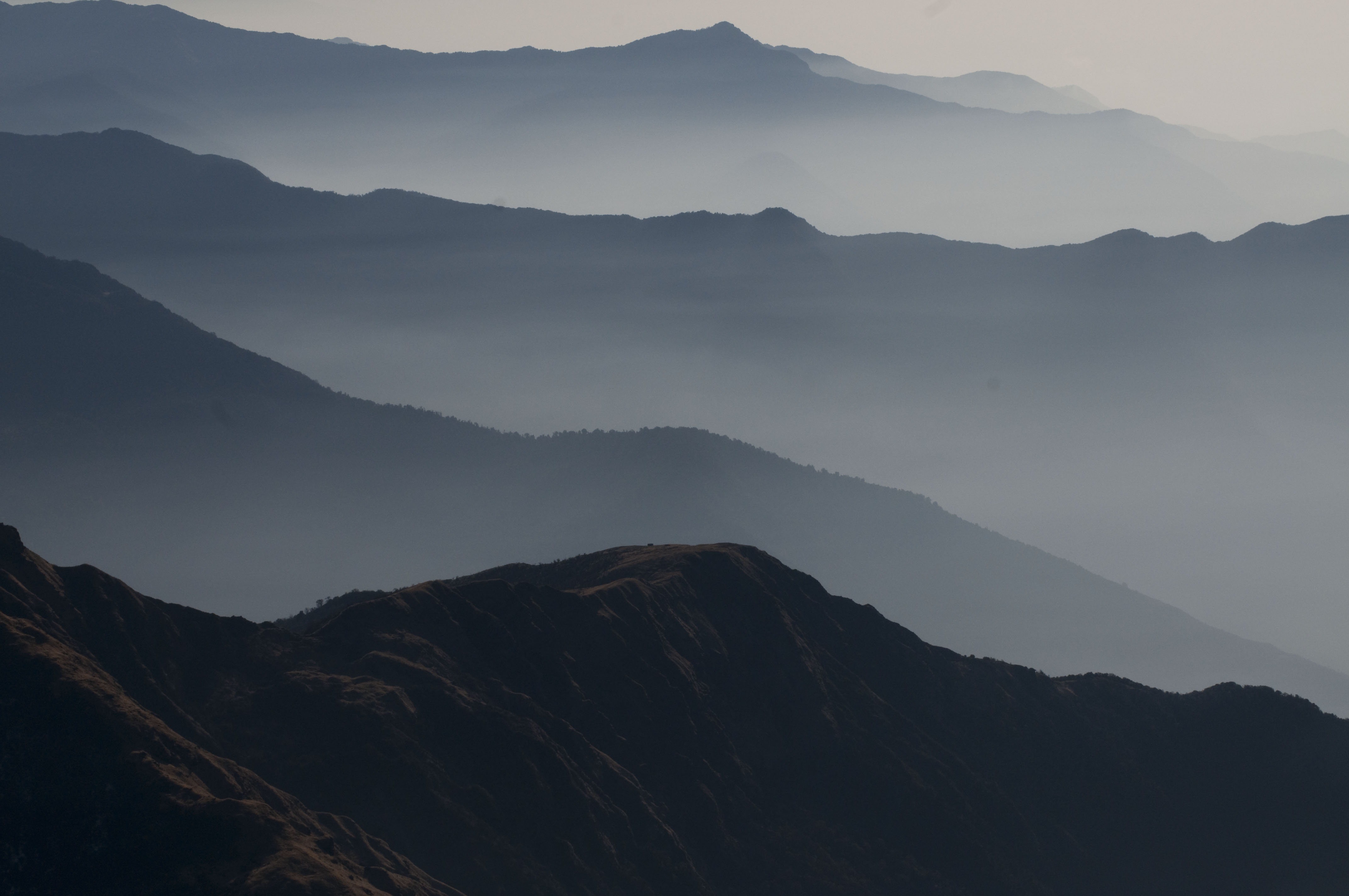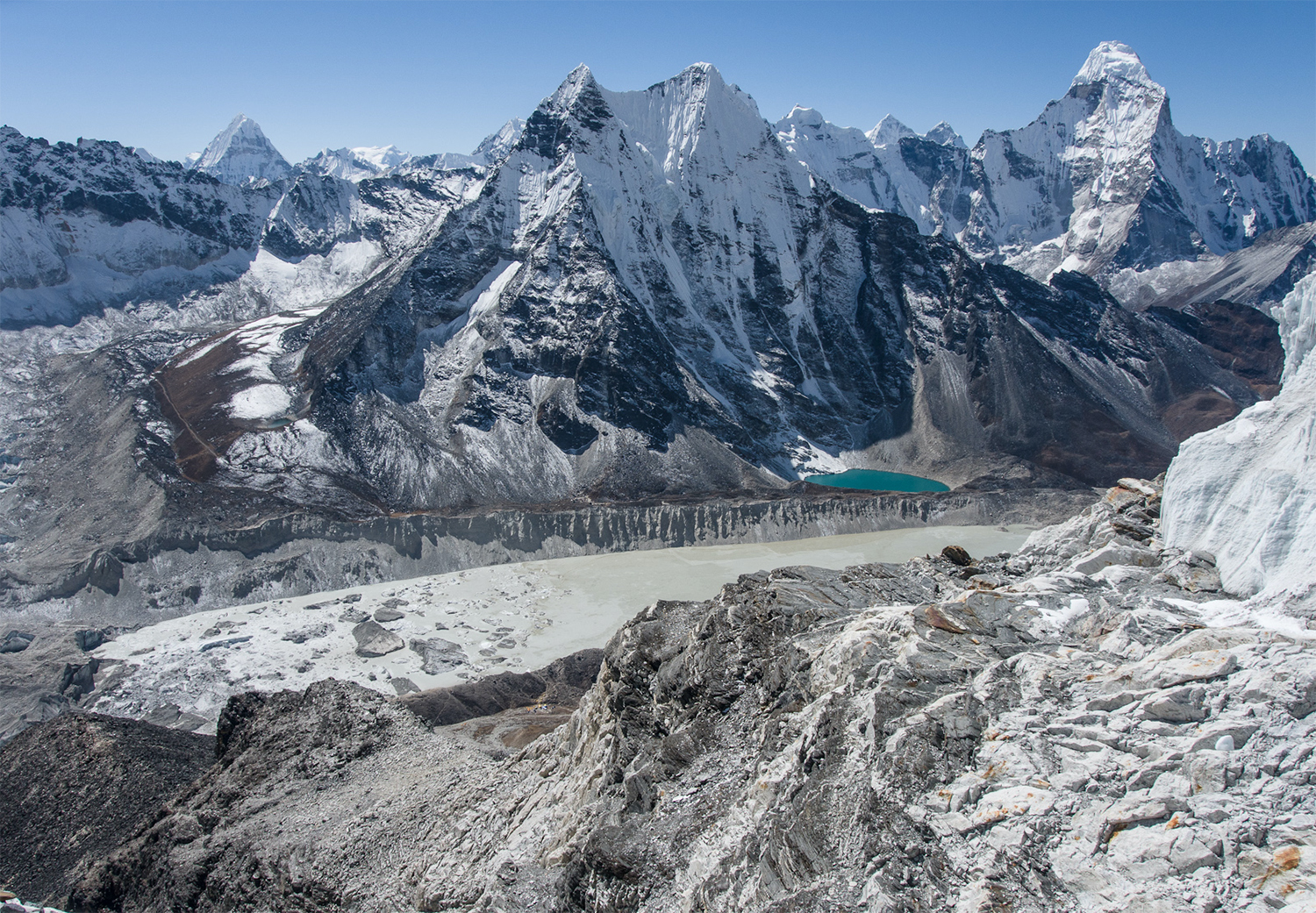
The Himalaya is the largest storehouse of water as ice after the polar regions, which is why it is called the Third Pole. The world’s highest mountain range is also referred to as the Water Tower of Asia, but the roof of the world is running out of water.
Sky rivers bring moisture from the ocean and precipitate it as rain or snow on the mountains. Much of it seeps into the ground with the mountains acting like gigantic sponges. The rest is stored as ice and melts slowly in summer when glaciers bring them down.
But climate change is heating up the Himalaya faster than the global average, disrupting this water cycle. The rains are becoming more erratic, either coming in torrents or not at all, groundwater is depleting, and glaciers have shrunk.
Rivers originating in the Himalaya and the Tibetan Plateau that sustain the inhabitants of the mountains as well as 1 billion Asians downstream will have less water in the dry season in the coming decades.
If greenhouse gas emissions are not reduced, scientists predict that two-thirds of Himalayan glaciers will be gone during this century. Already, there is a river running through Everest Base Camp, and runnels in the Khumbu Icefall may turn it into a waterfall in the not-too-distant future.
Khim Lal Gautam, who was part of the team that measured the height of Mt Everest to greater accuracy in 2020, has climbed the world’s highest mountain twice and has noticed the changes.
“The moraine and permafrost here at the Everest Base Camp is melting dangerously. The glacier is collapsing, every time I come here there is less and less ice,” says Gautam.
He adds: “The accelerated melting means there is now this big river running through Base Camp. In the last six years, the average temperature here has increased by six degrees.”
Read also: It is getting hotter on the roof of the world, Kunda Dixit
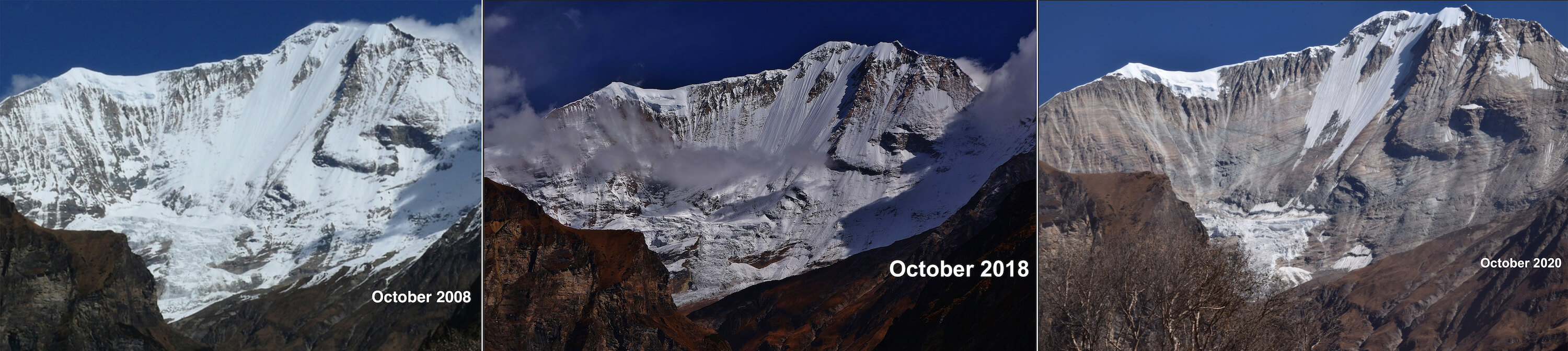
Across the Himalaya, iconic peaks like Mt Machapuchre have turned into bare rock during some seasons. Between October 2008 to October 2020, Mt Saipal at 7,031m in far west Nepal lost most of its ice, shocking mountaineers, scientists and locals alike.
In 2006, the serac below the summit of Ama Dablam that gave the mountain its name broke off killing six climbers. “Ama Dablam means mother’s necklace, and a chunk of this big block of ice collapsed and thundered down,” says environmentalist and entrepreneur Dawa Steven Sherpa. “We are not just losing our mountains but a large part of our identity and what they mean to us.”
Researchers have made similar observations in the Karakoram in Pakistan, in the Tibetan Plateau, Bhutan and India where the permafrost is melting and glaciers receding.
“In the past, glaciers in the Karakoram were more stable than elsewhere in the Himalaya … but now even these glaciers have started melting,” says Pakistani remote sensing specialist Sher Muhammad, who is with the Kathmandu-based International Centre for Integrated Mountain Development (ICIMOD).
Accelerated melting has also meant that the number of glacial lakes is increasing. Nepal’s longest glacier, Ngozumpa below Mt Cho Oyu, now resembles Swiss cheese, riddled with melt pools and debris. Imja Glacier has turned into a glacial lake in just 30 years.
“Imja didn’t used to be a lake, it used to be a solid glacier,” adds Dawa Sherpa. “My father camped on the glacier 60 years ago with a Japanese expedition. Today, we need a rubber boat to be where he was back then.”
There are 3,252 glacial lakes in Nepal, and they are shrinking three times faster than in 1998. Many of these are filling up with melt water and are in danger of bursting. Glacial Lake Outburst Floods (GLOFs) are a threat not just to human settlements but to infrastructure projects, many of them hydropower plants which are built along rivers downstream.