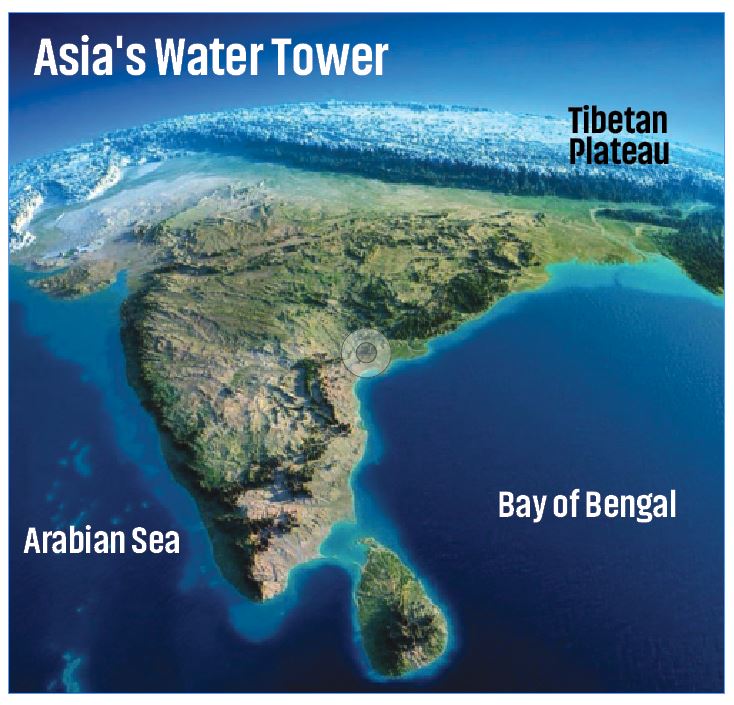
The Tibetan Plateau is heating up faster than the global average due to climate change, and scientists say this will ultimately reduce the flow of Asia’s mighty rivers originating there.
The plateau has an average elevation of 4,000m, is rimmed by the Himalaya, Karakoram, Pamir and Tien Shan mountain ranges, and is called the ‘Third Pole’ because it has the largest store of frozen water on the planet after the polar regions.
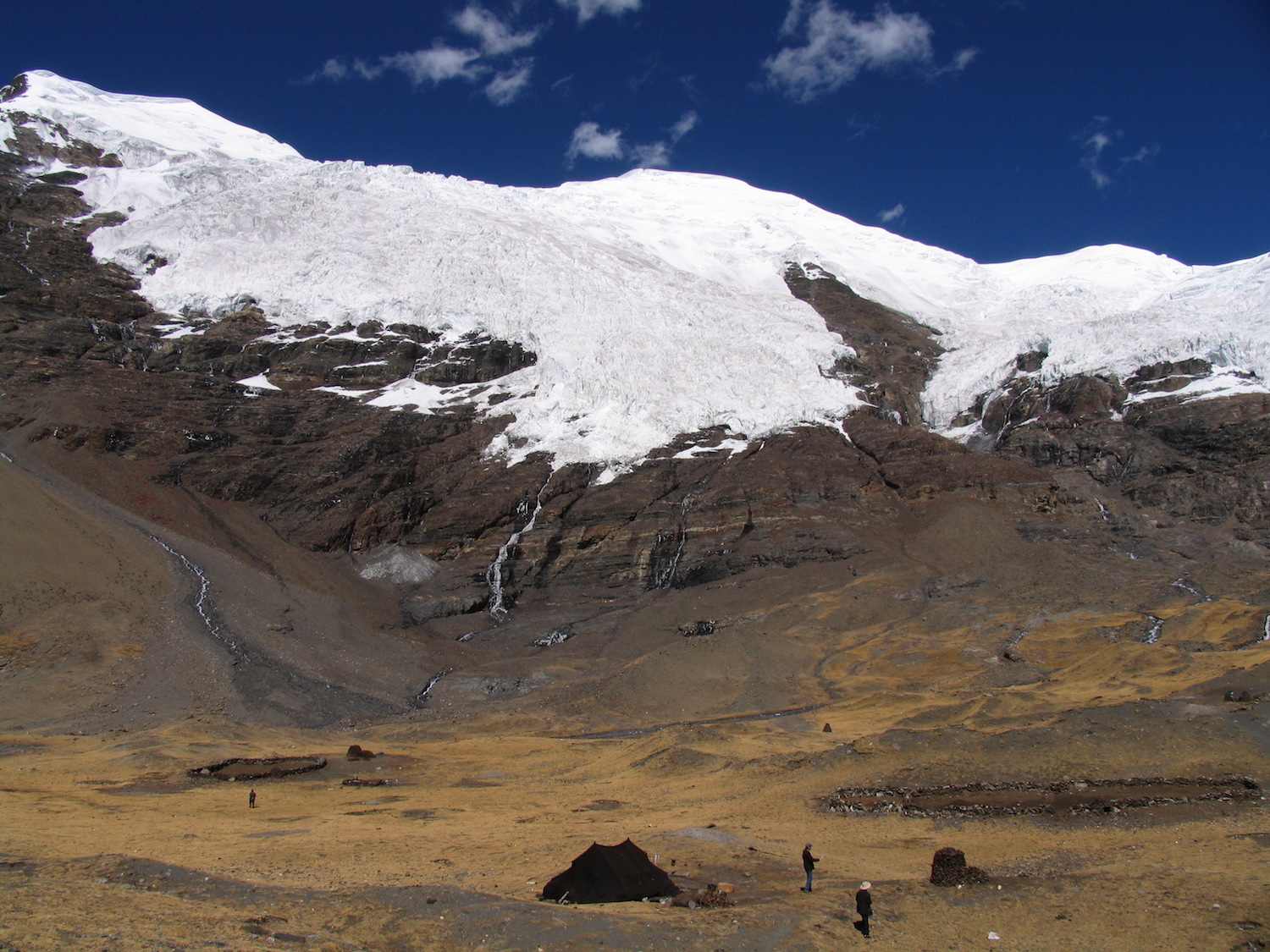
But the glaciers, snowfields and permanently frozen ground on the ‘roof of the world’ are thawing, making Tibet’s lakes bloat by 58.5 cubic km just in the past 40 years.
“The plateau is filling up like a goblet. Its cryosphere is already undergoing a catastrophic and irreversible ecological shift, and the current direction of climate change in the next 50 years will directly impact the region and the world,” warns Martin Mills of the Scottish Centre for Himalayan Research.
Read also: North Indian heat wave hits Nepal, Sonia Awale
Mills prepared a paper for the Scottish Parliament titled ‘Climate Change on the Third Pole’ that lays out the process and consequences of uncontrolled global heating on the plateau and regions downstream.
The Tibetan Plateau is a hot spot in more ways than one — besides the effect of the climate crisis, it is also a geopolitically sensitive region with territorial disputes that erupt into frequent border skirmishes. There is little cooperation between countries that share the Himalayan watershed to study and mitigate the impact of climate change.
The plateau is the source of the Indus and its tributaries that flow into the Arabian Sea, the Ganga and Yarlung Tsangpo (Brahmaputra) that flows down to the Bay of Bengal, the Burmese rivers, the Mekong and China’s Yellow and Yangtze Rivers.
When glaciers on the Tibetan Plateau and the Himalaya melt in spring, their waters keep the rivers flowing in the dry season. However, because of climate change there will be less and less ice to feed these rivers in future.
Read also: Dalai Lama gets block of glacial ice, Nepali Times
The plateau is warming 2-4 times faster than the global average, and its impact is already being seen in shrinking glaciers and expanding lakes. While those changes are visible, there is also the hidden thawing of the permafrost — the ‘underground icebergs’ beneath the plateau. When the frozen ground melts, it destabilises mountain slopes, leading to destructive landslides.
“As snowfall turns into rain, the Tibetan Plateau is becoming progressively warmer and wetter,” Mills told the Dialogue for Our Future conference convened by the Dalai Lama in Dharamsala last week.
He said the impact of these changes in the next 50 years will include increased flooding south of the Himalaya, desertification of river headlands in Tibet, loss of fresh water sources to mountain communities, and damage to infrastructure from permafrost melting.xit
The main driver for these changes is warming of the planet’s atmosphere because of fossil fuel burning, but that is exacerbated by the deposition of ‘black carbon’ pollution particulates that makes the ice lose its reflectivity and melt even faster.