
The brutal murder of school principal Rajendra Shrestha in the remote village of Miklajung of Morang district this week is a cruel reminder of the decade of insurgency in this country. And that was perhaps the intention of the Maoist-inspired Communist Party of Nepal (CPN) that claimed responsibility.
The CPN led by Netra Bikram Chand is not to be confused with the ruling Nepal Communist Party (NCP), formed after the fusion of the erstwhile UML and mainstream Maoists led by Pushpa Kamal Dahal in 2017.
Chand split from Dahal in 2012 and vowed to continue the armed struggle. After arson attacks, extortion and explosions, the CPN was banned two years ago. Today, almost exactly a quarter of a century after the insurgency began, and fifteen years after it ended, the message from the Morang murder is that the revolution never ended.
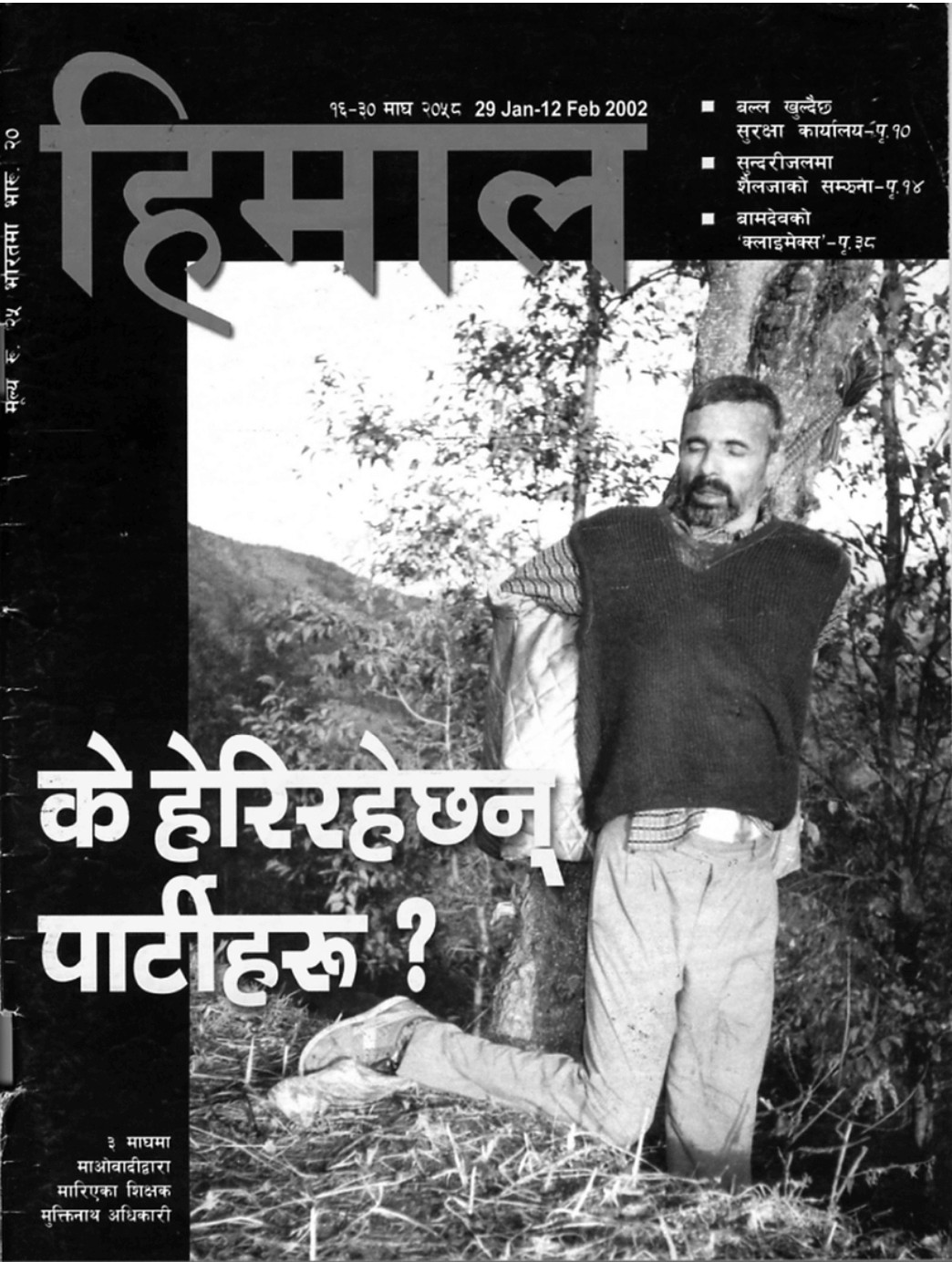
Indeed, several commentators have drawn parallels between the murder of Rajendra Shrestha, and the summary execution of another headmaster – Muktinath Adhikari in Lamjung on 16 January 2002.
Both were abducted, taken nearby and killed. The intention was to strike terror in the population, and make an example of someone who refused to be cowed down by violence. Besides being a teacher, Adhikari was a human rights activist. Shrestha is accused of being a police informant.
Rajendra Shrestha’s killing is murder. It is not a war crime, because no war has been declared. It cannot be labelled ‘revolutionary justice’, it is a criminal act. It is not a reaction to structural violence, such crimes have no place in politics. Like any other killing, it must be investigated, perpetrators apprehended and tried in a court of law.
What is Netra Bikram Chand trying to achieve anyway? There are plenty of avenues available to him within Nepal’s current dispensation to launch a political career.
In fact, the field is wide open to mount a political challenge against Dahal and his former Maoist associates who have failed miserably to deliver on the utopian promises of the revolution in the past 15 years despite being at the helm of the party and government. That is, unless they are being egged on by other forces at a time when royalists are on the march, and geopolitical tensions are rising.