
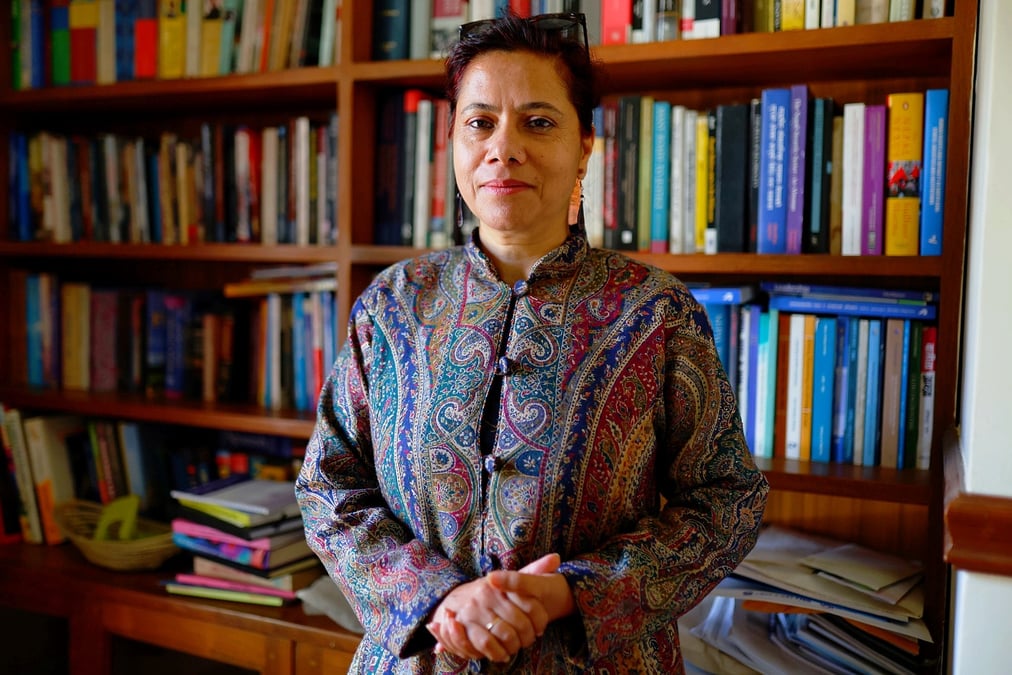
The Dahal Government has decided to fast-track the controversial Transitional Justice bill drafted by Govinda Prasad Sharma Koirala ‘Bandi’ through the parliament. Conflict victims and human rights defenders have raised their voice against the bill which they say may facilitate impunity. Nepali Times spoke with Mandira Sharma, human rights activist, and Senior International Legal adviser at the International Commission of Jurists. Excerpts from the interview:
Nepali Times: The conflict victims and human rights defenders (HRDs) have come out against the bill presented by the Dahal Government to Parliament, in a statement signed by 42 organisations. What are the main points of disagreement?
Mandira Sharma: The main concern of victims and civil society is that by having certain provisions in the bill and omitting others, the bill is likely to facilitate de-facto amnesty for all those committing gross violations of human rights and international crimes. It provides different protection for victims, depending on who the perpetrators are. It provides differing treatment for the same nature of crimes, depending on who the perpetrators are.
As the bill provides the Truth and Reconciliation Commission (TRC)with several competing mandates, victims and human rights defenders also have doubts that the TRC can deliver on these mandates without having an adequate legal framework, which the bill fails to provide.
Is the fear that the bill is inadequate or that it will be misused? Is the fear legitimate or just speculation?
I think some of the fears of victims and HRDs are legitimate. It is important to stress that transitional justice (TJ) is not only about bringing perpetrators to justice, it is also about opening the process to help victims and society know what happened in the past so that we can take measures to correct them to ensure it is not repeated. It is also a process to address the root causes of conflict. However, considering the context of impunity and deep sense of inequality in the society, people are also trying to see more carefully how this TJ process helps to address the extent of impunity to restore rule of law in the country. There are so many aspects in the bill requiring clarity, but let me give you some examples which have been raised by victims and HRDs as to how this bill may facilitate impunity.
Firstly, the bill says human rights violations include murder, beating and mutilation, abduction, destruction of private and public property, sexual violence, arson, illegal arrest and detention, forced displacement, etc. In all these violations, perpetrators will get amnesty. Some of these violations if committed in a widespread or systematic manner are of the kind that would amount to crimes against humanity and/or war crimes under international law. However, war crimes and crimes against humanity are neither included in the bill nor in any other legislation, such as the Penal Code. Although certain conditions are required for alleged perpetrators to meet to get amnesty - such as disclosure of truth, willingness to apologise to victims and to pay compensation etc. - the bill has no provision to allow those not meeting these conditions to be charged and held accountable. They enjoy de facto blanket amnesty. Thus, in practice, a clear possibility exists under the new bill to provide amnesty (de facto) for those involved in war crimes and crimes against humanity.
Secondly, the bill states that the sentencing will be done as per the ‘existing law’ for some violations listed as serious violations of human rights. This includes ‘murder with cruelty’, cruel and inhuman torture, disappearances, and rape. The Penal Code is the existing law that would provide punishment for these crimes. However, the Penal Code only came into force in 2018 and prevents retroactive application. The Penal Code also has a provision of limitations in reporting cases. For example, reporting rape has a limitation of up to 3 years, depending on who the victim is, from the time of occurrence. Thus, victims and civil society organisations were demanding that the Government either include a provision in the bill stating that the non-retroactive effect of law, and statutory limitation in existing laws, will not apply to the cases under the jurisdiction of the Special Court or would amend the Penal Code to say that these provisions will not apply to the crimes committed during the armed conflict. However, neither of these proposed options has been taken up.
Thirdly, the definition of certain crimes is narrow in the Penal Code and would in essence provide grounds for different treatment for the same crime, depending on who the perpetrator is. For example, torture in the Penal Code is narrowly defined and does not include pain and suffering inflicted by non-state actors. Thus, the end result of the provision of this bill is torture committed by the state security forces will be tried in the Special Court but torture committed by the Maoist will ipso facto enjoy amnesty.
Fourthly, many violations require investigation under international law outside the ambit of the TRC and the Special Court. For example, the bill states that human rights violations or serious violations of human rights will come to the jurisdiction of the TJ mechanisms only if they are committed against an ‘unarmed civilian or group’, and if they are committed in a ‘systematic’ manner. These requirements would then mean, for example, that rape committed against Maoist combatants would be outside the ambit of the TJ mechanisms.
Issues like these, which victims and HRDs had raised, requiring careful detailing, sadly have not been addressed in the bill presented by the Government.
Read also: Nepal’s Transitional Justice and the West’s recalibration, Kanak Mani Dixit
A bill was proposed by Govinda Sharma Koirala (‘Bandi’) as minister in the previous Deuba Government but was withdrawn after vigorous protests. Has the Government not made adjustments to address the concerns of conflict victims and rights defenders?
I have noticed four changes made to the bill from the one tabled last time. The text now includes the provision of appeal against the decisions of the Special Court, which was absent in the previous bill. It has extended the time for the public prosecutor to decide whether or not to prosecute the cases recommended by the TRC from six months to a year. It has also removed one positive provision in the previous bill which allowed the suspension of public officials from their post once the charge sheet is filed against them in the Special Court. Apart from these, no changes have been made to last year’s bill, and there has been neglect of the demands and concerns of conflict victims and civil society.
Has Govinda Sharma Koirala ‘Bandi’, who attended the UN Human Rights Council session in Geneva as human rights and peace Adviser to PM Dahal, consulted with victims and HRDs? Why do you think that the Government hurried this bill into Parliament?
No, neither he nor any government agency has consulted conflict victims and HRDs on this bill. As you know, many victim representatives and HRDs supported the consultations the last time, when Bandi was the Minister and promised to bring a fair and just document in consultation with all stakeholders. However, that bill was finalized without respecting issues that victims and HRDs had raised during the consultations, and so the victims and HRDs felt betrayed. It seems the government wants to ‘fast track’ it through Parliament using the majority that the government commands, but we need to understand that the new Parliament does not even have committees yet to provide full and transparent debate to discuss many of these provisions in the bill.
Do you see a ploy to show certain token adjustments while maintaining the overall perpetrator-friendly nature of the bill?
Overall, this bill seems to be designed to give priority to the demands of perpetrators rather than the victims. This process requires honest efforts from all actors to make it possible to have an acceptable framework for TJ. As of today, the bill does not provide clarity on the overall architecture of the TJ process. It has been long argued that the architecture should allow all major components of the TJ (truth-seeking, reparation, justice, institutional reform) to work in tandem. We know that it is not possible to disclose the truth in every case, prosecute every single case, or provide reparation to every single victim. Different components working in tandem could leverage and complement each other to address the limitation each creates. If designed properly, the justice component could be leveraged for the truth, reparation, and reforms.
Although the bill looks like it is trying to adopt this model by having the provision of leniency in sentencing, it fails to link this sufficiently to other components of TJ to leverage it for truth, reparation, and reforms. On the contrary, it ensures impunity to those not supporting the TJ process by offering de facto amnesty. For example, the bill contains a provision that if anyone has been involved in murder or mutilation who wants to support the TJ process has to pay compensation, make a confession and offer apologies to victims and can then get a formal amnesty. However, those not supporting the process would get de facto blanket amnesty as nothing can be done to them. This does not promote those alleged perpetrators even to engage in the amnesty process.
Similarly, the bill empowers the TRC to conduct an inquiry for truth-seeking while at the same time being in control of an investigation for prosecution. How the TRC will balance its truth-seeking mandate, where it might need the power to offer confidentiality and protection even to alleged perpetrators, and its mandate to do an investigation for the purpose of prosecution is not clear. Doing an investigation for the purpose of prosecution requires different skills and standards than those meant to unpack the truth. It is important to note that under the Constitution and under international law, the accused also have certain rights that need to be respected, and that flouting those rights would not only undermine the right of the accused, making the trial unfair and rendering a sham trial, but ultimately letting those involved in serious violations go scot-free.
It seems that the bill is designed to please diplomats and international observers while neglecting the voice of Nepali rights defenders and the conflict victims. Is the international community so aloof and disinterested that they may be taken in by the ploy?
As someone who has been following Nepal’s TJ process very closely since the beginning, I have seen varying degrees of interest from international diplomats. In the past, I have been privy to a coordinated strategy of the international community, which contributed significantly to pave the grounds for setting up the TJ mechanisms with a strong legal foundation, one that does not undermine international law. Although I am not too sure such a coordinated strategy exists in Nepal’s TJ effort today, I have to say that the international community is not uninformed.