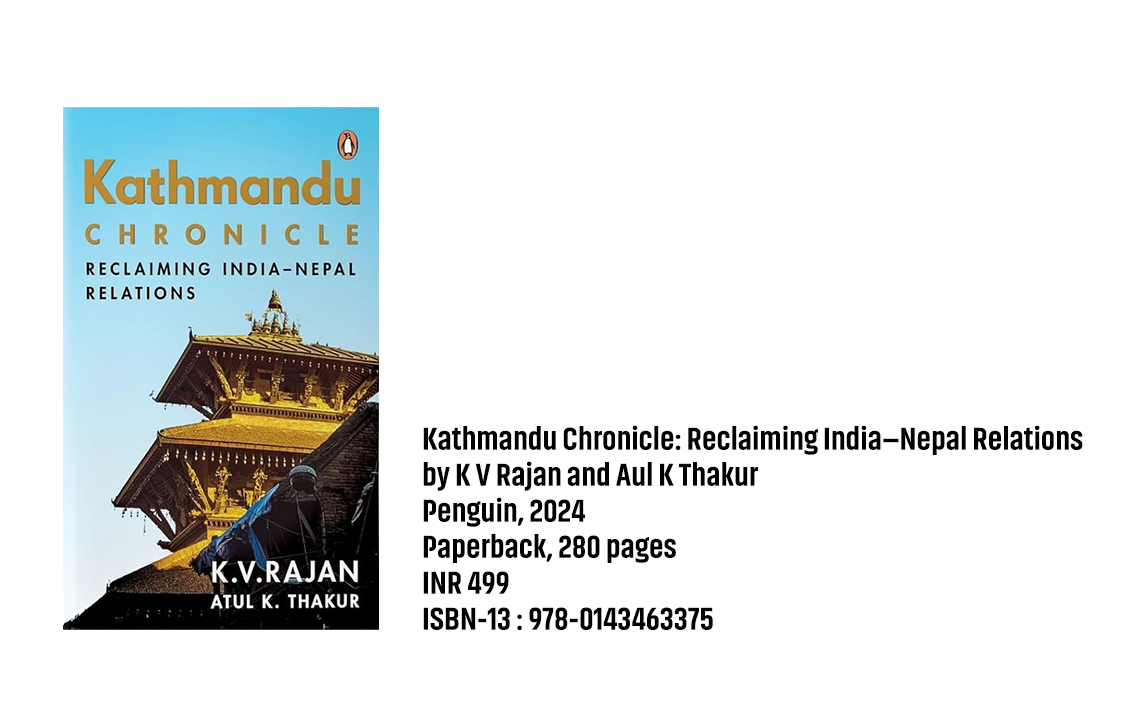
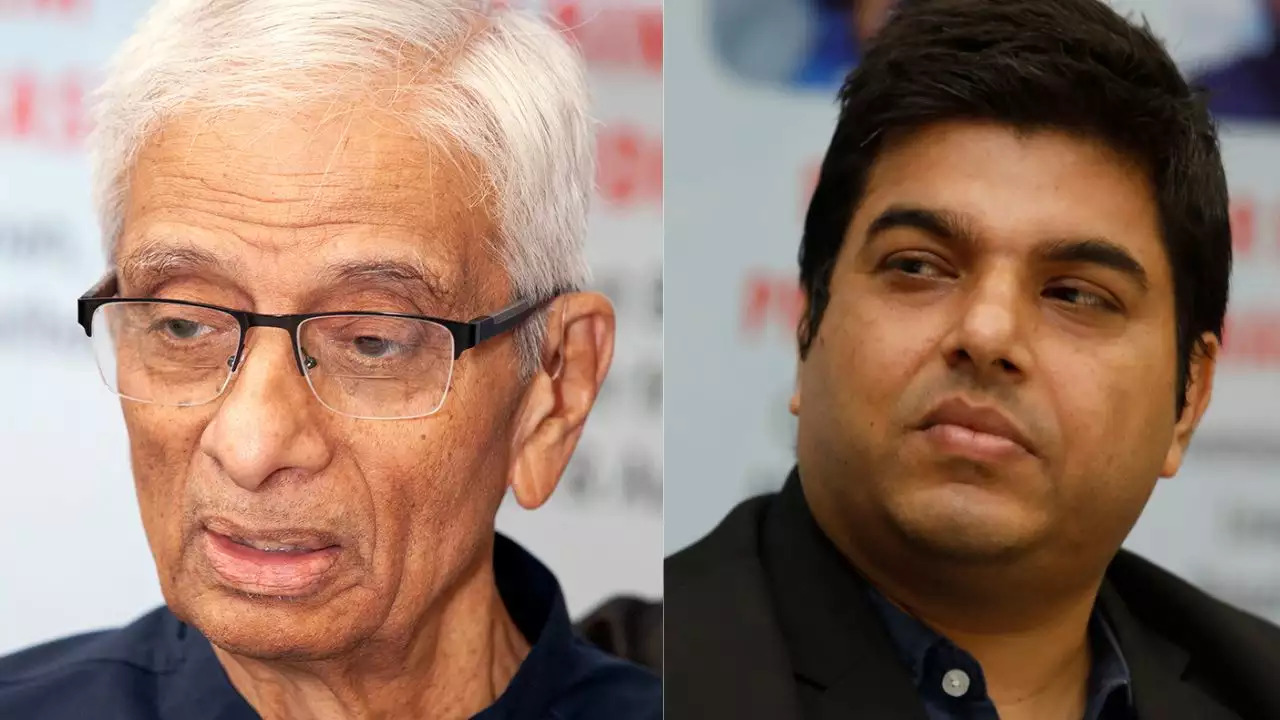
K V Rajan, India’s ambassador to Nepal from 1995 to 2000, and Atul Thakur, a respected voice in Nepal affairs in India, have jointly published ‘Kathmandu Chronicle: Reclaiming India-Nepal Relations’.
The book is an earnest attempt to reproduce Rajan’s personal experience during his tenure in Kathmandu combined with research by Thakur and makes for interesting and meaningful reading.
The methodology is simple, aligning both formal and informal which projects the right tone to guide people-to-people connect between the two neighbouring countries.
The book starts with a first-person account by Rajan, moving on to analyse the complicated political transition in Nepal, and concludes with an elaboration on future challenges. And unlike many other such works penned by former Indian bureaucrats, this one is honest, unbiased and more balanced -- all much needed to move Indo-Nepal relations forward, at least from the Nepali perspective.
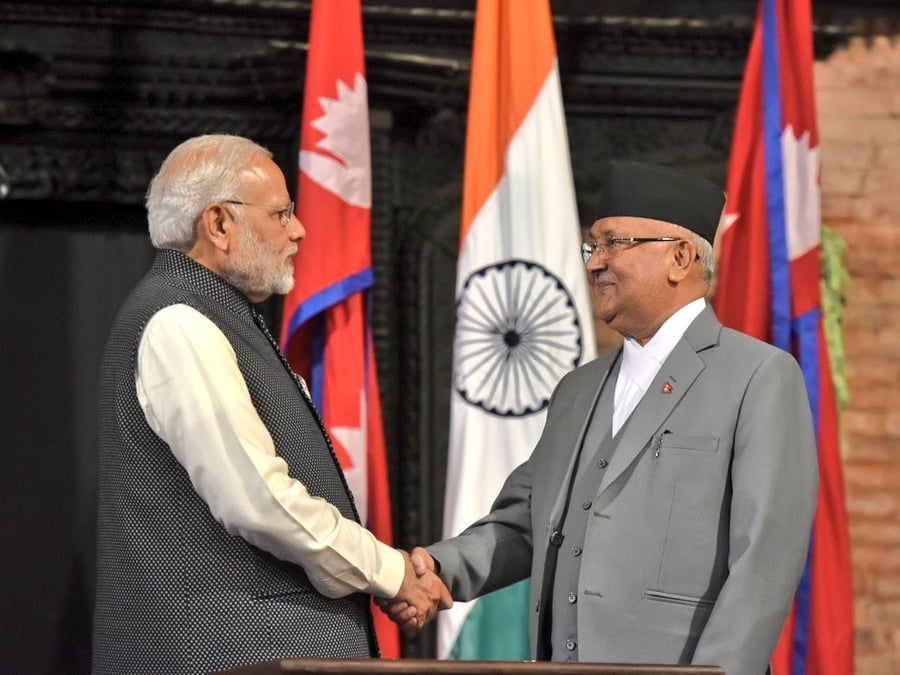
Rajan cites his personal rapport with King Birendra with whom he built the trust needed to guide bilateral ties. When Rajan landed in Kathmandu, back in Delhi India’s Nepal policy was in the hands of veterans like Prime Minister P V Narasimha Rao, External Affairs Minister Pranab Mukherjee and Foreign Secretary Salman Haider. Their line was to build relations with the palace as well as the political parties.
Rajan quotes Prime Minister Rao as advising him, ‘The King seems to have learnt his lessons. So have we. Let him know we take him seriously, we are not taking him for granted … Make all political leaders feel that they are equally important for us, whether they are supposed to be pro or anti-India. I will not give an inch more to the pro-India prime minister, and not an inch less to the anti-India one.’
Then, of course, Birendra was killed in the massacre at the royal palace on 1 June 2001. Pranab Mukherjee apparently warned him after an earlier meeting with Birendra that the king ‘felt a certain threat’ and was ‘very worried’ before the killings.
Rajan makes the rather far-fetched connection between Crown Prince Dipendra and Pakistan’s Inter Services Intelligence (ISI) and the underworld, thereby hinting at a conspiracy that he does not expound on. We have to remember that these undercurrents followed the hijacking of Indian Airlines flight IC 814 from Kathmandu to Delhi on 24 December 1999.
The plane was forced to fly to Kandahar in Afghanistan and finally released at the turn of the millennium on 31 December. The hijacking itself affected Nepal-India ties for years after.
Rajan takes us on a flashback of Nepal’s recent history in which the shadow of King Mahendra loomed large, and Gyanendra’s effort to emulate his father after his coup on 1 Februrary 2005 when he assumed total state power.
It is quite clear from the book that India was not in favour of the move by Gyanendra, who ws regarded as being more friendly towards China. Rajan does provide an honest analysis of the dilemma India faced in dealing with Gyanendra and the political forces at a time when Nepal was in the throes of the Maoist conflict.
‘Tactical U-turns and transactional compromises would leave lasting perceptions in Kathmandu of Indian inconsistency, unreliability and insincerity, and in Delhi, of Nepal’s ingratitude, deviousness and how easily it could be led astray,’ Rajan writes, referring to India’s twin-pillar policy of supporting both the constitutional monarchy and parliamentary democracy post-1990.