In 2023, northern India suffered record-breaking heat. In 2024, it broke its own record. In 2025, the Indo-Gangetic plains and the Nepal Tarai suffered a prolonged pre-monsoon heat wave and humidity, forcing closure of schools and workplaces.
This week, southern Europe is suffering the worst heat wave since temperature records began. Football matches, tennis tournaments have been affected, and tourist sites have been closed off. Qatar has ordered a midday work curfew for Nepali and other migrant workers are the maximum temperature this week touched 45°C.
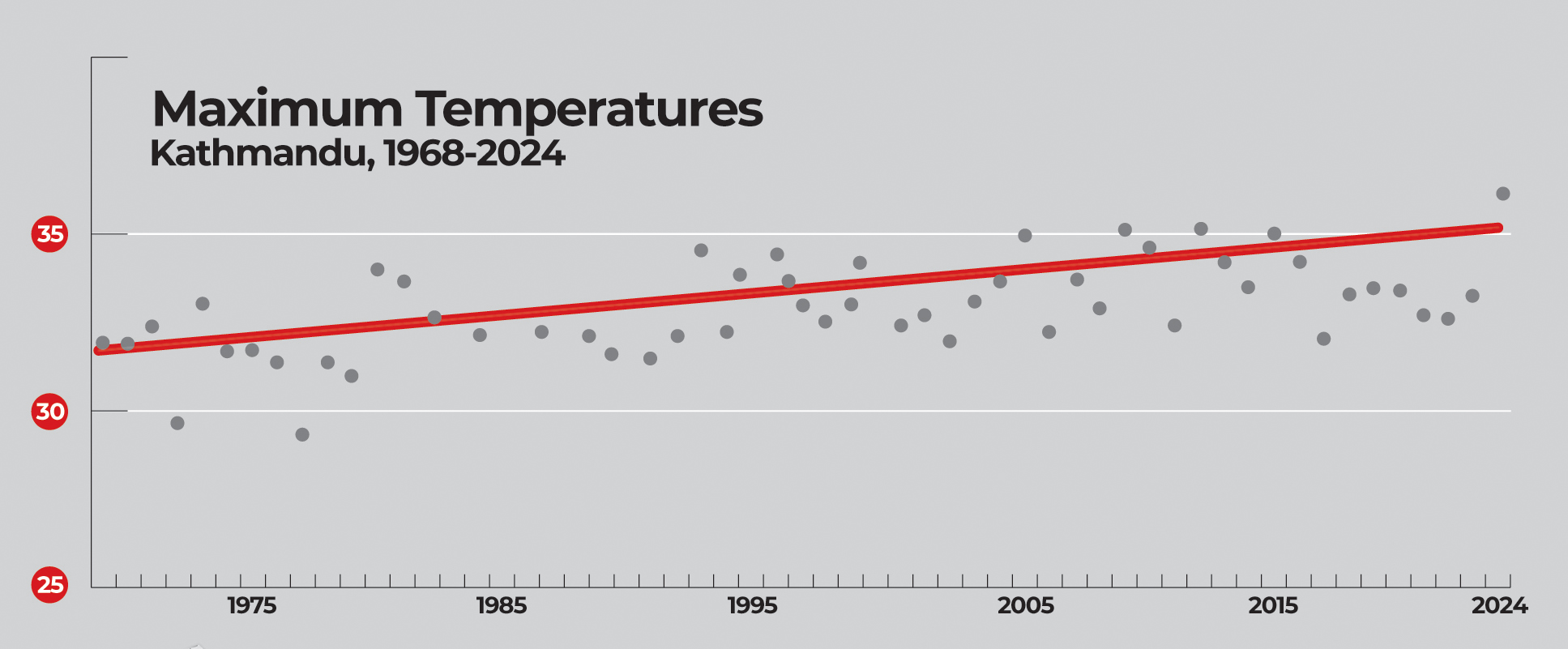
Kathmandu Valley experienced its highest temperature in 25 years in May 2024 at 35.3°C. This year, the maximum temperature exceeded 30°C on many days — heat that till a decade ago would be considered unusual. Rains in early June also meant that towns in the mountains sweltered under high heat plus humidity.
Measuring just temperature does not give a true picture of how hot it is. When humidity is factored in, the heat index this summer has been much higher in northern India and Nepal. Also, the hotter the air temperature the higher the concentration of water vapour in it.
“We feel it is getting hotter, and our statistics back that up,” says Shanti Kandel at the Department of Hydrology and Meteorology, which issued two heat wave warnings this year, compared to 11 last year. “We need more research to analyse how humidity is make this situation worse.”
A recent analysis by the Indian Meteorological Department has found that heat stress in that country has increased by nearly 30% over the past 40 years. Similarly, India’s Council on Energy, Environment and Water (CEEW) noted that cities like Delhi, Chandigarh, Jaipur, and Lucknow have experienced a 6-9% rise in relative humidity in the last decade.
It also states that 60% of Indian districts, home to three-quarters of the country’s 1.3 billion people face a high to very high risk from extreme heat, with rising night-time temperatures and humidity.
The heat index is also called ‘wet-bulb temperature’ and is a measure of how hot the human body feels when humidity levels are also high — usually much hotter than the recorded temperature. For example, a wet-bulb temperature of 35°C is considered the maximum limit of heat and humidity that humans can handle, beyond which the body cannot cool by perspiration, leading to death.
One indicator of increasing humidity is a rise in average minimum temperature, and Nepal recorded the highest figure since 1981 last year, with a peak of 15.8°C. Higher minimum temperature denotes warmer nights, which in turn is an indication of heat stress caused by increasing humidity, which in turn is a result of global warming.
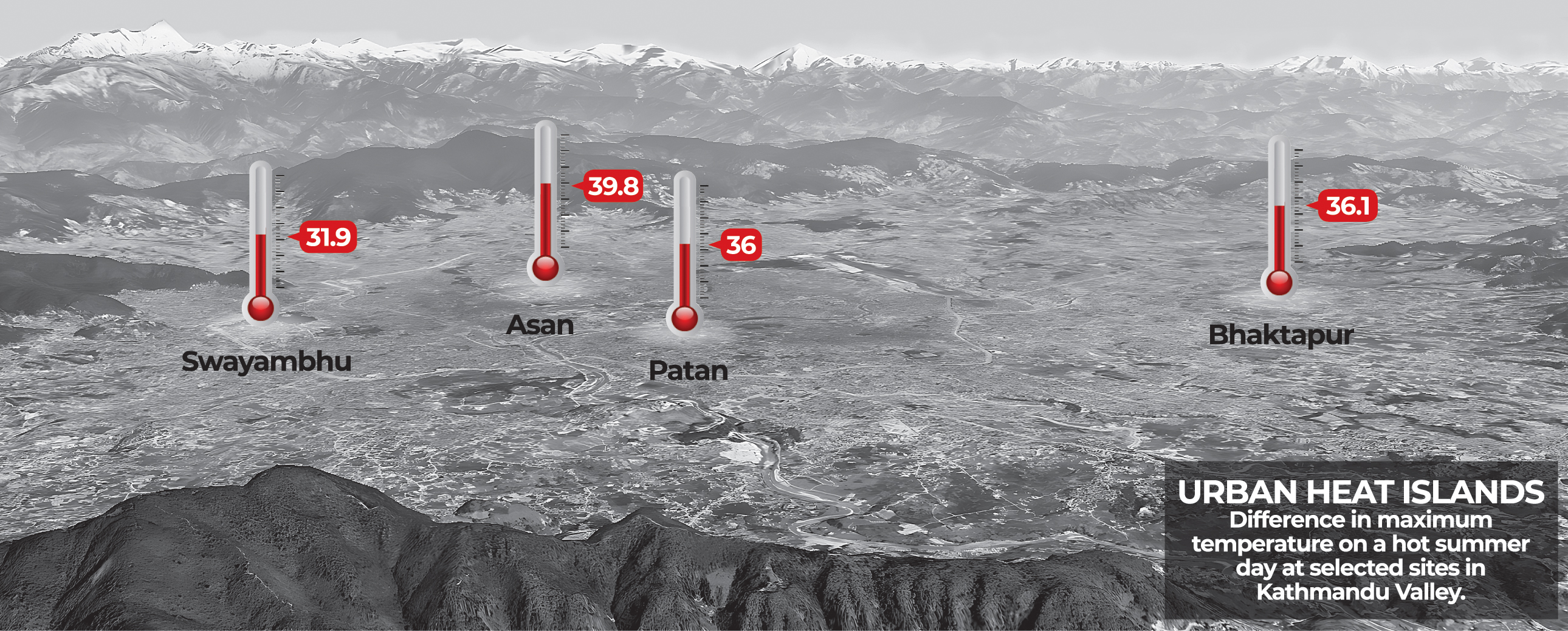
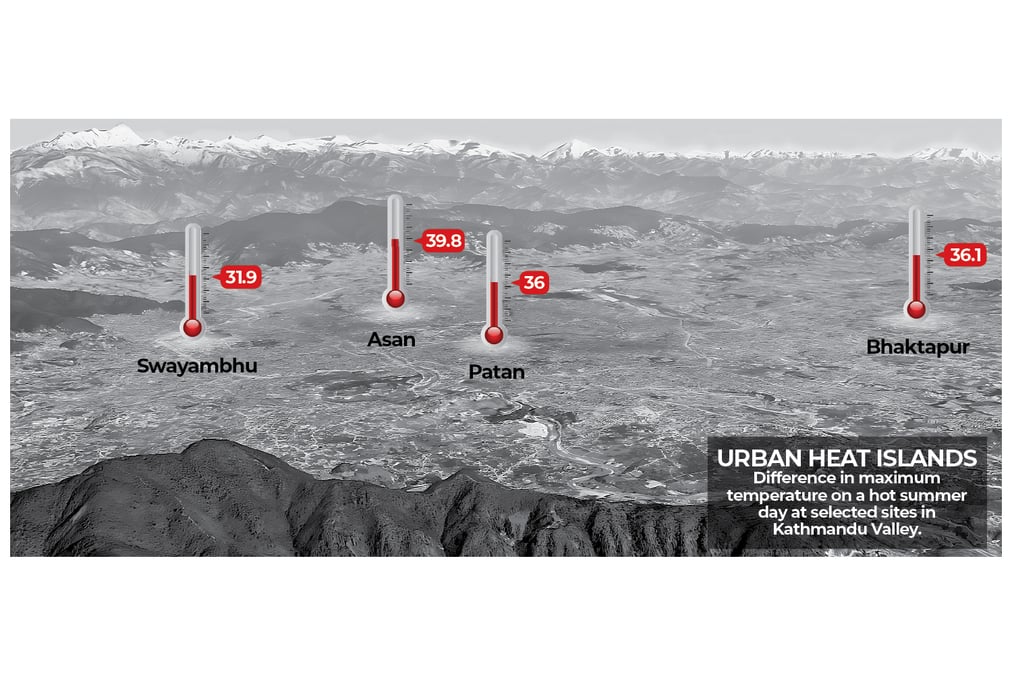
Aside from higher average temperatures worldwide this year, what makes heat and humidity more unbearable is that cities are always hotter than their surroundings. This is due to the urban heat island (UHI) effect – for example the temperature inside Kathmandu’s Ring Road can be hotter by up to 4°C during the daytime and by 1 to 3°C in the evening compared to the outskirts.
“Climate change is one reason for rising temperature, but there are other factors like increased heat in urban spaces due to concrete buildings and infrastructure, emissions from vehicles, industries, and home appliances,” explains urban planner Bhushan Tuladhar.