

As an unseasonal heat wave hit northern India earlier this year, Nepal Tourism Board launched a promotion campaign with the catchy Hindi slogan: “Garmi Se Behal? Chalo Nepal” (Suffering from the heat: Let’s go to Nepal).
If current trends in global heating continues, that may be more than a tourism slogan.
Many recent studies predict increased migration due to climate change-induced sea level rise, droughts, and extreme events. In fact, some of this is already happening in South Asia and across the world.
People through history have migrated as a strategy to overcome various types of crises. Families and individuals take voluntary decisions to move to a new place, seeking a better life. Cities can act as powerful magnets for those seeking new opportunities.
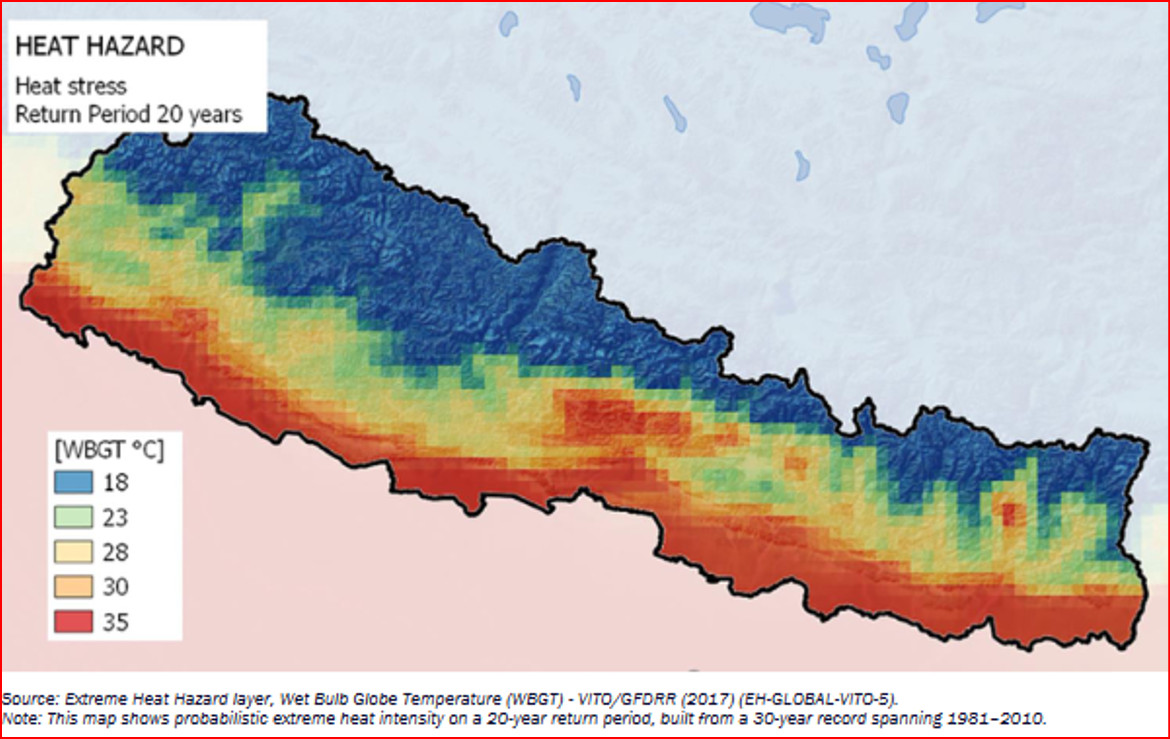
But increasing heat caused by the climate crisis is the new lived reality in the Indo-Gangetic plains. Rising wet-bulb temperatures (a combination of heat plus humidity) is emerging as a major health risk that could have significant socio-economic consequences such as migration.

An average ambient wet-bulb temperature of 35°C, if it persists for long enough, can lead to heat stress, heat stroke and even death. Sleeping outdoors at night or being in the shade cannot cool the body enough.
Air conditioning can help, but low-income families cannot afford it. Surge in energy demand during recent heat waves has already caused frequent power cuts across the region as more energy for air-conditioning overloaded electricity networks.
This year, I lived in New Delhi between March and June. The monthly electricity bill doubled compared to February. Increased use of air conditioning requires additional energy, which in India comes mostly from coal-fired thermal plants and add to greenhouse gas emissions.
Chemical coolants used in older air conditioners models are about 7,000 times more potent greenhouse gases than carbon dioxide. Their increased use adds to further warming.
In contrast to New Delhi, Kathmandu during this time felt naturally air-conditioned. But even Kathmandu Valley with higher humidity than in the past was uncomfortably hot in August and September. There were occasional power-cuts, and it was difficult to sleep without fans.