
|
|
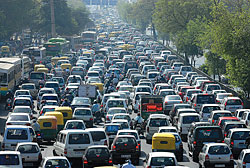
NEW DELHI-India's capital in late April has few virtues to attract visitors. Even the residents get out if they can, seeking cooler climes in Shimla and Mussoorie. Unlike our orderliness in Kathmandu, here the powercuts are unscheduled, and the whirr of backup generators makes your head spin.
Last week the city introduced a pilot project for a new traffic system, in which buses were restricted to dedicated bus lanes. Many arterial roads came to a standstill. It's going to take more than new traffic rules to solve Delhi's infrastructure problem. Globally-aware Delhiites compare their transport chaos to Heathrow Airport's Terminal 5, but Heathrow's traffic flow problems don't affect millions of people every day.
Global construction companies are now eyeing India as a country where massive new infrastructures are due to be built, as opposed to countries like the US where most future work is likely to be rehabilitation and maintenance.
As cranes now loom on every corner of the skyline, the boom is creating fresh challenges for the economy. Firstly, with supply of materials unable to keep up with demand, prices are shooting up which means the cost of infrastructure development is increasing apace. Public-funded projects are thus draining the exchequer deeper, and private ones are raising their consumer charges.
Secondly, the demand for skilled and semi-skilled construction workers is going to affect labour costs too. In Nepal, it is becoming increasingly difficult to find a good mason or plumber as most of the ones with any gumption are taking their skills to the Middle East and India where they will get paid more. The rise in food prices and general inflation will also increase the cost of labour, and consequently cost of capital.