
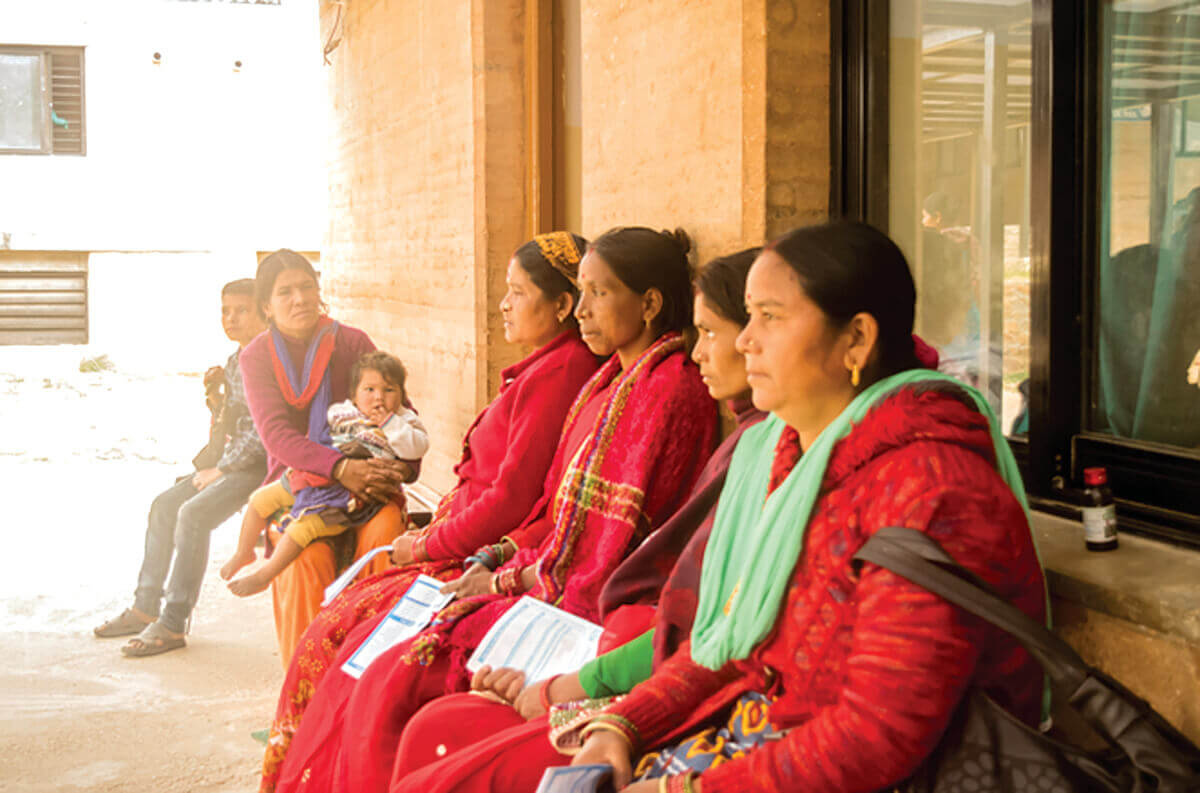
Around the world, in rich countries and poor, financing healthcare is one of the biggest challenges. In poor countries, it becomes a life-or-death issue.
Over 40% of global healthcare expenses are still covered by patients and their families, and more than half the world’s population lacks access to essential health services. Medical bills push 100 million people into extreme poverty every year.
Nepal has taken remarkable strides in healthcare in past decades despite internal conflict and instability, but medical care is still unaffordable or inaccessible to most. More than half the healthcare expenditure of Nepalis is still covered out of pocket. Nearly a third of families spend over 10% of their annual income on medical care.
Read also:
This is how to upgrade Nepal's rural health, Sewa Bhattarai
State of the art rural hospital, Marty Logan
Thursday, 12 December, is Universal Health Coverage Day, an important date to remind ourselves of the next steps we need to take to achieve healthcare for all. The 2015 constitution of Nepal declares basic and emergency healthcare as fundamental rights of citizens, putting the responsibility of financing such care on the state. Following federalism, municipal governments have got the responsibility to manage basic and essential care. A national health insurance bill has been passed and is being implemented.
The state guarantees quality healthcare without financial burden on citizens, for which the insurees pay Rs3,500 per year for a family of five, and receive care worth Rs100,000. This is expected to reduce the burden of out of pocket and catastrophic expenses, while the government covers the premium for citizens under the poverty line.
Read also:
A national health insurance scheme is not as easy as it looks, Sonia Awale
Poor health, Editorial
There is also a provision for free essential drugs and free treatment for patients with cardiovascular disease, cancer, spinal injuries, renal ailments and sickle cell anaemia, through the Disadvantaged Citizens Medical Treatment Fund.
None of these initiatives is being implemented fully yet, but with federalism Nepal has a chance to build an accountable and sustainable healthcare system. The country therefore needs to focus on the following areas to manage health financing to meet the targets of the Sustainable Development Goals:
- Increase public sector healthcare investment to at least 7% of annual national budget. This should also be targeted towards reducing external aid.
- Empower people for self-care and make treatment more strategic and efficient as the burden shifts from communicable to non-communicable diseases.
- Focus on primary health care and improve services at the first point of care with comprehensive, accessible and community based care.
- Coordinate multisectoral policy action involving education, agriculture and social behaviour.
- Launch a priority national campaign to spread insurance coverage. Enrollment can be top-down starting with all government officials and then the public at large.
A mixed financing model using tax-based funds through the treasury, and premium-based funds through health insurance can work for public, private, community, and other hospitals that run under the state-non-state partnership. An example of state- non-partnership is Bayalpata Hospital in Achham district, managed through a public-private partnership between the ministry of health and population and the non-profit Nyaya Health Nepal, where insurance reimbursement covered over 60% of the hospital’s operating costs.